White House accuses Moonshot AI of stealing Anthropic's Fable model, Treasury threatens sanctions
The White House on July 22 publicly accused Moonshot AI, the Beijing-based developer of the Kimi model family, of covertly distilling Anthropic's Fable model to build its own Kimi K3 system, and of illegally obtaining export-controlled Nvidia GB300 chips through Thailand. Treasury Secretary Scott Bessent followed by warning that sanctions and Entity List designations are on the table for Chinese AI firms found running these operations.
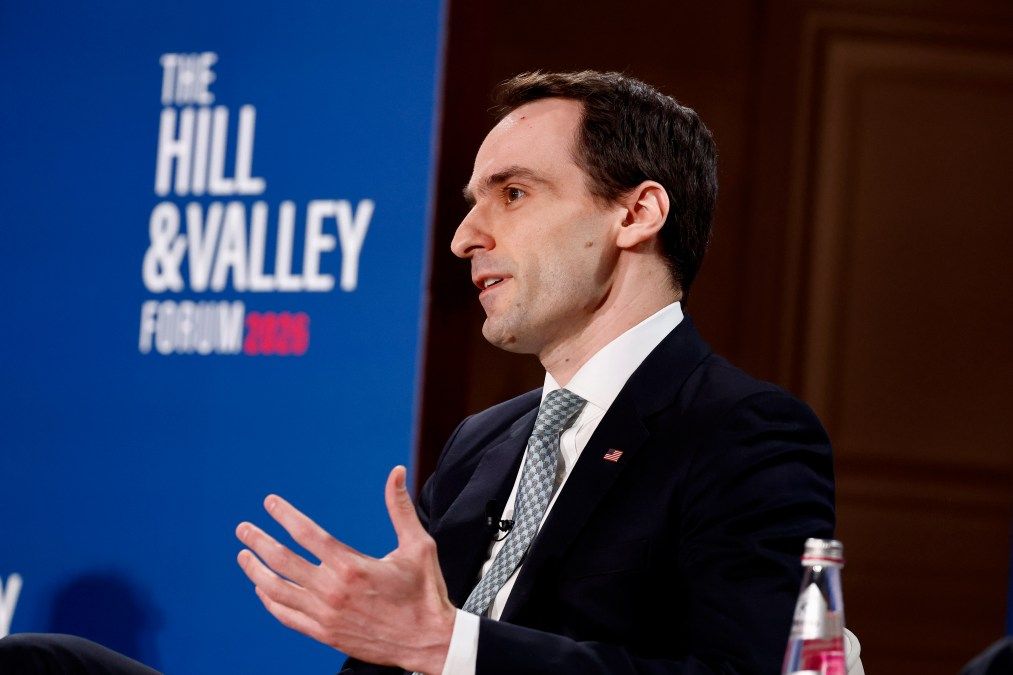
Michael Kratsios, director of the White House Office of Science and Technology Policy, made the accusation on X, writing that Moonshot AI "developed a sophisticated internal platform to conduct large scale distillation against U.S. models, allowing them to quickly switch between multiple methods of access to avoid detection." He called the alleged campaign "large-scale, covert industrial distillation aimed at stealing proprietary U.S. technology and undermining American research."
The accusation lands at a moment when Washington is trying to draw a hard line between two very different things: legitimate model distillation, a standard machine learning technique used industry-wide to compress a large model's capabilities into a smaller, cheaper one, and what US officials are calling systematic IP theft dressed up as research. Kratsios acknowledged that distillation itself is not the problem — he said the US "strongly supports the free and fair development of AI" and that legitimate distillation improves efficiency. The objection is to doing it covertly, at scale, against a rival's proprietary weights, while also evading export controls to get the compute to run it.
Kimi K3, which Moonshot released as an open-weight model in mid-July, is a 2.8 trillion parameter mixture-of-experts system that landed at roughly third place on independent AI leaderboards and undercut US labs on per-token pricing. Kratsios's claim is that some of that capability originated in Anthropic's Fable model rather than from Moonshot's own training runs. He did not disclose how US intelligence agencies determined that distillation occurred, and Moonshot AI had not responded to press requests for comment as of publication.
Treasury Secretary Bessent's follow-up statement raises the stakes considerably. Entity List designation would cut a company off from US suppliers, including any indirect access to Nvidia chips or American cloud infrastructure — a far more consequential penalty than a public accusation. The legal theory combines two threads: intellectual property theft through covert distillation, and unauthorized acquisition of Nvidia GB300 servers, which are barred from sale into China under current export controls, allegedly obtained new or accessed via Thailand-based infrastructure to route around the restriction.
This is not the first time Moonshot has faced this kind of accusation. Anthropic's head of public policy made a similar claim against the company in February 2026, and Anthropic itself has previously accused Alibaba of running some 25,000 fraudulent accounts to scrape its models at scale. Security researchers, including Tuskira CEO Piyush Sharma, have noted that distillation genuinely can transfer much of a model's core capability without ever touching its underlying weights directly — making the practice hard to prove and easy to deny.
Not everyone is convinced the timeline supports the White House's version of events. Some AI researchers who reviewed Kimi K3's release schedule against Fable's own launch date have questioned whether there was enough time for large-scale distillation to have occurred at all, a gap Kratsios's statement does not address.
The dispute is a preview of where US-China AI policy is heading in the second half of 2026: less about outright chip bans and more about enforcement actions against specific companies, backed by intelligence claims that the government isn't fully substantiating in public. If Treasury follows through on an Entity List designation, Moonshot would join a small number of Chinese AI firms formally cut off from US supply chains — a step that would also test whether Nvidia's export-control enforcement is actually working, given the GB300-via-Thailand allegation. As reported by CyberScoop, neither Moonshot AI nor Anthropic had issued a formal response by the time of the White House's statement.
Originally reported by CyberScoop. Read the original article for additional details.
View original source