Vivodyne opens robotic lab network growing human tissue to train AI on causal biology
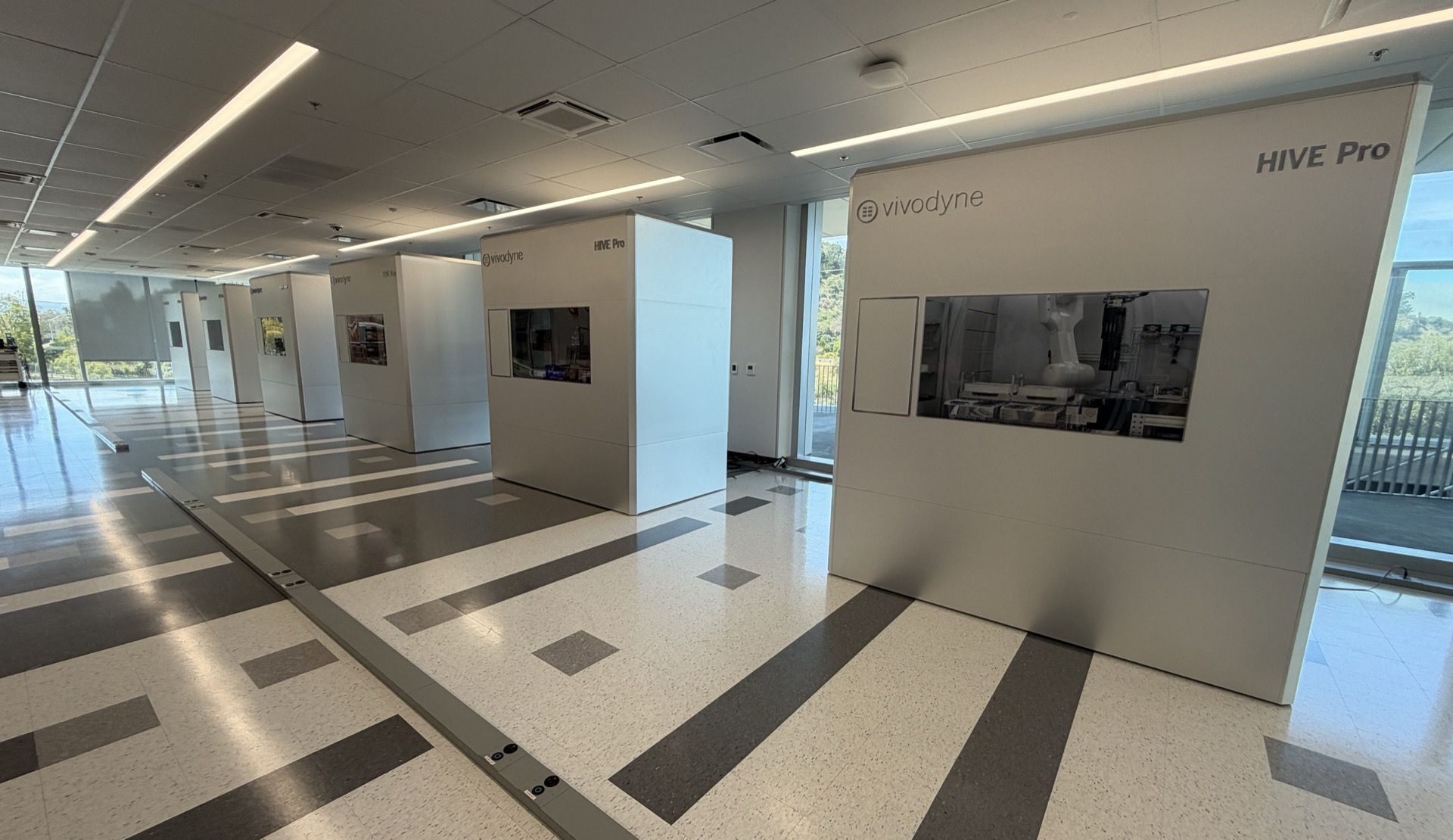
A Philadelphia-based biotech startup says the reason AI hasn't cured cancer yet isn't a modeling problem — it's a data problem. Vivodyne has opened what it calls the world's largest human biological data center, a network of robotic laboratories that grow living human tissue, dose it with drugs, and record how it responds — generating exactly the kind of causal data that today's AI models are missing.
The company, spun out of the University of Pennsylvania in 2021 by CEO Andrei Georgescu after his bioengineering PhD, has raised under $80 million across two funding rounds led by Khosla Ventures. Eight of the world's largest pharmaceutical companies have already paid for early access to the platform.
Why AI drug discovery keeps hitting a wall
Georgescu argues that AI models trained on existing biological datasets are fundamentally limited because that data captures static snapshots, not cause and effect. “All the training is done on static snapshots of these cells,” he told TechCrunch. “The model learns ‘this is cell state A,’ ‘this is cell state B,’ but never ‘cell state B is the effect of inflaming cell state A.’” Without that causal link, he said, models trained purely on animal or cell-line data end up optimizing for outcomes that don't translate to humans — hence his blunt assessment: “Absent human testing, what are these models going to do? They're going to cure cancer in mice.”
Inside the HIVE labs
Vivodyne's answer is HIVE — modular robotic laboratories that can grow 20 different types of human tissue, then autonomously dose and monitor them around the clock. The company's new facility near San Francisco houses 12 HIVE labs with the capacity to run controlled trials on 3.1 million large human tissue samples per year, which Vivodyne says is roughly double the combined scale of every clinical trial conducted in the United States.
The results reported so far are notable: liver tissue models show 94% predictive accuracy against real human toxicity trials, airway tissue matches human behavior 96% of the time, and bone marrow testing across 20 chemotherapy drugs hit 100% concordance with clinical outcomes. The company's newest hardware, the Series 2 TissueDisk, is a wafer-scale biological chip that grows hundreds of functional living human tissues simultaneously and is manufactured entirely on Vivodyne's own robotic production line.
What this unlocks — and what it doesn't
The pitch to AI researchers is that this causal, high-throughput data can finally support the same reinforcement-learning techniques that drove breakthroughs in language models, but applied to human physiology. That matters most for combination therapies, where the search space for drug interactions explodes combinatorially. “If we want combination therapies, the space that has to be searched explodes,” Georgescu said. “You have to say, ‘I want this effect to happen, so what cause should I invoke?’” — a question static snapshot data simply cannot answer.
Vivodyne's tissue models are not full organisms, and skeptics will note that in-vitro tissue behavior, however sophisticated, is still a step removed from a living human body with an immune system, hormonal regulation, and organ interactions. The company is positioning its platform as a way to de-risk drugs before human trials, not replace them — but the scale of the data it's generating is large enough that AI labs and pharma companies are paying attention regardless.
As reported by TechCrunch, Vivodyne's announcement on August 19 marks its first major infrastructure reveal since spinning out of academic research five years ago.
Originally reported by TechCrunch. Read the original article for additional details.
View original source