U.S. Export Control Order Forces Anthropic to Pull Fable 5 and Mythos 5 Globally
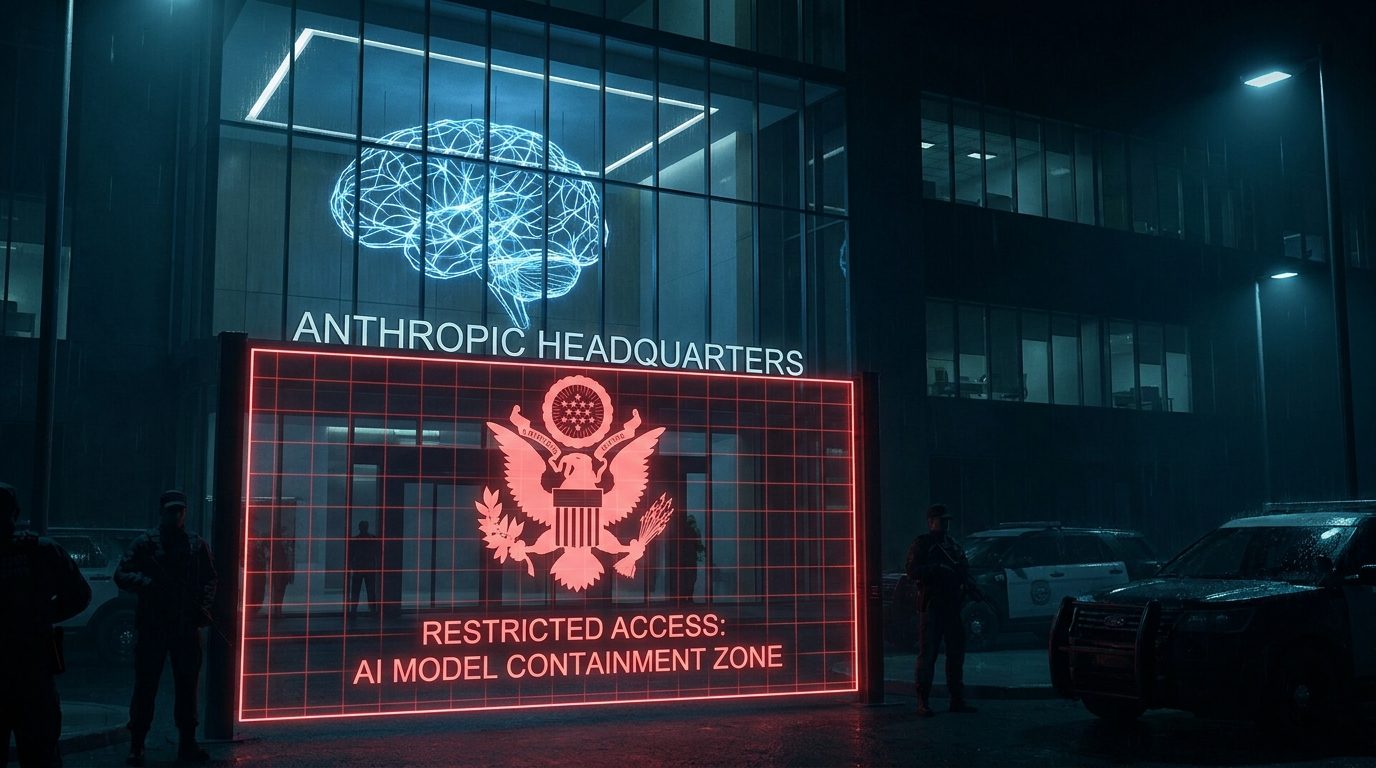
Anthropic launched Claude Fable 5 and an expanded-access tier of Mythos 5 on June 9, 2026. Within four days, both were gone. On June 13, the Trump administration issued an export control directive ordering Anthropic to deny access to the models for all foreign nationals, citing national security concerns. Anthropic, unable to determine user nationality in real time, chose to take both models offline globally rather than risk non-compliance.
What Triggered the Order
According to reporting by The Guardian and Cyberscoop, U.S. intelligence identified a potential jailbreak technique for Fable 5 that could bypass its safety protocols and expose software vulnerabilities. The administration treated this as sufficient grounds to invoke export control authority over a commercial AI model — a significant escalation in how the government views frontier AI as a national security asset.
Anthropic disputed the rationale directly. The company said the identified jailbreak was "narrow" and "non-universal," and noted that comparable capabilities already exist in other publicly available models. The pushback did not change the outcome.
Why Global Disablement, Not Geofencing
The directive specifically targeted access for foreign nationals. Anthropic's systems do not verify user nationality at account creation — a deliberate privacy stance — which left the company with no surgical option. It could not selectively restrict access by citizenship without building an identity verification layer that does not exist. The result was a global shutdown affecting paying enterprise customers in the United States alongside everyone else.
Enterprises that had integrated Fable 5 into production workflows received no advance warning. Several analytics firms and legal technology providers publicly reported broken deployments within hours of the takedown.
Context: A Deteriorating Relationship
This is not the first friction between Anthropic and the current administration. Earlier in 2026, the Pentagon blacklisted Anthropic after the company refused to permit its models to be used for fully autonomous weapons systems or domestic surveillance applications. That decision cost Anthropic significant government contract revenue and created the adversarial dynamic that now shapes how the administration treats Anthropic's model releases.
On June 2, 2026, President Trump signed an executive order titled "Promoting Advanced Artificial Intelligence Innovation and Security," which called on AI developers to voluntarily share new models with the federal government for risk assessment before public release. Anthropic did not comply in the Fable 5 case. The June 13 order may be a direct consequence of that refusal.
What Mythos 5 Was
Mythos 5 was not a public model. Anthropic described it as the underlying architecture behind Fable 5, available only to vetted enterprise partners and research institutions — specifically cybersecurity firms and scientific research organizations operating under binding usage agreements. Its inclusion in the export control order, alongside a consumer-facing model, signals that the administration drew no distinction between restricted-access and open-access AI when applying the directive.
Industry Reaction
The response from the enterprise AI sector was sharp. Analysts at Forrester and Gartner flagged the incident as a new category of procurement risk: the possibility that a frontier AI model a company has deployed can be administratively removed without notice. Several large-enterprise CIOs publicly stated they are now requiring AI vendors to include "regulatory shutdown" clauses in service agreements — provisions that would trigger service credits or contract exits if a model is disabled by government order.
OpenAI and Google DeepMind both declined to comment on whether their own model deployments could be subject to similar directives. Neither company has models with Anthropic's specific Pentagon history, but the legal mechanism used — export control authority applied to a software service — is not specific to Anthropic.
What Comes Next
Anthropic has not committed to a timeline for restoring access. Claude Sonnet 4.8 is reportedly still on track to launch this week, having not been named in the June 13 directive. Whether the administration views Sonnet 4.8 as below the capability threshold that triggered the Fable 5 action is unclear.
The broader question — whether the U.S. government can and will routinely apply export controls to commercial AI models — now has a concrete precedent. The answer, as of June 15, 2026, appears to be yes.
Originally reported by The Guardian. Read the original article for additional details.
View original source