US Approved Adding DeepSeek and 100+ Chinese Firms to Trade Blacklist, Then Held Back to Ease Beijing Tensions
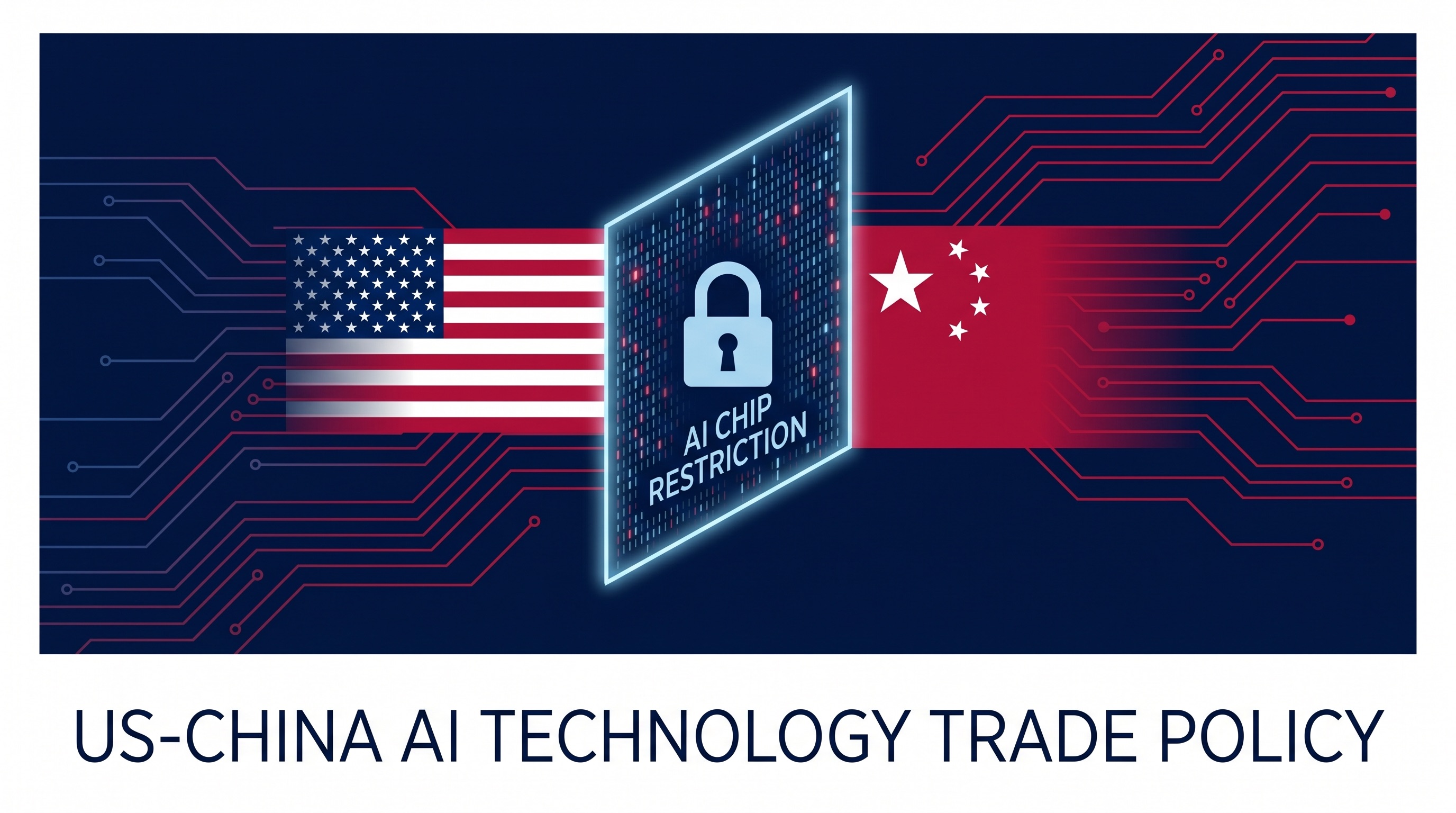
The Trump administration approved adding Chinese AI lab DeepSeek and more than 100 other Chinese companies to a trade blacklist, then deliberately held back from enforcing the decision in an effort to avoid escalating tensions with Beijing. The move — reported by Reuters and confirmed by multiple sources — reveals a widening gap between the US government's national security assessment of Chinese technology companies and its willingness to act on it.
What the Blacklist Decision Would Have Meant
Adding companies to the Commerce Department's Entity List restricts their ability to acquire US-origin technology, including semiconductors, software, and components. For an AI company like DeepSeek, blacklisting would have blocked access to NVIDIA chips (even through intermediaries), US cloud infrastructure, and hardware from American suppliers — effectively cutting off a core supply chain for AI development.
The interagency approval covered DeepSeek, ChangXin Memory Technologies (CXMT) — China's top memory chipmaker already designated as a "Chinese military company" by the Defense Department — and at least 75 other entities in advanced semiconductor production, semiconductor manufacturing equipment, and AI modeling. Additional companies on the approved list reportedly include firms that supplied drones recovered in Poland last September that were used by Russian forces, as well as companies that illegally sold restricted NVIDIA chips to Chinese universities.
The Security Case Against DeepSeek
The security concerns cited against DeepSeek are substantial. Anthropic stated it identified a campaign by DeepSeek and two other Chinese AI labs to illicitly extract capabilities from its Claude AI platform — essentially using Claude to help train and improve DeepSeek's models. OpenAI separately warned US lawmakers that DeepSeek was also targeting its models in the same way. Beyond model theft, US intelligence assessments indicate DeepSeek has supported China's military and intelligence operations, a claim the company has denied.
DeepSeek first drew global attention in January 2025 when it released an AI model that matched frontier Western models at a fraction of the reported training cost, triggering a sharp sell-off in US tech stocks and raising questions about export controls on AI chips.
Diplomacy Over Security Enforcement
The decision to hold back reflects the broader tension in US-China relations under the Trump administration, which has simultaneously pursued aggressive tariff negotiations and tech decoupling while trying to maintain channels for diplomatic engagement. Blacklisting over 100 Chinese companies, including one of China's most prominent AI exports, would likely have triggered a sharp response from Beijing at a sensitive moment in trade talks.
This is not the first time approved Entity List additions have been held back for diplomatic reasons. Critics of the approach argue that indefinitely deferring enforcement signals to Chinese companies that national security designations carry limited real-world consequence, undermining the deterrent value of the blacklist entirely. The story was originally reported by Reuters.
Originally reported by Reuters. Read the original article for additional details.
View original source