Uber and Pony.ai plan to deploy over 2,000 robotaxis across Europe and the Middle East
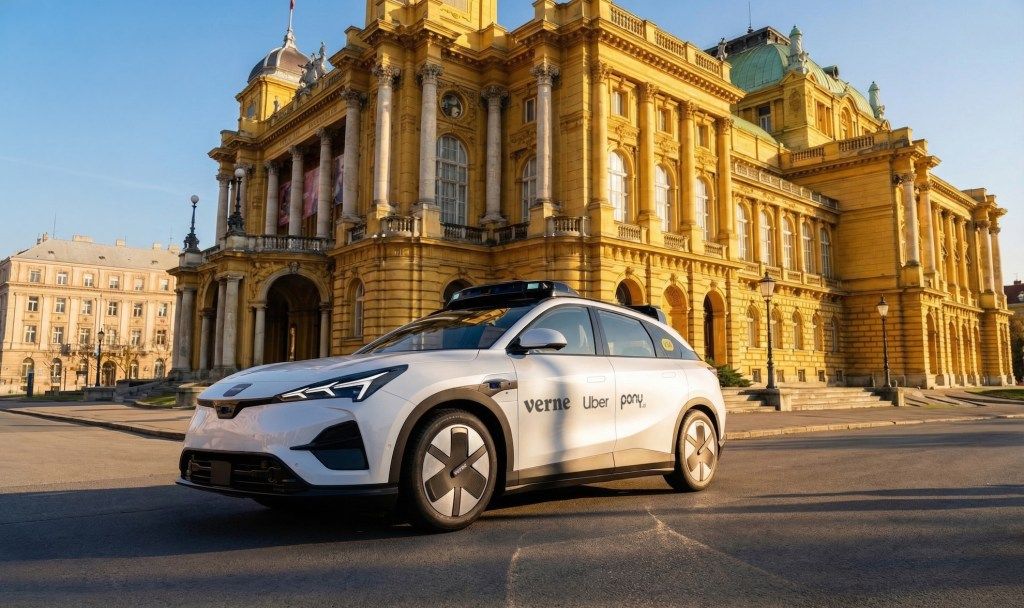
Uber and Pony.ai announced an expanded partnership on August 14 to deploy more than 2,000 robotaxis across Europe, with plans to extend into the Middle East as well. The announcement builds on the companies' first commercial robotaxi service in Europe, which launched in Zagreb, Croatia earlier this year, and will add four additional European cities revealed in phases going forward.
How the partnership actually works
The expansion runs on what Pony.ai calls a joint-deployment model, which splits a scaled robotaxi service into three distinct functions handled by three different specialized partners. Pony.ai supplies the Level 4 autonomous driving technology itself — the self-driving software and hardware stack. Uber contributes its ride-hailing platform and the rider demand that comes with it. A local operator, separate from either company, handles day-to-day fleet operations: maintenance, cleaning, charging, and the physical logistics of keeping vehicles on the road.
In the Zagreb launch, that local role was filled by Verne, a Croatian mobility company that also took on vehicle ownership for that market. Fleet ownership structure varies by city, meaning the specific mix of who owns, operates, and provides the software can differ from one European market to the next as the rollout expands.
Why the joint-deployment structure matters
Splitting a robotaxi service into three specialized roles — technology, demand platform, and fleet operations — addresses a problem that's slowed autonomous vehicle expansion elsewhere: no single company is naturally good at all three. Autonomous driving companies excel at the software and sensor stack but typically lack the existing rider base and app infrastructure a ride-hailing platform already has. Ride-hailing platforms have the demand and brand recognition but no expertise in physically maintaining and operating a self-driving vehicle fleet day to day. By explicitly dividing the work, the partnership avoids forcing any one partner to build competency outside its core strength — the model that let Waymo and other operators scale more slowly by handling all three functions themselves.
The bigger picture: China's AV tech reaching Western streets
Pony.ai is a Chinese autonomous driving company, and this expansion is a significant example of Chinese self-driving technology reaching commercial deployment on European roads at meaningful scale — a notable data point in an industry where geopolitical tensions have complicated cross-border technology deployment in other sectors, from telecom equipment to semiconductors. The partnership between Uber and Pony.ai dates back to May 2025, when the companies first announced plans to bring Pony.ai's robotaxis onto the Uber platform in international markets, with Europe's first concrete deployment taking shape in March 2026 through the three-way Zagreb deal.
The Middle East expansion adds another region to the partnership's footprint, with Qatar specifically named as a market where Pony.ai has already secured partnerships. Combined with the European rollout, the 2,000-vehicle target represents one of the largest announced robotaxi deployment plans outside the US and China to date.
As reported by TechCrunch.
Originally reported by TechCrunch. Read the original article for additional details.
View original source