Trump Confirms Apple Will Partner With Intel to Manufacture Chips in the US
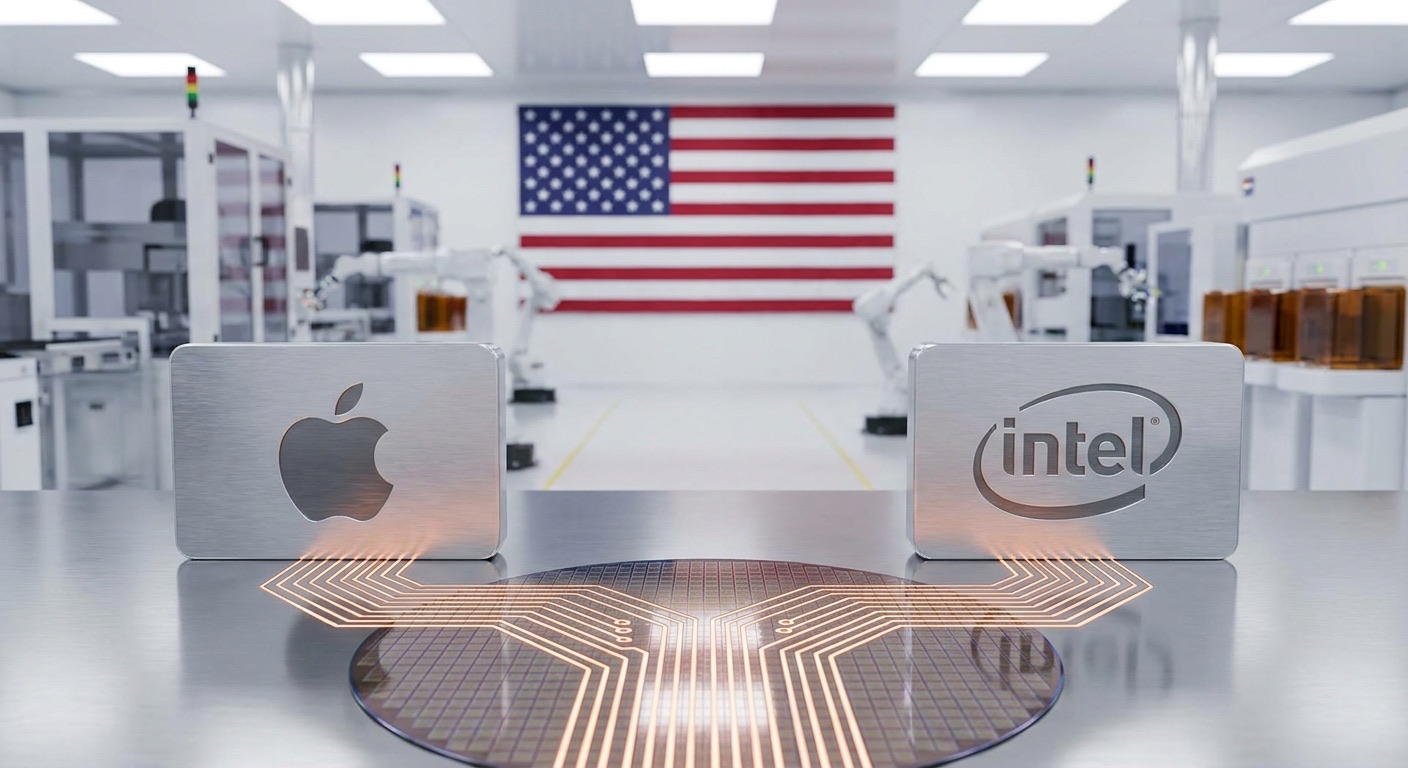
Apple has agreed to partner with Intel to manufacture some of its chips in the United States, President Trump announced on Truth Social on Thursday. The news sent Intel's stock up as much as 11 percent in premarket trading, pushing the company's market cap past $608 billion. Apple shares rose a more modest 0.6 percent. Neither company has issued an official statement, but The Wall Street Journal reported a preliminary agreement between the two companies last month, as first noted by MacRumors.
The deal marks a significant shift in Apple's supply chain strategy. Apple currently sources all of its custom silicon — the A-series chips in iPhones and the M-series chips in Macs and iPads — exclusively from Taiwan Semiconductor Manufacturing Co. (TSMC). Bringing Intel into the manufacturing chain would reduce Apple's dependence on a single Taiwanese supplier and respond to pressure from the Trump administration to anchor more semiconductor production on American soil.
What Intel Would Actually Make
The arrangement would see Intel manufacture chips based on Apple's own designs — the same model Apple uses with TSMC — rather than Intel-designed processors. Prior reporting and analyst commentary suggest Intel would initially handle lower-end chips: the entry-level M-series variants used in base iPad and MacBook Air models, or lower-priority components, while TSMC retains production of Apple's most advanced processors.
This is not a return to the pre-2020 era of Intel-designed CPUs in Macs. Apple completed its full transition to Apple silicon by mid-2023 and is expected to drop Rosetta 2 compatibility and drop Intel Mac support entirely with macOS 27 in Fall 2026. The Intel partnership is strictly a manufacturing arrangement — Intel as a foundry, not a chip designer.
Intel's Turnaround Makes This Possible
The deal would have been implausible two years ago. Intel's manufacturing arm spent years trailing TSMC and Samsung, struggling to ship competitive process nodes on time. The company's turnaround under CEO Lip-Bu Tan — who replaced Pat Gelsinger in 2024 — has materially changed that picture. Intel's stock has surged approximately 464 percent over the past 12 months. The US government converted $8.9 billion in unpaid CHIPS Act grants into a roughly 10 percent equity stake last year, giving Washington direct financial interest in Intel's success as a domestic foundry.
Winning Apple as a customer would be Intel Foundry's most significant external contract since the strategy shift, validating its process technology against the most demanding customer in the consumer electronics industry.
Geopolitical Context
Apple has been openly working to diversify away from TSMC's Taiwan operations since 2022, when geopolitical tensions over Taiwan sharpened. CEO Tim Cook said on Apple's most recent earnings call that a meaningful share of iPhones sold in the US are now manufactured in India. Shifting some chip production to Intel's US fabs — in Oregon, Ohio, and Arizona — extends that diversification to silicon manufacturing itself.
For the Trump administration, the deal reinforces the CHIPS Act investment thesis: that government support for domestic semiconductor manufacturing can attract private-sector anchor customers that would otherwise default to Asian suppliers. The details of the arrangement, including volume commitments and timelines, have not been disclosed.
Originally reported by MacRumors. Read the original article for additional details.
View original source