Tacta Systems unveils robotic hand with grain-of-sand touch sensors for manufacturing
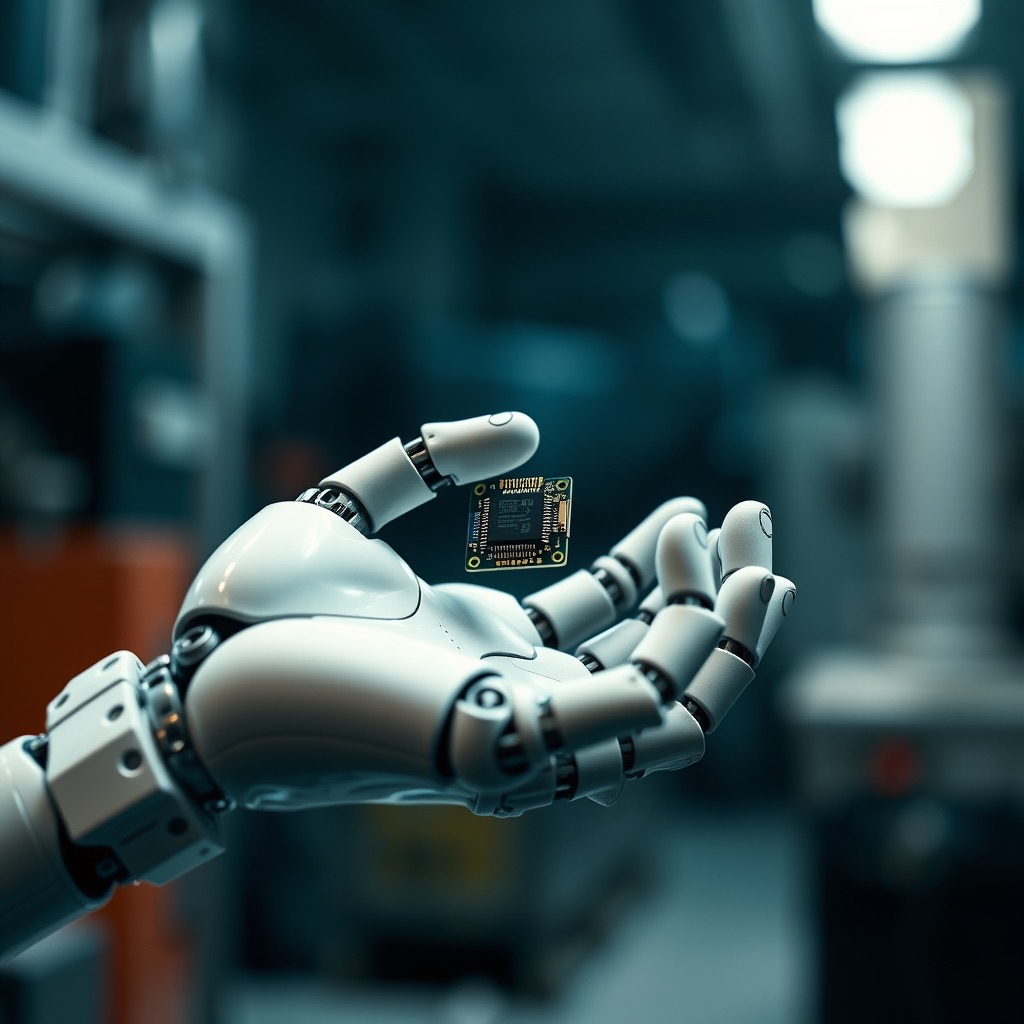
Tacta Systems unveiled its TactaBot system on July 27, 2026, a robotic hand designed to bring human-level touch and dexterity to manufacturing tasks that have resisted automation because they require tactile feedback rather than just visual guidance or brute mechanical force.
A Hand Built Around Touch, Not Just Grip
The Tacta Hand is a three-fingered end effector with 15 independently actuated joints, built to mount on off-the-shelf industrial robot arms. It uses a proprietary actuation method the company calls Fluidic Tendon technology, engineered for industrial-grade reliability across millions of cycles rather than lab-demo durability. The standout feature is its tactile sensors, which the company describes as smaller than a grain of sand, capable of detecting force across a dynamic range from 250 pascals — roughly the weight of a feather — up to 700,000 pascals, the force of an industrial clamp. The sensors sample 400 times per second, fine enough to detect subtle textures, resolve temperature changes within a tenth of a degree, and sense events like a screw beginning to bite into threads, a part starting to slip, or a cable pulling taut.
Training by Doing, Not Coding
The system's second half is Skill Capture, delivered through a companion Tacta Glove that uses the same tactile sensor technology as the robotic hand itself. Factory workers wear the glove and perform tasks naturally — no programming, no teleoperation rig, no motion-capture markers — and the glove records the physical nuances of their touch as structured data. That data trains Tacta's Dexterous Intelligence AI models, which then run directly on the TactaBot to drive the Tacta Hand. The company says the system keeps learning on the job, sharpening its model with every task it performs after deployment.
Backed by a $75 Million Raise
Tacta Systems previously disclosed $75 million in total funding: an $11 million seed round led by Matter Venture Partners, followed by a $64 million Series A led by America's Frontier Fund and SBVA, with participation from B Capital, EDBI, Sojitz Corporation, CDIB-TEN Capital, Yazaki Innovations, B5 Capital, Tyche Partners, and Woven Capital — Toyota's venture arm. The presence of Yazaki, a major automotive wiring-harness manufacturer, and Woven Capital signals specific interest from automotive supply chains, one of the three industries Tacta is targeting alongside electronics and AI infrastructure manufacturing.
Why Touch Has Been the Hard Problem in Robotics
Industrial robots have been reliably fast and strong for decades, but tasks like inserting a delicate connector, routing a cable without kinking it, or feeling whether a fastener has properly seated have remained largely human work because they depend on real-time tactile feedback that most robotic systems can't sense, let alone act on. Vision-based automation can guide a robot to a location, but it can't tell the robot whether a part just slipped or a screw is cross-threading. Tacta's bet is that solving tactile sensing at the hardware level, combined with capturing how humans actually perform these tasks rather than hand-coding robot motion paths, closes that gap for a specific class of high-precision assembly work.
What Comes Next
Tacta says it will begin deploying TactaBot with manufacturing partners in early 2027, starting in electronics, AI infrastructure hardware, and automotive assembly — three sectors where labor-intensive precision assembly is both expensive and hard to staff. Whether the system holds up to the millions-of-cycles reliability bar the company claims, outside of controlled demonstrations, will be the real test once it reaches production floors next year.
As reported by PR Newswire, with additional technical detail from The Information's AI Agenda newsletter.
Originally reported by PR Newswire. Read the original article for additional details.
View original source