SpaceX Starship Flight 13 aborts at ignition as four engines fail to start
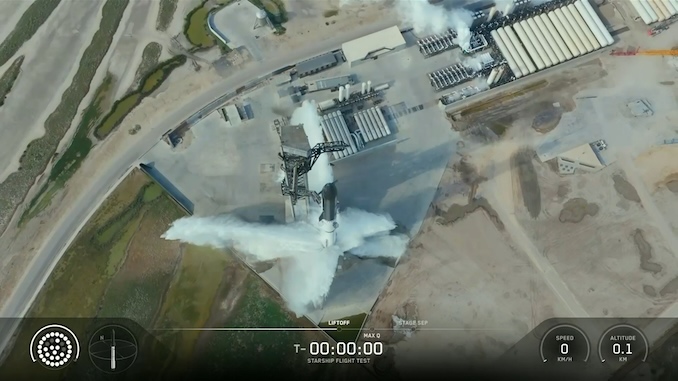
SpaceX's Starship Flight 13 ended seconds after its countdown reached zero on July 16, when four of the Super Heavy booster's engines failed to ignite as expected, triggering the vehicle's automated abort system. The mission was the first Starship flight test since SpaceX became a publicly traded company, and the first to attempt deployment of production-spec Starlink V3 satellites, as reported by Spaceflight Now.
What happened on the pad
The Super Heavy booster — Booster 20 — reached ignition at 5:45 p.m. CDT at SpaceX's Starbase facility in Boca Chica, Texas. Telemetry data on the live webcast showed four engines that failed to come online during the ignition sequence, crossing the threshold that triggers an automatic abort. "Some of the engines didn't start, triggering an automatic launch abort," Elon Musk wrote on X shortly after the scrub. The vehicle and launch infrastructure were undamaged.
SpaceX has not yet released a detailed technical explanation for why the four engines failed to ignite. The company is using Booster 20 and Ship 40 for this mission — freshly built hardware for the Version 3 configuration that first flew on Flight 12 in May 2026.
What Flight 13 was supposed to accomplish
The mission had three primary objectives: deploy 20 Starlink V3 satellites on a suborbital trajectory, demonstrating Starship's cargo deployment capability for the first time; attempt a relight of a single Raptor engine while in space; and execute a controlled entry, descent, and splashdown of the upper stage in the Indian Ocean. Starlink V3 satellites are significantly larger than the current V2 mini satellites flying on Falcon 9, and their deployment requires Starship's much larger payload bay.
Why this mission matters more now
Flight 13 carries unusual stakes: it's the first Starship test since SpaceX's stock market debut, meaning execution delays are now visible to public shareholders rather than just to internal stakeholders and government customers. NASA is also watching closely — Starship is central to the Artemis 3 lunar mission, which requires an orbital-capable Starship before it can proceed. SpaceX has repeatedly pushed back its internal orbital milestone, and the Flight 13 abort extends that uncertainty further.
Additionally, the Starlink V3 constellation is a strategic priority for SpaceX's revenue model. V3 satellites carry much higher throughput than their predecessors, and SpaceX needs Starship to deploy them at scale since they're too large for Falcon 9.
What's next
Musk said the next launch attempt is "hopefully in a few days," suggesting the engine issue is recoverable without major hardware changes. SpaceX has not issued an official statement with a new target date. Given the tight scrub-to-refly turnaround the company achieved on previous flights — sometimes as fast as a week — a late July attempt is possible if the root cause is identified quickly.
Originally reported by Spaceflight Now. Read the original article for additional details.
View original source