South Korea Commits $1.2 Trillion to Semiconductors and AI Infrastructure in Historic Tech Push
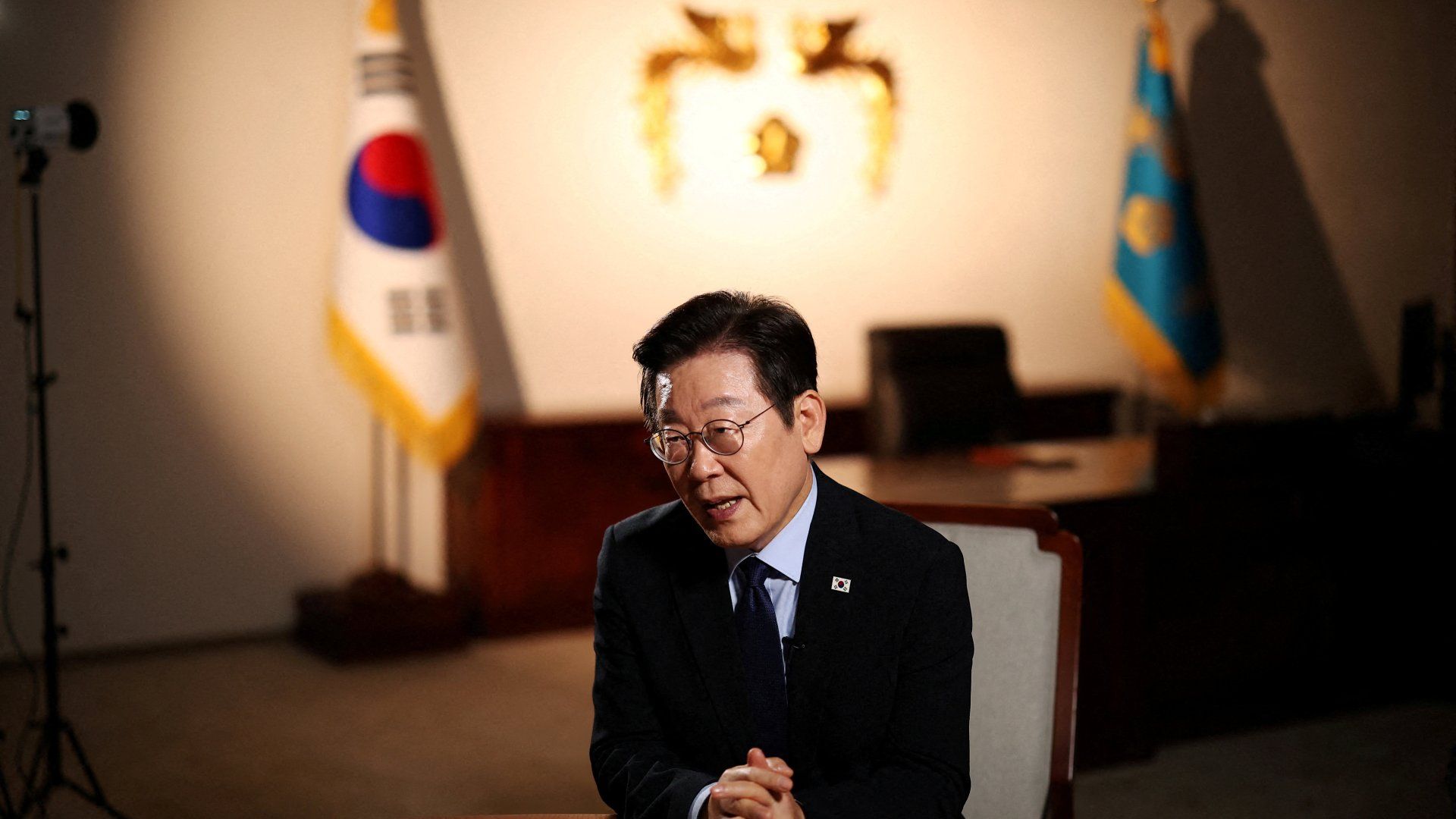
South Korea announced a $1.2 trillion investment program in semiconductors and artificial intelligence on June 29, 2026, the most ambitious national technology commitment any country has made. President Lee Jae-myung framed the plan as an existential imperative: "South Korea must secure the core elements of AI faster than any other nation."
The program runs on two parallel tracks. Samsung and SK Hynix will together spend roughly $520 billion to construct four new semiconductor fabrication plants in southwestern South Korea — two each — targeting completion by the mid-2030s. The second track allocates $650 billion over the next decade toward AI data center infrastructure: 550 trillion won in spending by 2029 and a single 10-gigawatt AI data center campus by 2035.
Why Now
The timing is not accidental. Samsung and SK Hynix are generating record profits driven by demand for High Bandwidth Memory, the specialized chip architecture that powers AI accelerators from Nvidia, AMD, and their competitors. South Korea produces the overwhelming majority of the world's HBM supply, and every major AI build-out — from hyperscale data centers to sovereign AI programs — runs through Korean memory fabs.
But that dominance is under pressure. The United States CHIPS Act is pumping subsidies into domestic semiconductor manufacturing. China is pushing aggressively to develop homegrown memory production despite export controls. Taiwan's TSMC dominates logic chip manufacturing and is expanding globally. South Korea's calculation is that the window to lock in manufacturing leadership before competitors scale up is narrow — and closing.
What the Fabs Mean
The four new plants will be located outside the Seoul metropolitan area, which the government has identified as strategically important both to reduce regional inequality and to distribute industrial infrastructure away from a single geographic concentration. As reported by Al Jazeera, the government's stated goal is to maintain "overwhelming market leadership" in memory chips — language that signals this is not merely a growth plan but a defensive one.
Each fab at this scale requires roughly 18–24 months of construction before equipment installation and another 12–18 months of qualification runs before volume production. The mid-2030s timeline for full output is realistic given those constraints, according to industry analysts cited by Tom's Hardware. The plants are expected to manufacture next-generation HBM variants alongside NAND flash, with capacity designed to absorb demand from the AI data center buildout occurring simultaneously.
The Data Center Track
A 10-gigawatt AI data center — the anchor of the infrastructure half of the plan — would be among the largest single computing campuses on earth. For scale: the entire US data center sector consumed roughly 200 gigawatts in 2024. A 10-GW facility represents approximately 5% of that capacity concentrated in one location, requiring dedicated power generation, water cooling infrastructure, and transmission buildout to match.
The 550 trillion won ($390 billion at current exchange rates) committed by 2029 will fund smaller data center deployments ahead of the 2035 anchor facility, creating an AI compute ecosystem that Korean cloud providers, enterprises, and government agencies can draw on domestically rather than routing workloads to US or European infrastructure.
Geopolitical Implications
South Korea's announcement lands at a moment of intense competition among major economies for semiconductor leadership. For AI hardware buyers globally, the commitment signals continued HBM supply availability and likely price stability in the medium term — both critical inputs for the economics of large model training and inference. For the US, Korea's independent investment reduces the pressure on CHIPS Act-funded domestic HBM development, but also underscores that the most critical AI memory supply chain will remain concentrated in a US-allied nation.
The $1.2 trillion figure combines public investment and private capital commitments from Samsung and SK Hynix. It dwarfs the US CHIPS Act ($52 billion) and the EU Chips Act (€43 billion) in absolute terms, though South Korea's program is more heavily weighted toward private sector execution. Whether the full commitment materializes will depend on continued AI-driven HBM demand — a condition that, for now, shows no sign of weakening.
Originally reported by Al Jazeera. Read the original article for additional details.
View original source