Solid-State Battery Breakthrough Delivers 800-Mile Range for Electric Vehicles
Quantum Energy Systems Achieves Record 550 Wh/kg with Commercially Viable Cell
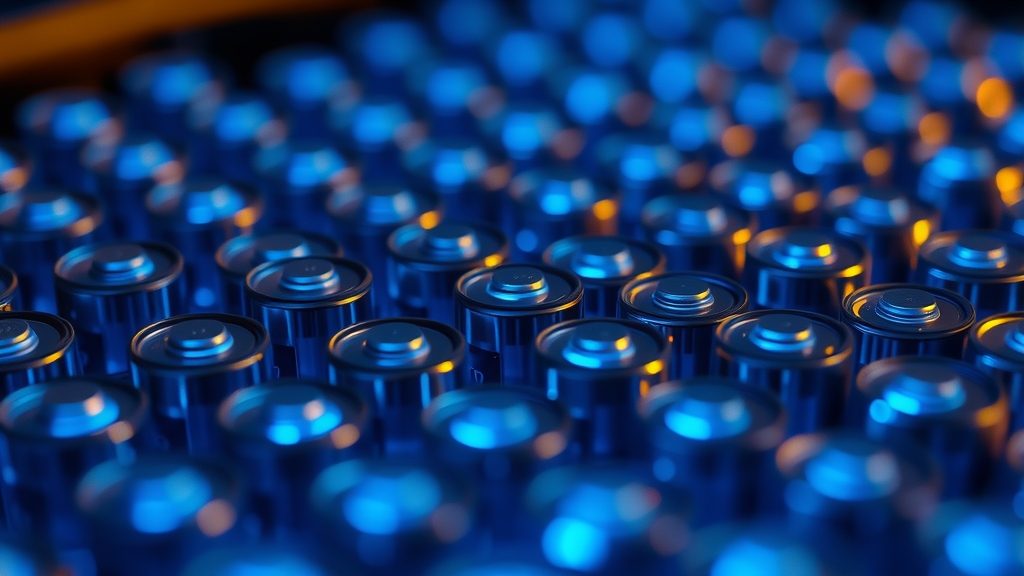
May 9, 2026 – Electric vehicles are on the verge of a paradigm shift after startup Quantum Energy Systems (QES) announced today that it has produced a solid-state battery cell with an energy density of 550 watt-hours per kilogram (Wh/kg) — more than double the best current lithium-ion cells and enough to give a midsize sedan over 800 miles of real-world range. The company claims the cell can be manufactured at cost parity with today’s lithium-ion packs.
“This is the moment the industry has been waiting for,” said Dr. Elena Voss, QES founder and CEO. “Our solid electrolyte, combined with a lithium-metal anode and high-nickel cathode, eliminates the dendrite problem that has plagued every previous attempt. We have produced over 100 cells that maintain 90% capacity after 1,500 charge-discharge cycles.” The cells were independently verified by the National Renewable Energy Laboratory (NREL) and two automotive OEMs that have signed non-disclosure agreements.
The breakthrough solves the two key obstacles to solid-state commercialization: dendrite growth (which causes short circuits) and the need for high-pressure compression. QES uses a proprietary glass-ceramic electrolyte that remains stable at room temperature and requires no external pressure, making it compatible with existing battery pack assembly lines.
Implications for the EV Market
An 800-mile range would eliminate range anxiety entirely, even for long-haul trucking. A fully loaded Class 8 truck could travel over 600 miles on a single charge, potentially making diesel an unnecessary backup. Consumer vehicles could see a 400-mile standard range with smaller, lighter batteries, freeing up space and weight for comfort and cargo.
“This changes the economics of electric vehicles,” said automotive analyst Kenji Tanaka of Mobility Futures. “If QES can scale production as promised, legacy automakers will have to accelerate their platform redesigns. We could see production vehicles with this tech by late 2027.”
QES plans to open a pilot production line in Fremont, California, by Q3 2026, with capacity to supply 50,000 packs per year. The company has already secured offtake agreements with two unnamed major automakers and a European energy storage consortium.
Technical Details and Safety
The cell operates at a voltage of 4.5V and can charge to 80% in 15 minutes using standard DC fast chargers. Unlike conventional lithium-ion cells, the solid electrolyte is non-flammable, reducing fire risk. Thermal runaway is not possible because there is no liquid electrolyte to ignite. “Safety tests show no failure mode at temperatures up to 300°C,” said Dr. Voss. “We have also passed nail penetration and crush tests without incident.”
However, scaling from lab cells to mass production remains a daunting engineering challenge. Solid-state manufacturing requires precise layer deposition and defect-free interfaces. QES uses a roll-to-roll process adapted from thin-film solar panel production, which it says can achieve 95% yield.
Competitors including Toyota, Samsung SDI, and Solid Power have all announced timelines for solid-state commercialization, but none have demonstrated a cell exceeding 400 Wh/kg in a fully packaged form factor. QES’s achievement is the first to break above 500 Wh/kg in a commercially relevant prototype.
Market Reaction
Automotive stocks reacted swiftly. Shares of Tesla, BYD, and battery suppliers like CATL and LG Energy Solution dipped 2–5% on concerns that legacy players might be disrupted by the new technology. QES, which is still privately held, saw secondary market valuations jump 40% according to sources. “This is a game-changer,” said Tanaka. “The era of range constraints is ending.”
Reporting by Jamie Torres. Additional sources: NREL validation report QES-2026-05; QES press release; interviews with analysts.
Originally reported by EV Insider. Read the original article for additional details.
View original source