SK Telecom's data center arm seeks $350 billion for first phase of a 15GW AI buildout
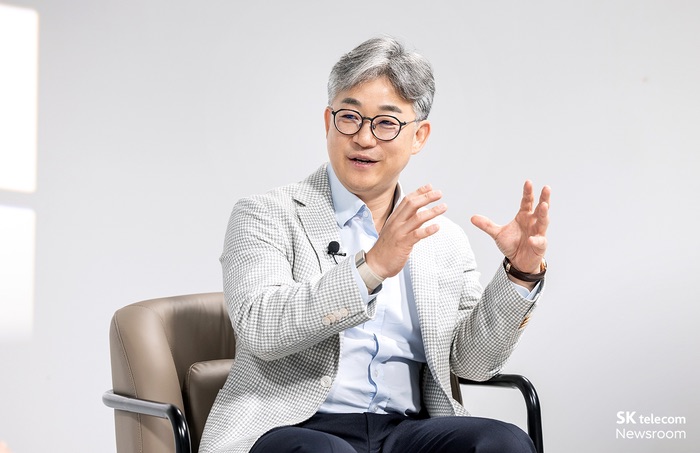
SK Hyper, the AI data center subsidiary of SK Telecom, is seeking roughly $350 billion (463 trillion won) to fund the first 5GW phase of a planned 15GW AI data center buildout across South Korea by 2035. CEO Chung Suk-keun disclosed the financing search in an interview on Bloomberg TV's "Bloomberg Tech: Asia" on October 22, saying the company is in talks with global technology companies and financial investors, as first reported by Seoul Economic Daily.
The scale puts the ask among the largest single infrastructure financing efforts tied to the AI buildout anywhere in the world. For comparison, South Korea's entire data center market today is roughly 1GW, according to Chung — meaning SK Hyper's first phase alone targets five times the country's current total capacity, before the plan even reaches its full 15GW scope.
Why this is happening now
SK Hyper was formally approved as an SK Telecom subsidiary in July 2026, with SK Telecom committing up to 750 billion won (~$510 million) toward it in stages through 2030 — a fraction of the capital the buildout actually requires. That gap is the point of the new fundraising push: SK Hyper plans to raise its first external capital round in late 2026 or early 2027, then continue raising over the following three to four years, sharing total project costs with data center tenants and outside investors rather than carrying the capital expenditure alone.
The first phase centers on a cluster exceeding 2GW in South Korea's Yeongnam region, anchored by the Ulsan AI data center, with additional gigawatt-scale sites planned for the Chungcheong and southwestern regions. Phased operations are targeted to begin in 2029, with Chung saying revenue could start arriving even earlier. Expansion beyond the first 5GW toward the full 15GW target depends on confirmed global customer demand materializing, not a fixed build schedule.
The demand SK Hyper is betting on
SK Hyper is in discussions with unnamed global hyperscalers about locating AI inference infrastructure in South Korea, alongside training compute capacity, and is targeting demand from Japan and Taiwan in addition to domestic sovereign and enterprise AI customers. Chung framed the competitive stakes directly: "Now what matters is who can generate tokens at the lowest cost and achieve the highest efficiency."
That statement doubles as an acknowledgment of the risk. AI data center economics only work if token-generation costs keep falling and demand keeps rising in step with the power and compute being built — an assumption investors have grown more skeptical of in 2026 as scrutiny of AI infrastructure credit risk and profitability has intensified. Chung named securing confirmed global demand and raising the capital itself as SK Hyper's two biggest challenges, a more candid framing than most infrastructure announcements offer.
How this fits the broader picture
SK Hyper's ask sits inside a larger commitment from SK Group: chairman Chey Tae-won has discussed roughly 1,000 trillion won (~$648 billion) flowing into AI data centers group-wide by 2035. SK Telecom has also structured financing outside its own balance sheet before — it separately spun off SK Horizon, a data center unit backed by a combined $2.2 billion from KKR and an IMM Investment–Stonebridge consortium, suggesting SK Hyper's search for outside capital follows a now-familiar pattern inside the group rather than a one-off necessity.
If SK Hyper's first funding round closes on anything close to the scale being discussed, it would mark one of the largest private AI infrastructure financings globally this year, and a signal that South Korea intends to compete directly with the US and Gulf states for position as a regional AI compute hub — assuming the hyperscaler demand Chung is counting on actually shows up on the timeline the financing requires.
Originally reported by Seoul Economic Daily. Read the original article for additional details.
View original source