Samsung Commits $648 Billion to South Korea in the Largest Corporate Investment Pledge in the Country's History
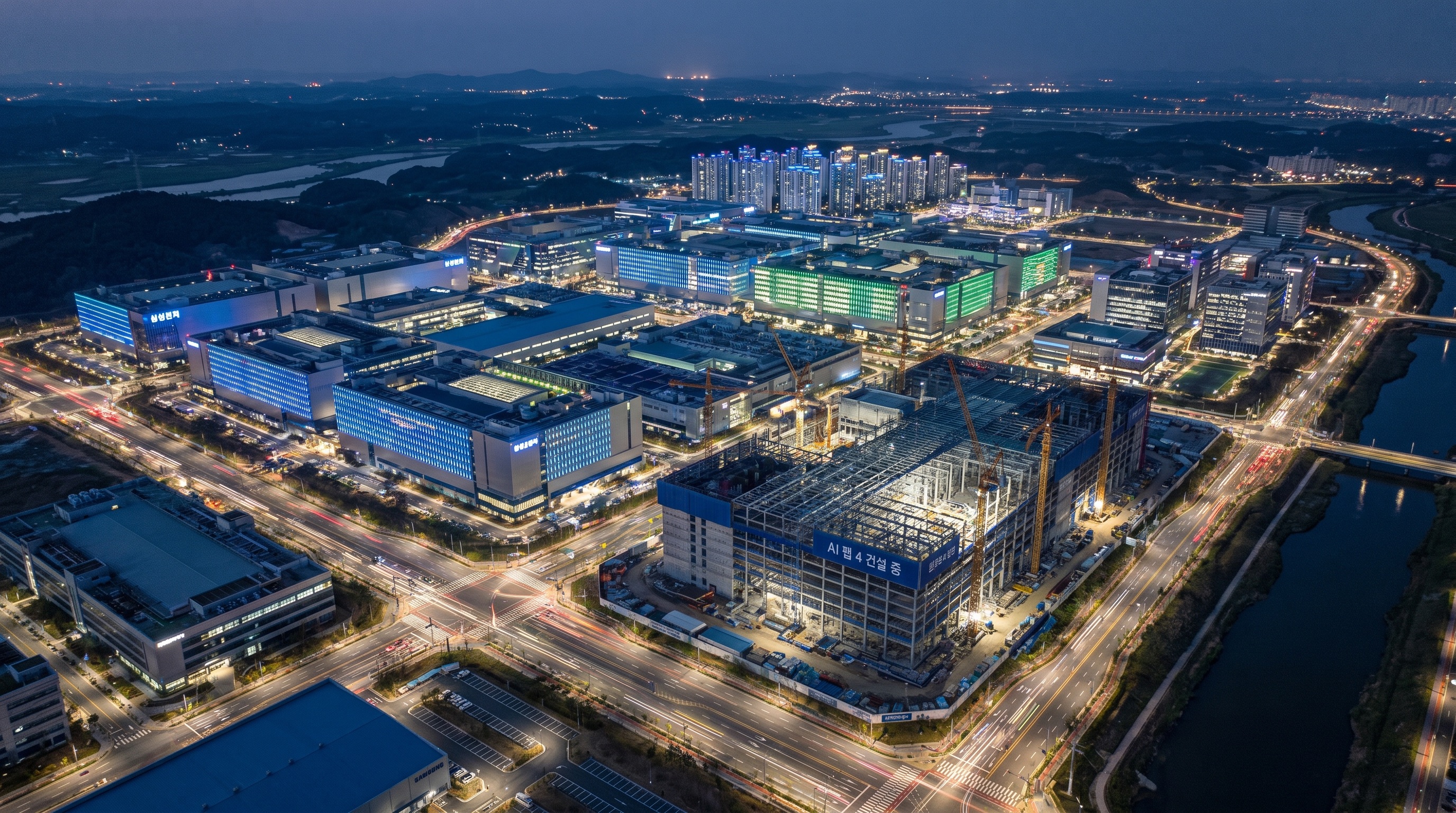
Samsung Group announced a 10-year investment commitment of 1,000 trillion won — approximately $648 billion — in South Korea on June 26, 2026, making it the largest corporate investment pledge in the country's history. The announcement came at a meeting between Samsung Electronics and SK Hynix executives and President Lee Jae Myung at the presidential office, and covers semiconductors, AI data centers, batteries, and displays.
What the Money Is Buying
The investment breaks into several streams. Approximately 300 trillion won is earmarked for chip manufacturing plants in South Korea's southwestern region — a significant geographic choice that doubles as a political one. A separate 60 trillion won covers six semiconductor fabrication facilities at Yongin, south of Seoul. The largest single allocation — more than 350 trillion won — goes toward AI infrastructure, including data centers built to service the surge in compute demand driven by large language models and AI training workloads.
The remaining commitments cover next-generation battery manufacturing and display technology, two sectors where Samsung remains a dominant global supplier despite intensifying competition from Chinese manufacturers.
The Infrastructure Argument
The strategic rationale behind the southwestern focus is partly practical. Seoul, which accounts for 52.8% of South Korea's GDP and hosts most of the country's existing semiconductor infrastructure, is running into physical limits. Government officials stated that the capital's power and water supply cannot accommodate the chip demand forecast for the mid-2030s, when AI training and inference workloads are projected to require substantially more energy and cooling capacity than current data center stock can provide.
By distributing investment across southwestern Korea — where land, power grid capacity, and water access are more available — Samsung is building ahead of constraints rather than around them. The Gwangju area, a focal point of the southwestern push, has historically been underinvested in industrial infrastructure relative to the Seoul-Gyeonggi corridor.
The Political Dimension
President Lee's "balanced regional development" agenda is also at play. Opposition lawmakers publicly criticized the initiative, accusing the administration of pressuring companies to channel investment toward the southwestern stronghold where Lee won approximately 85% of the presidential vote. The accusation reflects a recurring tension in South Korean industrial policy between national competitiveness and regional politics. Neither Samsung nor the presidential office addressed the criticism directly.
Why This Scale Matters Globally
To put $648 billion in context: it exceeds the entire annual GDP of Sweden. It is more than twice the total capital expenditure announced by TSMC for its global expansion through 2028. For a single corporate group — not a government — to commit that figure over a decade signals that Samsung is treating AI infrastructure as its defining bet for the 2030s, not a tactical allocation.
South Korea already produces the majority of the world's DRAM and a significant share of NAND flash. Samsung's HBM (High Bandwidth Memory) is the primary memory type used in Nvidia's AI accelerators. Expanding domestic manufacturing capacity at this scale reinforces South Korea's position as an irreplaceable node in the global AI compute supply chain — particularly relevant as geopolitical pressure pushes major economies toward supply chain resilience over pure cost efficiency.
The investment is a plan, not yet construction. The 10-year timeline, political headwinds, and global market conditions could all shift the allocation. But for now, it is the clearest signal yet that one of the world's largest technology conglomerates sees AI infrastructure demand as a decade-long construction project, not a cycle.
Originally reported by Reuters / Investing.com. Read the original article for additional details.
View original source