Rocket Lab Acquires Iridium in $8 Billion Deal to Build an Integrated Space Empire
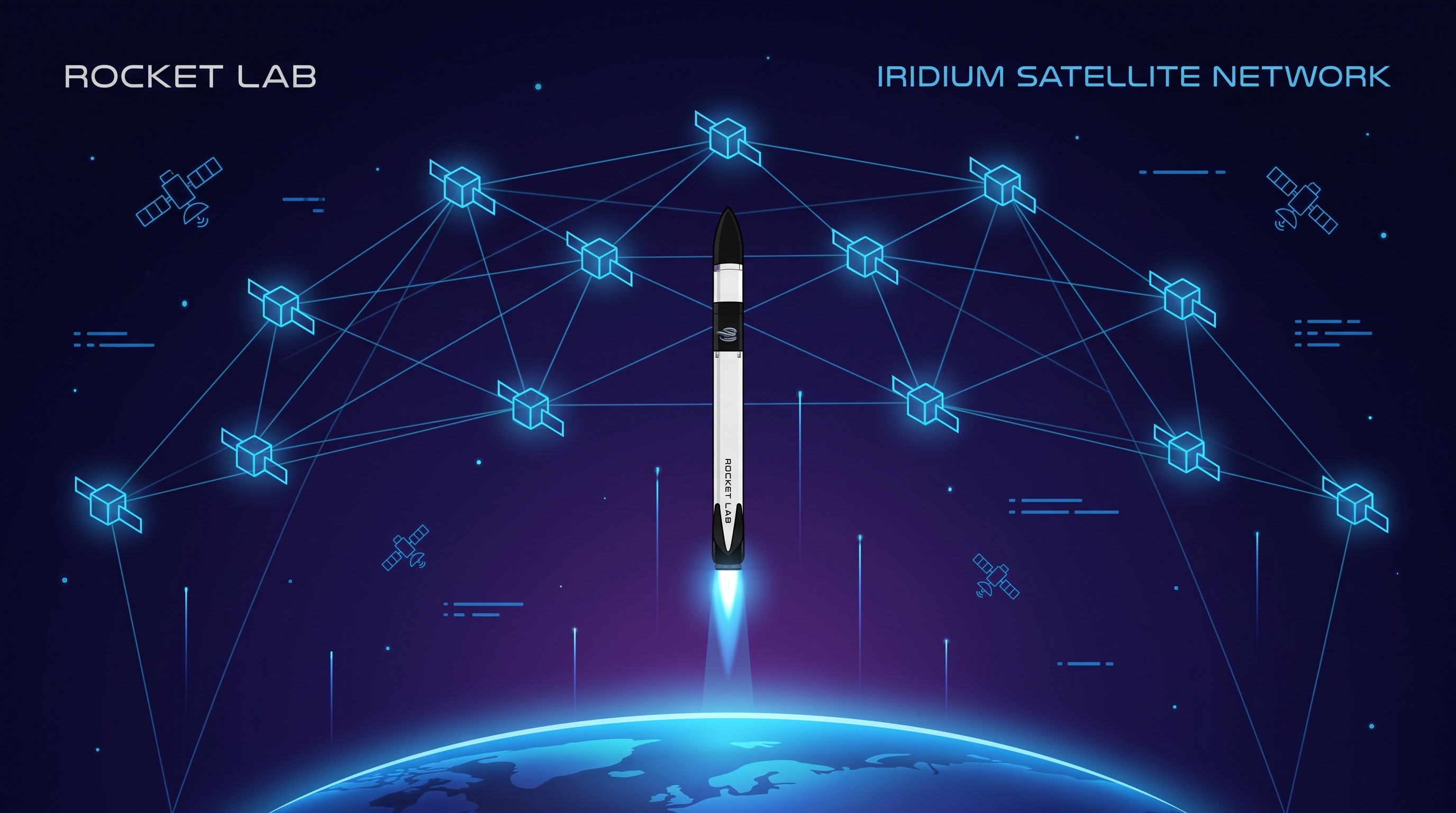
Rocket Lab announced Monday it will acquire Iridium Communications in an $8 billion deal that transforms the launch startup into a full-stack space infrastructure company — one capable of building, launching, and operating its own satellite network.
Under the agreement, Rocket Lab will pay $54 per Iridium share in a half-cash, half-stock transaction, representing a 24.1% premium over Iridium's last closing price. The deal values Iridium's enterprise at approximately $8 billion and is expected to close in mid-2027, pending shareholder and regulatory approvals.
What Iridium Brings to the Table
Iridium operates a constellation of 66 satellites in low Earth orbit that provide global voice and data coverage — including in polar regions where geostationary systems cannot reach. The network serves more than 2.55 million subscribers across government, defense, aviation, maritime, and commercial markets, with unique L-band spectrum licensing that covers virtually every patch of Earth's surface.
That spectrum is the crown jewel of the deal. L-band spectrum is globally licensed, low-latency, and penetrates building materials and adverse weather in ways higher-frequency bands cannot. It is particularly valuable for Internet of Things devices, emergency communications, and military use cases — all high-growth, high-margin segments.
Rocket Lab's Vertical Integration Play
Rocket Lab has spent the past several years building capabilities well beyond launch: it now manufactures solar panels, reaction wheels, and satellite buses through its space systems division. The Iridium acquisition completes the vertical integration picture — from components to launch to satellite operations to end-user connectivity.
The ambition echoes SpaceX's trajectory with Starlink, though at a different scale. Where Starlink serves mass-market broadband consumers with thousands of satellites, the Rocket Lab-Iridium combination targets specialized, mission-critical use cases where Iridium's proven reliability and global coverage command premium pricing.
Market Reaction and Competitive Context
Rocket Lab shares rose roughly 9% on the announcement while Iridium surged 20%. CNBC reported the deal as a sign that the satellite consolidation wave — driven by the need for scale in an increasingly competitive space economy — is now reaching smaller, specialized operators.
The timing matters: SpaceX's Starlink continues to expand, Amazon's Project Kuiper is rolling out, and Eutelsat OneWeb is seeking partnerships. Remaining independent becomes harder as launch costs fall and larger constellation operators achieve greater economies of scale. For Iridium, Rocket Lab offers a path to relevance through integration rather than being squeezed out by the larger players.
What Comes Next
The combined company will need to navigate complex regulatory reviews, particularly around Iridium's defense contracts and spectrum licenses. Iridium's Department of Defense relationships — the U.S. military is a core customer — add both value and scrutiny to the deal. Shareholders are expected to vote on the transaction later this year.
If approved, the deal would mark Rocket Lab's most ambitious pivot yet: from a small-satellite launch provider to an integrated space services company with a captive network, global spectrum, and a proven subscriber base — a position from which it could compete directly with much larger players in the growing commercial space economy.
The acquisition was announced jointly by Rocket Lab and Iridium Communications on June 29, 2026, as first reported by CNBC and The Next Web.
Originally reported by CNBC. Read the original article for additional details.
View original source