OpenAI replaces ChatGPT's Advanced Voice Mode with full-duplex GPT-Live models
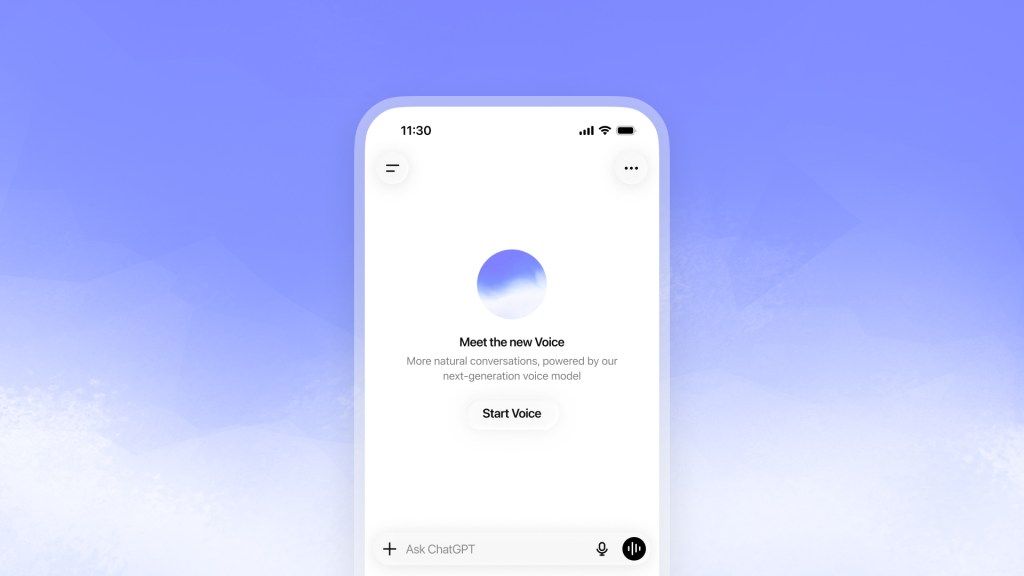
OpenAI on July 8 launched GPT-Live, a pair of new voice models — GPT-Live-1 and GPT-Live-1 mini — that can listen and speak simultaneously, replacing ChatGPT's older Advanced Voice Mode for over 150 million users worldwide.
The previous voice pipeline stitched together separate speech-to-text, language model, and text-to-speech stages. Each handoff added latency and made the system unable to respond naturally to mid-sentence interruptions. GPT-Live collapses all three into a single model that processes raw audio in real time, much the way a person stays engaged during a conversation without going into a processing pause.
What GPT-Live actually does
The system supports natural turn-taking — including appropriate back-channel cues like "mhmm" or staying silent while the user thinks — and can sustain conversations of 30 to 40 minutes, a notable extension over the previous voice experience. When a user's question requires web search, deeper reasoning, or complex agentic work, GPT-Live routes the request to GPT-5.5 in the background and weaves the result back into the voice conversation without an audible break. Visual formatting is also supported: the models can surface information as text or structured output on screen alongside the spoken response.
Built-in safeguards automatically apply age-appropriate responses for teenage users and provide resources when conversations touch on topics like self-harm.
Rollout and access
GPT-Live-1 mini is now the default voice experience for all ChatGPT users. Paid-tier subscribers get access to GPT-Live-1, the larger model with stronger performance on complex tasks. OpenAI has optimized both models for most widely spoken languages globally.
A live translation feature was demonstrated during the launch, though a Hindi demo drew attention for its heavy American accent and unnatural delivery — a reminder that real-time translation quality still has meaningful headroom for improvement.
Why this matters
OpenAI describes voice as becoming "the primary interface to computing" for extended, complex work — a framing that positions GPT-Live as infrastructure rather than a feature. More than 150 million people already interact with ChatGPT through Voice and Dictation. By pushing a full-duplex model to all users by default — not just a feature tier — OpenAI is making a structural bet that voice-first AI interaction is ready for mainstream use.
The shift also raises the competitive stakes for Google's Gemini Live, Apple Intelligence's voice layer, and other voice AI products that are still iterating on similar capabilities.
As first reported by TechCrunch, OpenAI's GPT-Live-1 mini is live now for all users, with GPT-Live-1 rolling out to paid subscribers.
Originally reported by TechCrunch. Read the original article for additional details.
View original source