Nvidia Halts H200 AI Chip Shipments to China, Citing No Public Explanation
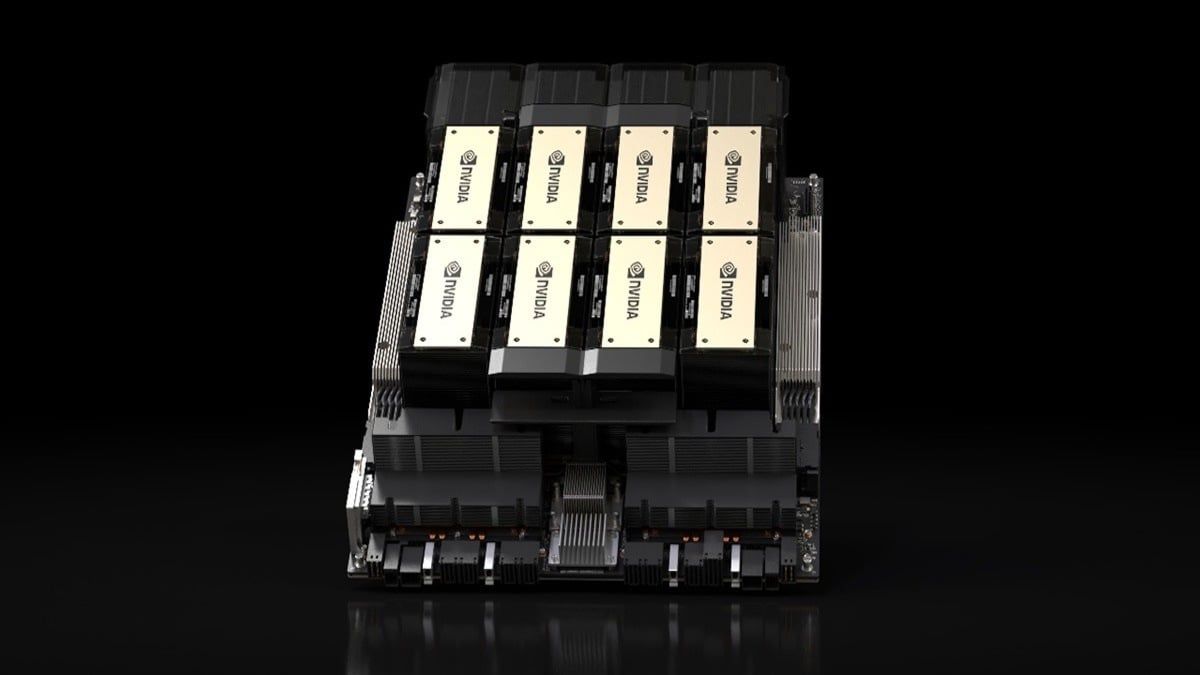
Nvidia has stopped shipping licensed Hopper-generation AI chips, including the H200, to China, interim CEO Colette Kress confirmed on the company's earnings call this week. Nvidia's forward guidance now excludes licensed Hopper data-center products entirely, and the company has given no public explanation for the halt or said whether it is permanent.
The shift removes a business that, while small relative to Nvidia's overall scale, was not negligible: licensed Hopper shipments to China generated $2.4 billion in revenue during the fiscal third quarter that ended in late October — roughly 2% of the company's total revenue for the period. Reports cited by multiple outlets say approximately 600,000 H200 chips were sitting in Hong Kong warehouses awaiting onward shipment to mainland China when the halt took effect, though Nvidia itself has not confirmed that figure.
The H200 shipments had only become possible after Washington relaxed export licensing rules in January, moving to a case-by-case review process for advanced AI chips bound for China. Under that framework, the U.S. Department of Commerce had approved H200 sales to at least 10 Chinese companies; Nvidia has not named which companies received approval, and reports naming specific buyers for other chip tiers like the H20 should not be assumed to apply to the H200 shipments covered by this halt.
Why the shipments stopped remains genuinely unclear. Beijing had separately moved to restrict H200 imports as part of a broader push to reduce China's reliance on American semiconductor technology, and it's possible the halt reflects Chinese-side restrictions rather than a unilateral US or Nvidia decision — but no party has confirmed that reading, and competing explanations remain unverified.
The timing adds to a difficult stretch for Nvidia. The shipment halt comes roughly a week after CEO Jensen Huang's resignation and the subsequent opening of a Securities and Exchange Commission civil investigation into whether Nvidia's disclosures misled investors — a probe reportedly tied in part to how Nvidia reported its Singapore sales figures. In response to the broader scrutiny around China exposure, Nvidia's board has formed a new panel focused specifically on national security and export-control compliance.
For China's AI sector, the halt removes near-term access to one of the more capable chips it had legally obtained through the licensing process, at a moment when Chinese AI labs have increasingly turned to domestic alternatives from SMIC and Huawei to reduce dependence on any US supply that could be revoked. Nvidia's results this week showed the broader business remains strong — a record quarter that drew attention mostly for how little the China segment now contributes relative to its past share of revenue.
As reported by CBS News and confirmed on Nvidia's fiscal third-quarter earnings call.
Originally reported by CBS News. Read the original article for additional details.
View original source