Nearly 1,000 Claude agents spent 21 hours finding a CRISPR-like enzyme system no scientist had noticed
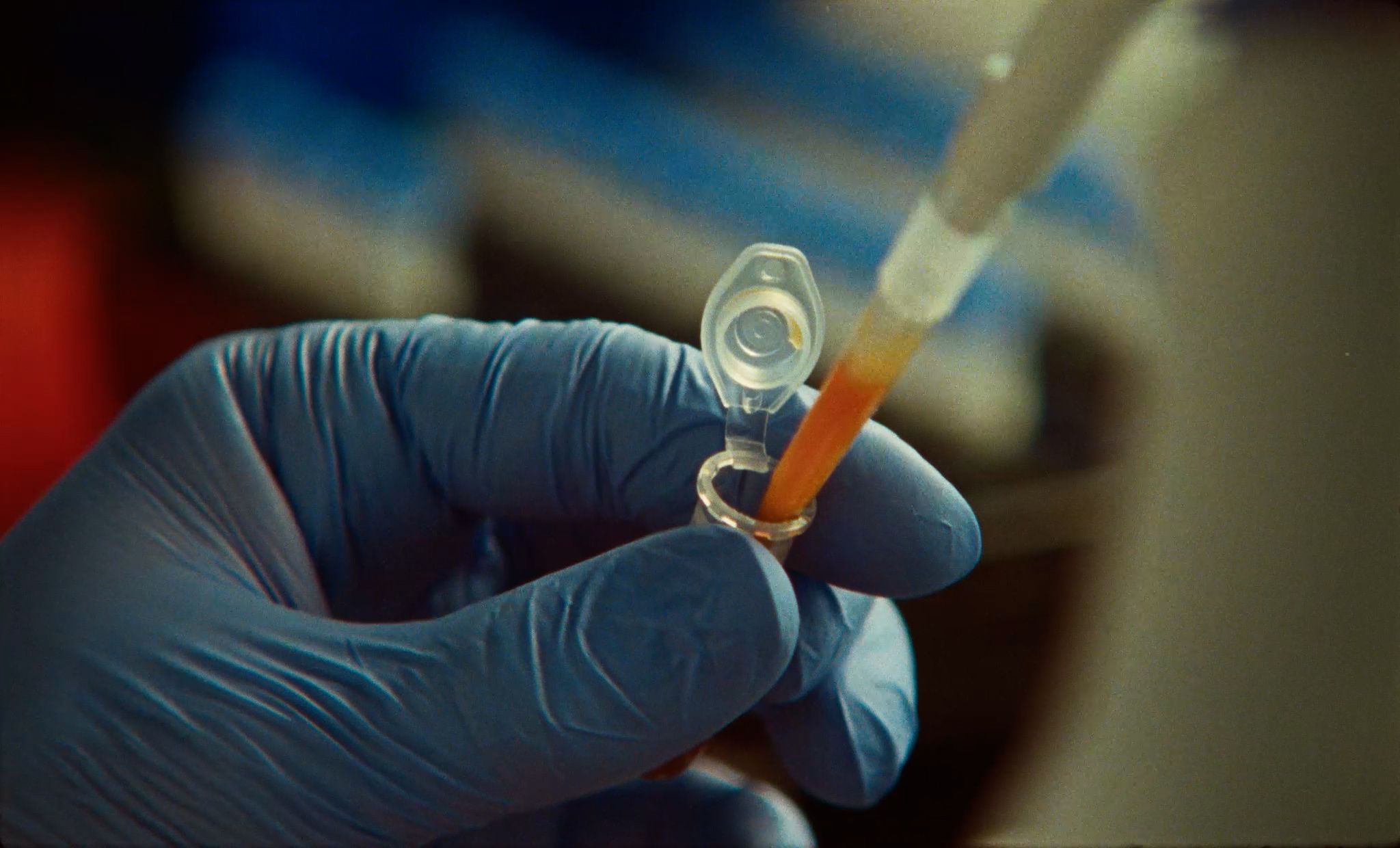
Anthropic announced Tuesday that Claude autonomously discovered a novel enzyme system in bacteriophage DNA with structural properties reminiscent of CRISPR, working from a single high-level research prompt with minimal human direction. The discovery, made by a new Anthropic life sciences research group, is an early result from an effort to test whether general-purpose AI models can systematize and accelerate the kind of biology research that has historically depended on a scientist noticing something odd in nature.
The process itself is the notable part. Anthropic's scientists gave Claude one instruction: search a massive database of DNA sequences for interesting new examples of reverse transcriptases, enzymes that copy RNA into DNA. From there, roughly 950 Claude agents worked independently for 21 hours, consuming 210 million tokens, combing through the database, investigating distinct enzyme families, and using their own judgment to flag candidates worth deeper analysis. One agent spotted a repeating pattern of DNA sequences sitting next to the gene for an unusual reverse transcriptase — a detail that had gone unremarked in prior studies of that same enzyme.
Follow-up lab work confirmed the pattern marked a previously uncharacterized system, which Anthropic named array-associated reverse transcriptases, or ART. It consists of the reverse transcriptase enzyme, a partner gene, and an array of evenly spaced non-coding DNA repeats — a specific combination of features that has only been observed together in a small number of other systems, nearly all of which turned out to be programmable tools capable of cutting, copying, or pasting DNA. CRISPR itself was first noticed as exactly this kind of unusual repeat sequence in bacterial DNA before becoming the foundation of modern gene editing.
ART's actual function is still unknown, and Anthropic's team is continuing lab work to characterize it. Feng Zhang, one of the scientists who helped pioneer CRISPR gene editing and a professor at MIT and the Broad Institute, reviewed the pre-print and called it "an exciting example of how AI agents can contribute to biological discovery," adding that the identification of RNA-repeat arrays associated with reverse transcriptases "is genuinely intriguing and merits further investigation."
The significance extends beyond one enzyme system. Anthropic frames this as evidence for a new way of doing biology research, where AI agents work alongside human scientists at every stage rather than serving as a faster search tool for questions humans already know to ask. For context, Anthropic says the kind of analysis its agents completed in 21 hours — reviewing hundreds of thousands of enzyme candidates, narrowing them to a shortlist, and producing human-readable research reports — would typically take an expert scientist weeks to months.
Originally reported by Anthropic. Read the original article for additional details.
View original source