NASA's LINK Spacecraft Launches This Week to Save the Falling Swift Observatory
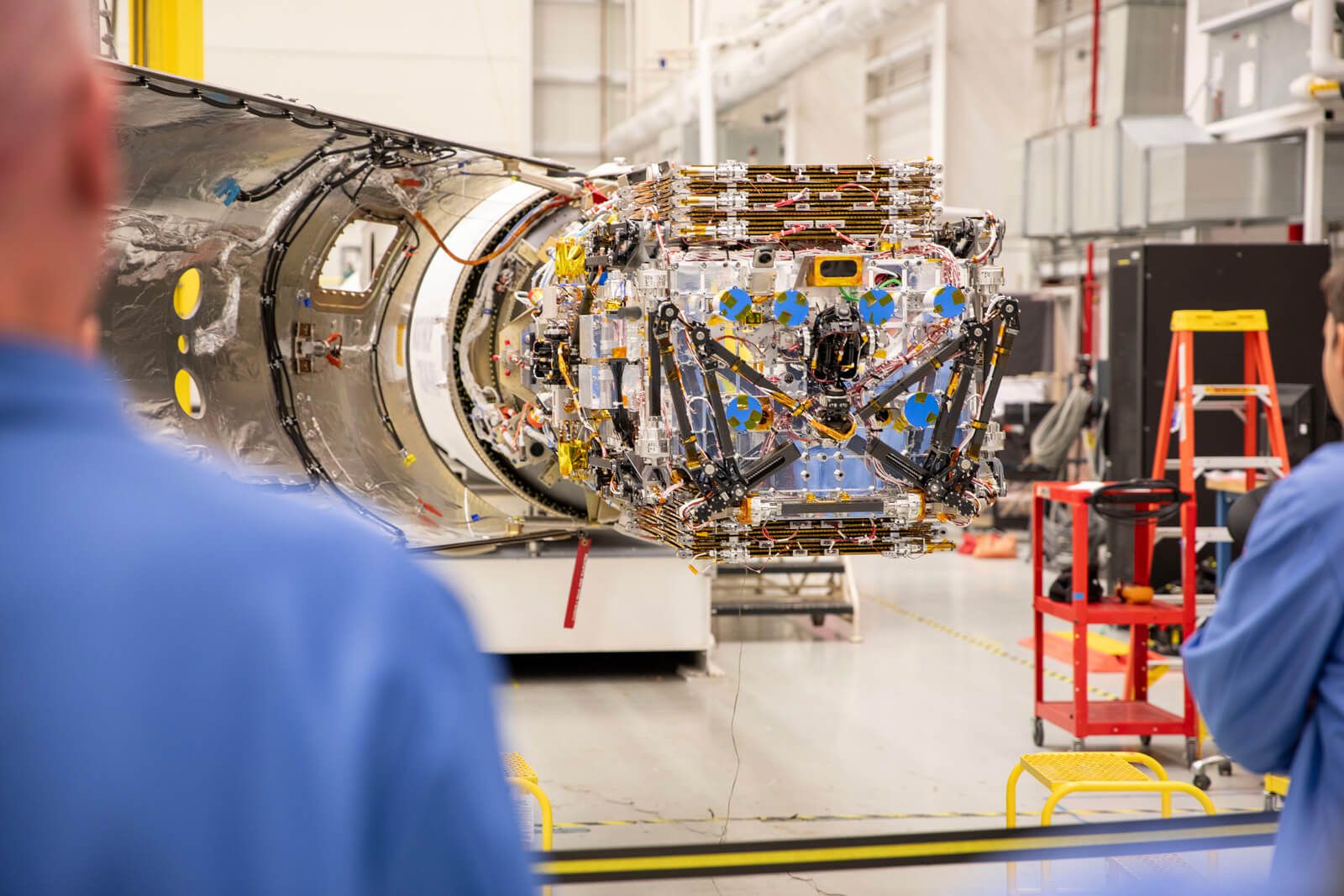
A robotic spacecraft called LINK is set to launch from Kwajalein Atoll in the Marshall Islands this week, kicking off the first-ever commercial robotic servicing mission for a government satellite not designed to be serviced in space. Its target: NASA's Neil Gehrels Swift Observatory, a 22-year-old space telescope losing altitude fast and on course to burn up in Earth's atmosphere by year's end without intervention.
A Race Against Orbital Decay
Swift launched in November 2004 to detect gamma-ray bursts — the most powerful explosions in the known universe. For two decades, it served as NASA's "first responder" in space: Swift can swing its instruments toward a sudden cosmic event within minutes, a turnaround that takes Hubble one to two days. It has catalogued more than 2,000 gamma-ray bursts and remains irreplaceable in NASA's astrophysics portfolio.
The problem: Swift has no thrusters to maintain its orbit. Atmospheric drag has been slowly pulling it down since launch, but intense solar activity in 2024 and 2025 expanded Earth's upper atmosphere, dramatically accelerating the decay. Swift's altitude has dropped from 363 miles at launch to just 225 miles as of last week. NASA estimates it will fall below the viable rescue threshold — roughly 186 miles — around October 2026, after which a reboost becomes impossible.
Built in Eight Months on a $30 Million Budget
In August 2025, NASA asked three companies whether they could pull off a satellite rescue in under a year. Katalyst Space Technologies, a Flagstaff, Arizona startup founded in 2020, said yes and presented the most technically credible plan. NASA awarded Katalyst a $30 million contract in September 2025, and the team built, tested, and shipped LINK in just eight months.
"What the Katalyst team has accomplished in just eight months is extraordinary," said Ghonhee Lee, Katalyst's CEO. "The team designed, built, tested, and integrated a robotic spacecraft capable of performing one of the most ambitious commercial servicing missions ever attempted."
LINK is roughly the size of a large refrigerator, weighing about 937 pounds, equipped with ion thrusters and three robotic arms. It will ride to orbit on a Northrop Grumman Pegasus XL rocket — an air-launched vehicle released from a modified L-1011 aircraft called Stargazer operating from Kwajalein Atoll in the Marshall Islands.
The Mission: Grab a Satellite That Wasn't Designed to Be Grabbed
Once in orbit, LINK will spend several weeks commissioning its systems before chasing down Swift. It will then autonomously rendezvous with the observatory — which has no docking ports and was never designed for in-orbit servicing — and use its three mechanical arms to latch on. After securing Swift, LINK's thrusters will push both spacecraft to a higher, safer altitude.
This is technically uncharted territory. "It's a different risk posture than NASA is used to working with," said Brad Cenko, Swift's principal investigator at NASA's Goddard Space Flight Center and a research astrophysicist who helped push for the mission. "When this opportunity came along, it was a tremendous relief."
Shawn Domagal-Goldman, director of NASA's astrophysics division, put it plainly: "I consider this a success already, just from the fact that we're even going to try this."
What Success Would Mean
If LINK pulls it off, Swift could continue operating into the 2030s, continuing to detect and characterize gamma-ray bursts, gravitational wave counterparts, and other transient high-energy events that other telescopes are too slow to catch. If the mission fails, NASA will allow Swift to reenter and burn up — the standard end-of-life for most spacecraft.
The mission also carries broader implications for the satellite industry. Hundreds of billions of dollars' worth of spacecraft routinely face premature retirement because there is no way to refuel or repair them in orbit. A successful LINK mission would demonstrate that robotic servicing of satellites not originally built for it is achievable, potentially opening a new market for on-orbit servicing at scale.
The mission was reported in depth by Space.com and Ars Technica, with additional coverage from Smithsonian Magazine, Forbes, and NASA's official press releases.
Originally reported by Ars Technica. Read the original article for additional details.
View original source