Microsoft embeds 6,000 AI engineers at enterprise customers with new $2.5B Frontier Company
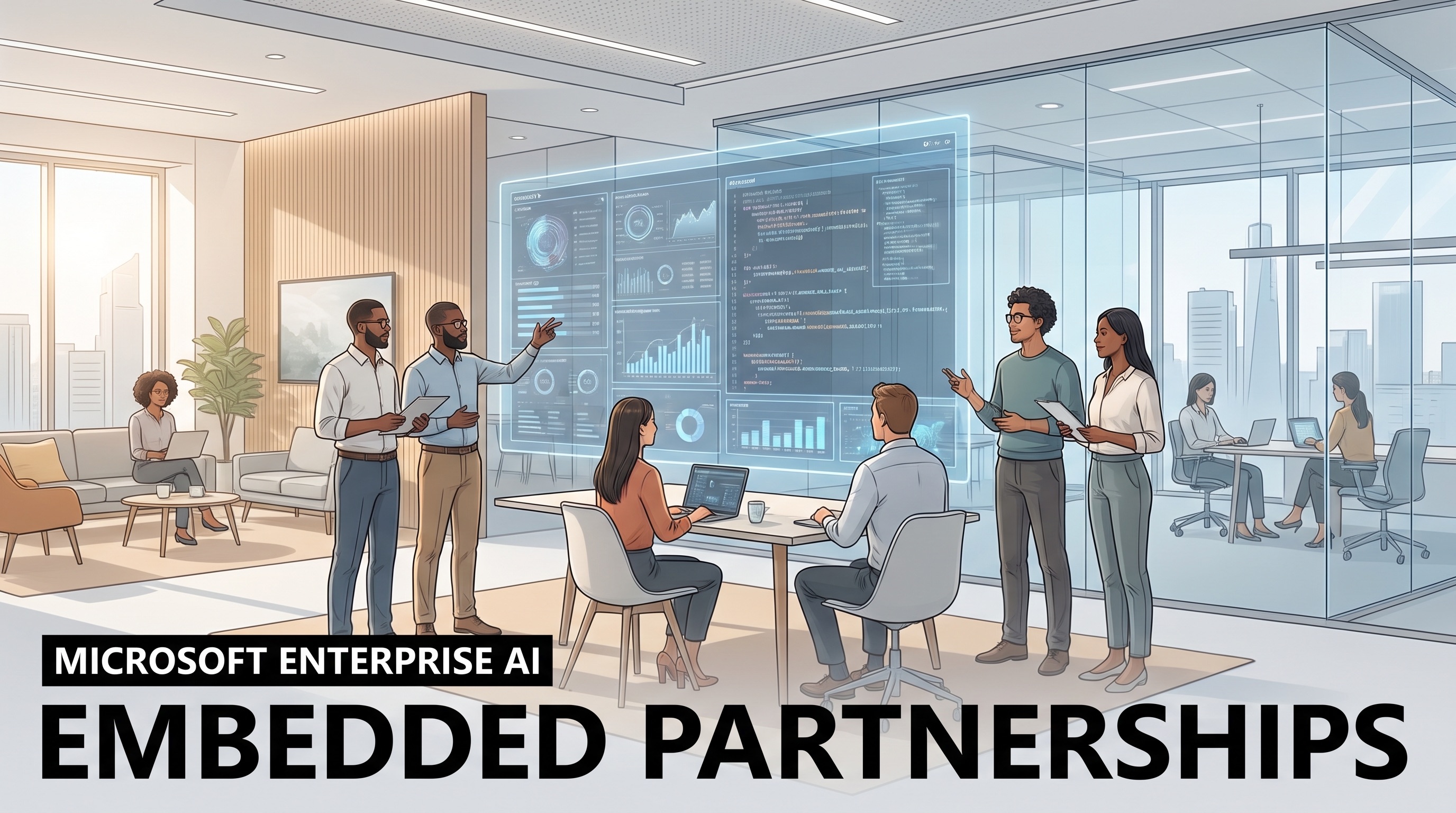
Microsoft launched the Frontier Company on July 2, a new operating business backed by a $2.5 billion investment that embeds 6,000 AI engineering and industry specialists directly inside enterprise customers. The goal: move companies past AI pilots and into deployments that deliver verifiable returns.
The announcement comes from Judson Althoff, Microsoft's Commercial Business CEO, who framed it as a direct response to a persistent complaint from enterprise buyers — that AI tools are multiplying faster than the results they generate. "Customers want measurable business outcomes and their enterprise IP protected," Althoff wrote in a blog post, adding that Microsoft's embedded teams will work alongside clients to swap out expensive models for cheaper alternatives and optimize AI spending through FinOps practices.
Forward-Deployed Engineering at Scale
The Frontier Company draws on the forward-deployed engineering (FDE) model — sending a firm's own technical staff to operate inside client organizations over extended periods. Palantir built its enterprise business on this approach. OpenAI and Anthropic have launched their own FDE units in recent months. Microsoft's iteration is positioning itself as the largest such operation in the industry, combining deep industry knowledge, change management expertise, and enterprise-grade AI engineering under a single unit.
Rodrigo Kede Lima, a Microsoft veteran who most recently served as president of Microsoft Asia, will lead the new organization. Despite its scale, the Frontier Company is not a separate legal entity — it's a consolidation of Microsoft's existing forward-deployed engineering and delivery teams, with planned internal transfers and external hiring to fill out the roster.
Two Platforms, One Continuous Loop
Althoff described the unit's core mission as building two interlocking platforms for each customer: an intelligence platform that compounds the company's proprietary data and workflows over time, and a trust platform covering governance, security, and ROI assessment. "This is what Microsoft Frontier Company was built to do: focus on end-to-end Frontier Transformation, enabling customers to amplify their IQ with AI while refining their differentiated value in the markets that they serve," Althoff wrote.
Microsoft CEO Satya Nadella added his own framing in a post: the company's "ambition is to help every enterprise" build on this foundation. A key customer assurance is that data and intellectual property shared with Microsoft's embedded teams will not be used to train AI models in ways that could erode a client's competitive edge — a concern that has slowed enterprise AI adoption across sectors.
Acknowledging the ROI Gap
The Frontier Company's rationale is, in effect, an admission that software alone isn't closing the AI adoption gap. Many enterprises have purchased Microsoft 365 Copilot licenses, Azure AI services, and adjacent tools, but the promised productivity and efficiency gains have been uneven. Althoff pointed to Microsoft's ability to identify where expensive frontier models can be replaced with cheaper alternatives as one concrete lever the embedded teams will pull.
The launch arrives as Amazon, OpenAI, and Anthropic all race to offer similar embedded services, reflecting a broader industry recognition that the hardest part of enterprise AI is not the model — it's the integration, the change management, and the continuous iteration needed to make AI systems generate business value. As first reported by GeekWire, Microsoft is betting that 6,000 experts living inside customer organizations is what bridges that gap.
Originally reported by GeekWire. Read the original article for additional details.
View original source