Microsoft and Chevron Sign 20-Year Deal to Power a 2.67 GW West Texas AI Data Center
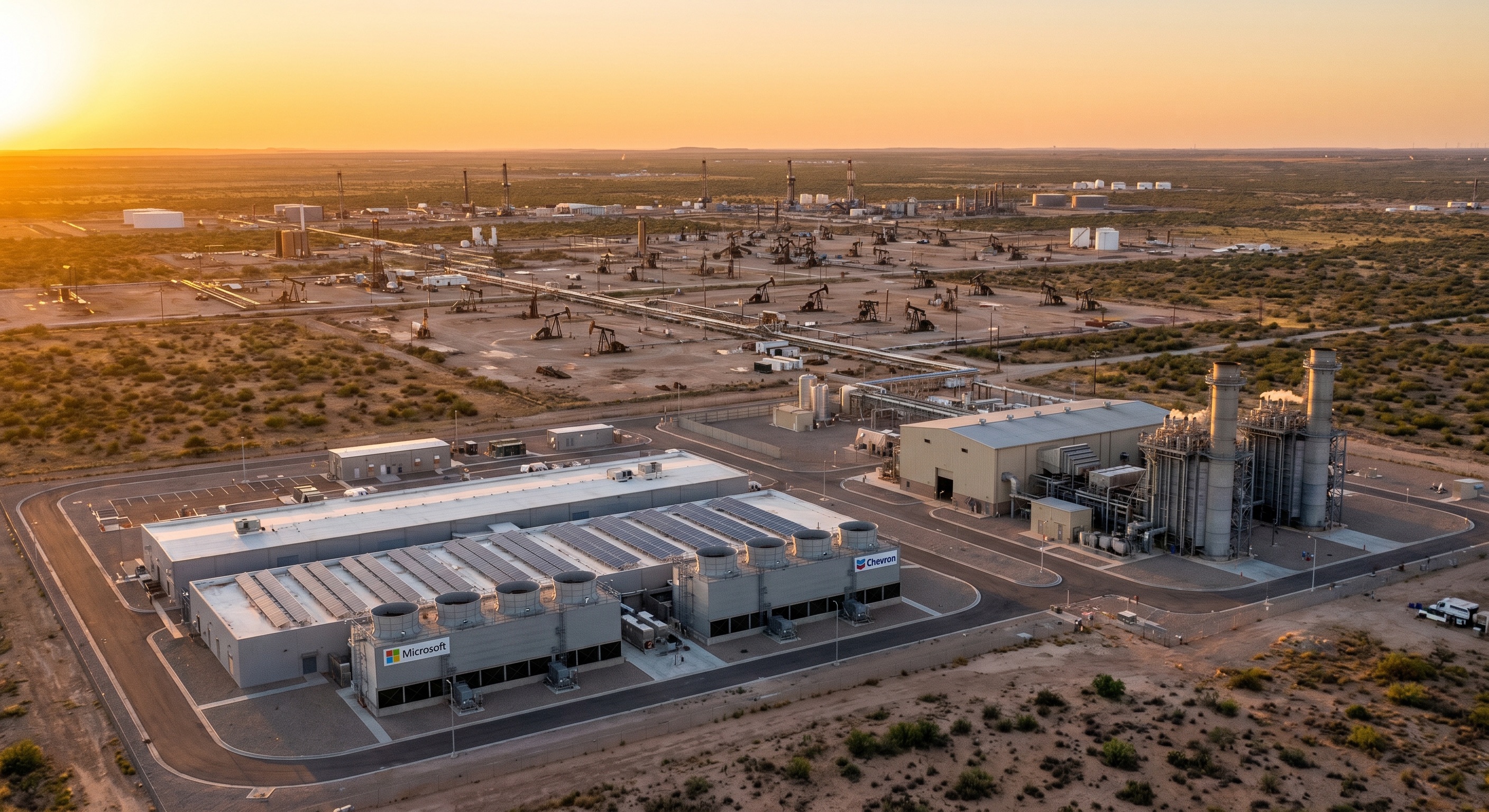
Microsoft and Chevron have signed a 20-year power purchase agreement to build a dedicated natural gas generation facility in West Texas that will supply electricity to a planned $7 billion AI data center complex. The project, called Project Kilby, will be developed on more than 2,000 acres in the Permian Basin and is designed to reach a capacity of 2.67 gigawatts — enough to power roughly 2 million homes — making it the largest energy deal ever struck between an oil company and a technology company, as first reported by Bloomberg.
The scale of the project reflects the compounding pressure AI infrastructure is placing on the U.S. power grid. Data center power demand in the United States is projected to nearly double to 77 gigawatts by 2030, driven primarily by the compute requirements of large language models and GPU clusters. For Microsoft, which has committed to building AI infrastructure globally to support its Azure AI and Copilot products, securing a multi-decade dedicated power supply is as strategic as the data center buildout itself — traditional grid connections cannot guarantee the stability or volume of electricity that hyperscale AI workloads require.
Chevron and Engine No. 1 — the activist investment firm known for placing climate-focused directors on ExxonMobil's board — will co-develop the generation facility. GE Vernova will supply the gas turbines and electrical infrastructure; Caterpillar's Solar Turbines subsidiary will provide additional generation capacity. Chevron will supply natural gas from its own Permian Basin operations, giving the project a vertically integrated energy supply chain. The company expects to generate mid-teens returns on its investment, marking Project Kilby as Chevron's formal entry into the gas-fired power generation business — a new revenue category for a company historically focused on upstream oil and gas production.
The timeline is deliberate but long. Chevron expects to make a final investment decision by the end of 2026, with first power generation beginning in 2028 and the full build-out continuing into the 2030s. That staging mirrors how hyperscale data center campuses are typically developed — in phases, as hardware availability and workload demand dictate.
The deal is notable both for its duration and its structure. A 20-year power agreement is unusual in the tech sector, where infrastructure contracts are often 10-15 years at most. Locking in a dedicated fossil-fuel generation asset for two decades signals that Microsoft is betting that AI compute demand will remain structurally high well into the 2040s — and that grid-scale renewable energy, while a long-term priority, cannot alone meet the reliability and density requirements of its largest data center campuses today. The Permian Basin location also gives Microsoft direct access to some of the cheapest and most abundant natural gas reserves in North America.
For Chevron, the move diversifies its revenue base at a moment when oil majors are increasingly expected to demonstrate a path beyond upstream extraction. The company has been careful to frame Project Kilby not as a climate concession but as a commercial opportunity created by AI's energy demands — a position that sidesteps the decarbonization debate while capturing real infrastructure revenue from the AI buildout.
Project Kilby joins a growing list of dedicated energy infrastructure projects anchored by tech companies, including the deal Microsoft struck with Constellation Energy to restart a unit at Three Mile Island for nuclear power, and Meta's interest in small modular reactor capacity. The common thread is that the largest AI operators are no longer willing to rely on shared grid capacity for their most power-intensive workloads.
Originally reported by Bloomberg / Chevron. Read the original article for additional details.
View original source