Meta Launches $299 Smart Glasses Under Its Own Brand, Skipping the Ray-Ban Label
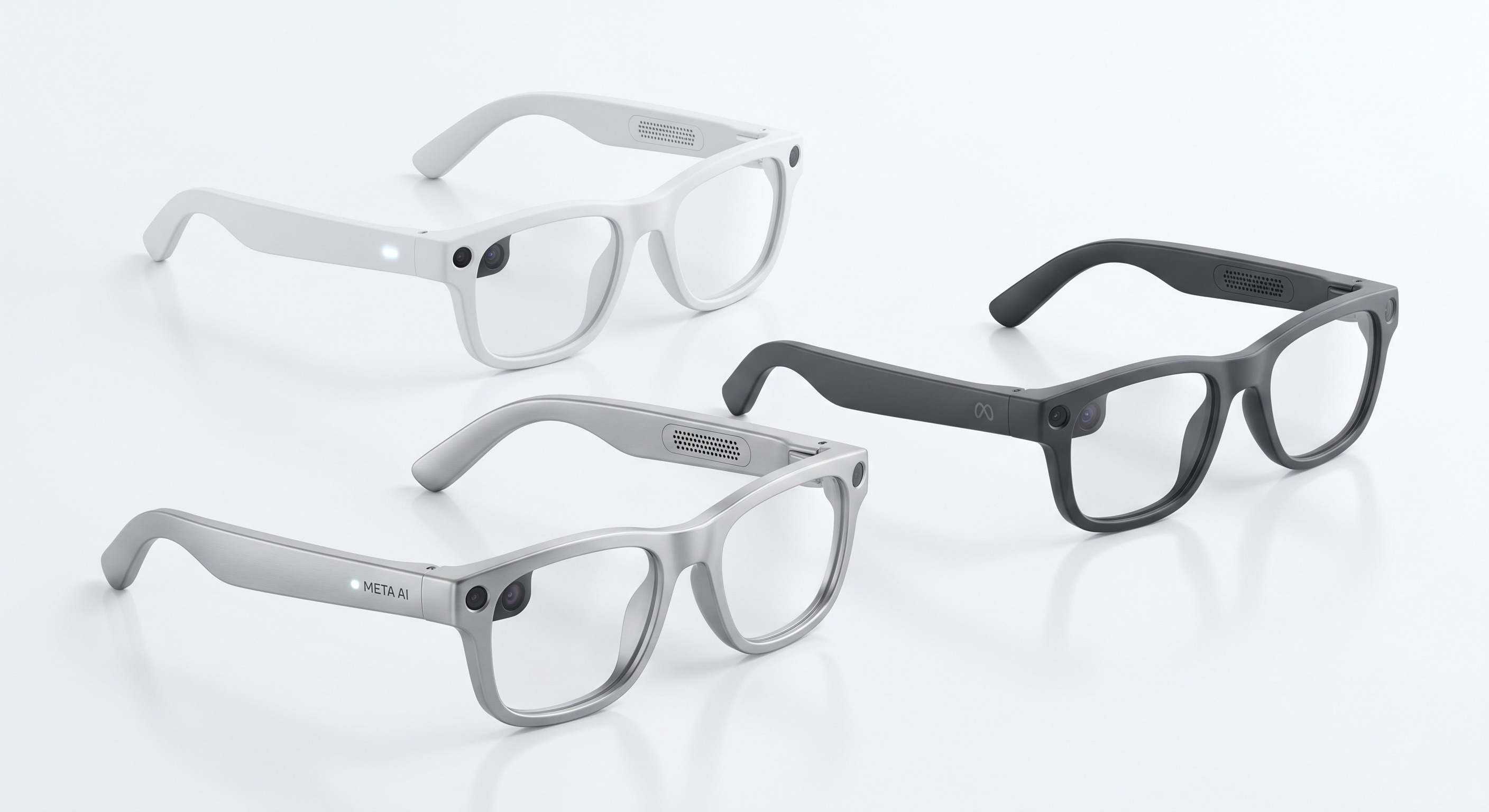
Meta on Tuesday launched a new line of AI-connected glasses under its own brand, priced starting at $299 — significantly cheaper than its existing Ray-Ban Meta glasses and a fraction of the $2,195 Snap Specs that arrived last week. The new product is simply called Meta Glasses, and it marks the first time Meta has sold a wearable under its own name rather than co-branding with a fashion house, as first reported by TechCrunch.
The glasses are built in partnership with EssilorLuxottica, the company behind Ray-Ban, Oakley, and dozens of other eyewear brands. Together, Meta and EssilorLuxottica now control more than 80 percent of the smart glasses market by volume — a dominant position that gives Meta significant leverage over pricing, distribution, and design across the category. The decision to launch under the Meta brand rather than a licensed fashion label appears to be a deliberate push to build Meta's own consumer hardware identity, rather than relying on the Ray-Ban name for credibility.
On hardware, the Meta Glasses ship without a display — a deliberate choice to keep costs down and battery life up. The glasses include a camera for capturing photos and video and external speakers for audio output and AI interaction. Battery life is rated at eight-plus hours, with the included charging case extending total use to around 40 hours. A customizable button defaults to triggering the Meta AI assistant, which can answer questions, describe what the camera sees, and handle basic daily tasks through voice interaction.
Three frames launch at release: the Meta Adventurer (a rectangular style available in standard and large sizes), the Meta Fury (a boxier silhouette aimed at men), and Meta Glasses by Kylie — a slim oval frame designed in collaboration with model Kylie Jenner. The Kylie edition signals Meta's intention to use celebrity partnerships to push the product into consumer lifestyle markets rather than positioning it purely as a tech product.
Two features are listed as coming soon: pedestrian navigation for walking directions (building on the camera-plus-AI combination), and live translation in 14 languages including Japanese, Mandarin Chinese, Hindi, and Korean. Live translation was one of the standout features demonstrated at Google I/O this year; Meta's inclusion signals that real-time spoken translation via wearable is becoming a table-stakes capability across the smart glasses category, not a differentiator for any one player.
The comparison to Snap Specs is instructive. Snap's $2,195 augmented reality glasses — released June 16 — are a fundamentally different product, with a full-color AR display and a developer-first positioning. Meta Glasses, at $299, are targeting a mass consumer market that Snap is not trying to reach with Specs. The strategic question is whether Meta can grow smart glasses from a niche enthusiast category — Ray-Ban Meta sold about a million units in 2025 — into a mainstream consumer segment the way it grew from Oculus to Quest. The $299 price point is an attempt to clear that bar.
For context on what "mainstream" means here: AirPods have sold more than 100 million units cumulatively. The smart glasses category as a whole has sold a fraction of that. Meta's bet with the Meta Glasses brand is that a lower price and a simpler value proposition — AI assistant you wear on your face — can pull in buyers who were not interested in a fashion-branded product at $299+.
Originally reported by TechCrunch. Read the original article for additional details.
View original source