Google runs an AI model in orbit for the first time, and it writes a haiku about Earth
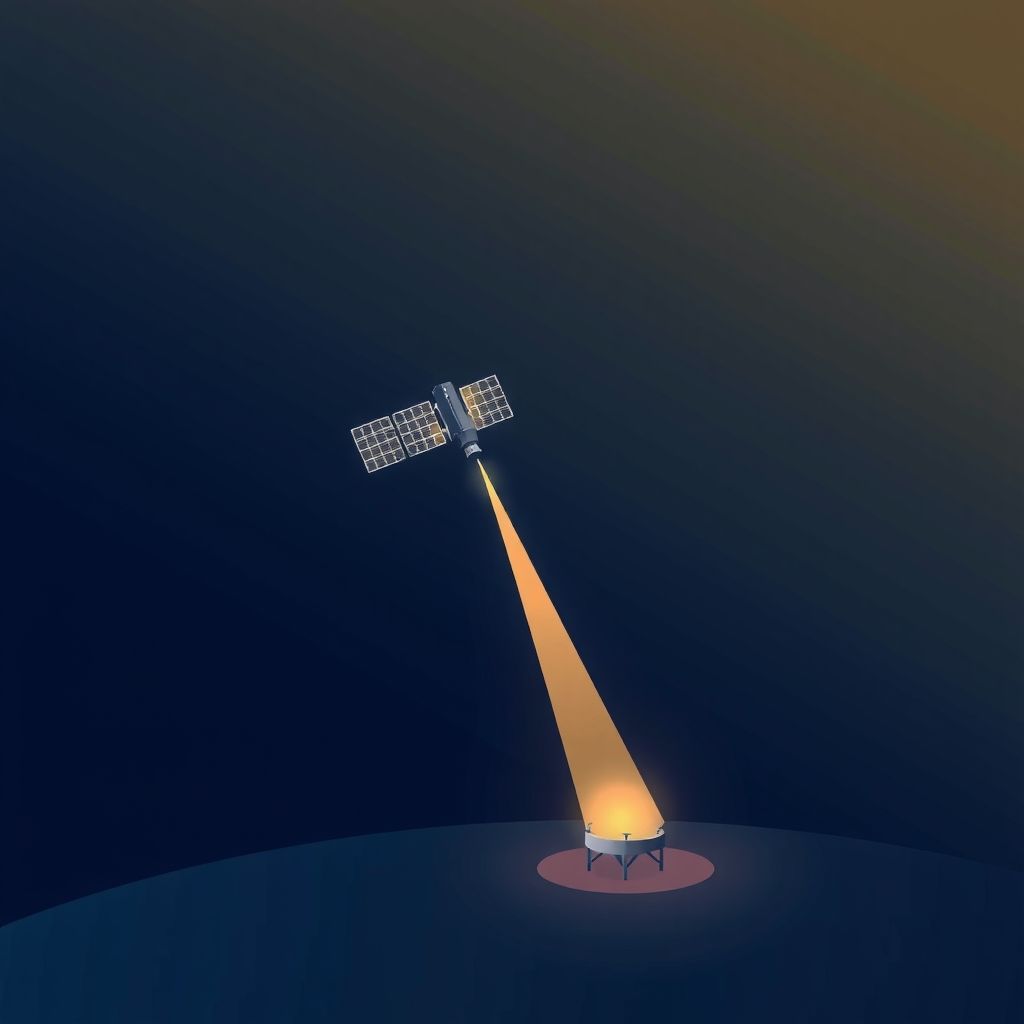
Google has run an AI model aboard a satellite in orbit for the first time, generating a short haiku on command from a ground station and transmitting it back to Earth. The company announced the milestone on October 30, calling it a “Hello World” moment for its Project Suncatcher initiative — a long-term research effort to explore whether data centers could eventually operate in space.
The prototype satellite, built in partnership with aerospace imaging company Planet, launched on October 1 aboard a SpaceX rideshare mission. It carries four of Google's data-center-class Tensor Processing Units (TPUs) — the same chip family that powers the company's terrestrial AI infrastructure. During a ground-station pass over Svalbard, Norway, Google operators uplinked a prompt instructing the onboard system to generate a space-themed haiku using Gemma 4, the company's open-weight AI model. The satellite returned: “Blue marble below / Data streams in silent grace / Starlight feeds my core.”
The TPUs can currently only run for about 15 minutes at a stretch, limited by heat management constraints that are one of the central engineering challenges of the project. Unlike Earth-based data centers, which rely on air or liquid cooling systems with effectively unlimited heat sinks, satellites can only shed heat through radiation into space — a much slower process that becomes a hard constraint on how much compute can run continuously. The prototype currently operates in a standard battery-powered orbit; Google's longer-term plan calls for a sun-synchronous orbit that would let future satellites run on continuous solar power without battery dependence.
Google frames this explicitly as a research moonshot rather than a near-term commercial product. Travis Beals, the project's lead, has said he doesn't expect space-based data centers to be cost-competitive with terrestrial ones within five years, and that replacing Earth infrastructure isn't the goal — at least not yet. The appeal is longer-term: solar power in orbit is available continuously without weather or night-time interruption, and space imposes no land-use or local power-grid constraints, both of which have become real friction points for AI data center expansion on Earth as communities push back against the water and electricity demands of new facilities.
Google isn't alone in testing this idea. Startup Starcloud launched a spacecraft carrying an Nvidia H100 chip last November and demonstrated a version of Google's own Gemini model running from orbit. SpaceX has said it expects to begin deploying what it calls “orbital AI compute satellites” as early as 2028. The race reflects a broader reality: Google's own capital spending guidance for AI infrastructure this year sits between $180 billion and $190 billion, more than six times 2022 levels, and demand for AI compute continues to outstrip available supply on the ground.
The next phase for Suncatcher involves extended testing of how the TPUs handle the thermal extremes and radiation exposure of sustained spaceflight, rather than the short validation burst used for the haiku demonstration. If those tests hold up, Google plans to launch two interconnected satellites in 2027 to test laser-based communication between orbital nodes — the architecture that would need to scale from a single four-chip prototype into something resembling a distributed data center before any of this moves past the moonshot stage.
Originally reported by Google Research / Notebookcheck. Read the original article for additional details.
View original source