FAA grants final launch license for Starship Flight 14, clearing the last hurdle before Monday's orbital attempt
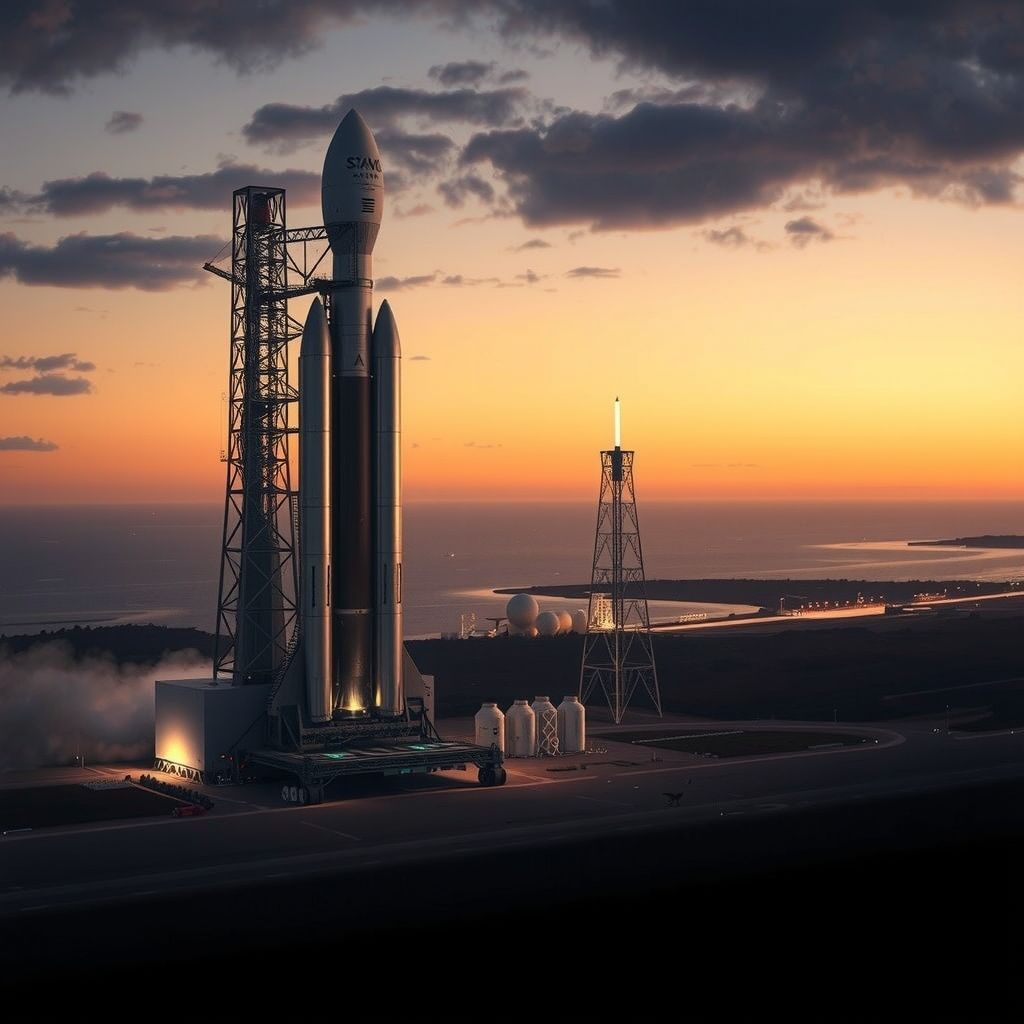
The FAA granted final launch and reentry authorization for SpaceX's Starship Flight 14 on September 26, clearing the last regulatory obstacle before Monday's launch attempt from Starbase, Texas. SpaceX is targeting liftoff between 8:15 and 9:30 a.m. EDT on September 28, with Ship 41 stacked atop Super Heavy Booster 21 at Orbital Launch Pad 2.
This is the moment SpaceX has been building toward since Starship's first test flight roughly two years ago: Flight 14 is the vehicle's first genuine attempt at orbital insertion, rather than the suborbital hops and partial trajectories of every prior test. If the mission profile holds, Starship's upper stage will reach an altitude of approximately 275 kilometers and complete roughly six orbits over a flight lasting just under 10 hours, before executing a deorbit burn on a single Raptor engine and attempting a controlled reentry and splashdown in the Pacific Ocean west of Chile.
The mission also carries real commercial weight, not just a test payload. Flight 14 will deploy 26 Starlink V3 satellites — the first batch of the newest-generation Starlink hardware to reach orbit. Each V3 satellite is designed to add roughly 1 terabit per second of capacity to the constellation, meaning a single successful deployment on this flight would add about 26 terabits per second of network capacity, a meaningful jump for a constellation that has become one of SpaceX's largest revenue sources. That makes Flight 14 the company's first Starship mission with a genuine, quantifiable business payoff attached to its success, beyond proving out the rocket itself.
Getting here wasn't smooth. SpaceX had originally targeted a September 24 launch date, which slipped after public safety concerns pushed the timeline back. The company used the delay to run a wet dress rehearsal on September 24 — loading propellant into the fully stacked vehicle and triggering the pad's water deluge system — along with flap actuation tests on Ship 41's forward and aft control surfaces. The FAA's approval two days later confirmed the vehicle and safety case were ready to proceed.
The stakes for a clean first attempt are higher than usual because of what's happened on the two most recent test flights. Flights 12 and 13, both flown with the redesigned Starship V3 vehicle, each scrubbed on their initial launch attempts before eventually getting off the pad on a later try. A successful countdown and launch on the first attempt Monday would be a notable change in trend for the V3 program, independent of whether the orbital and satellite-deployment objectives are ultimately achieved.
Whatever happens Monday, Flight 14 represents the clearest test yet of whether Starship, after years of suborbital demonstrations, is ready to function as the operational orbital launch vehicle SpaceX has designed it to be — and by extension, whether it can begin taking on the role NASA and SpaceX have assigned it in the Artemis lunar program, which depends on a reliable, repeatedly flying Starship fleet.
Originally reported by Aviation Week. Read the original article for additional details.
View original source