EPA eliminates power plant carbon limits, citing AI data center power demand
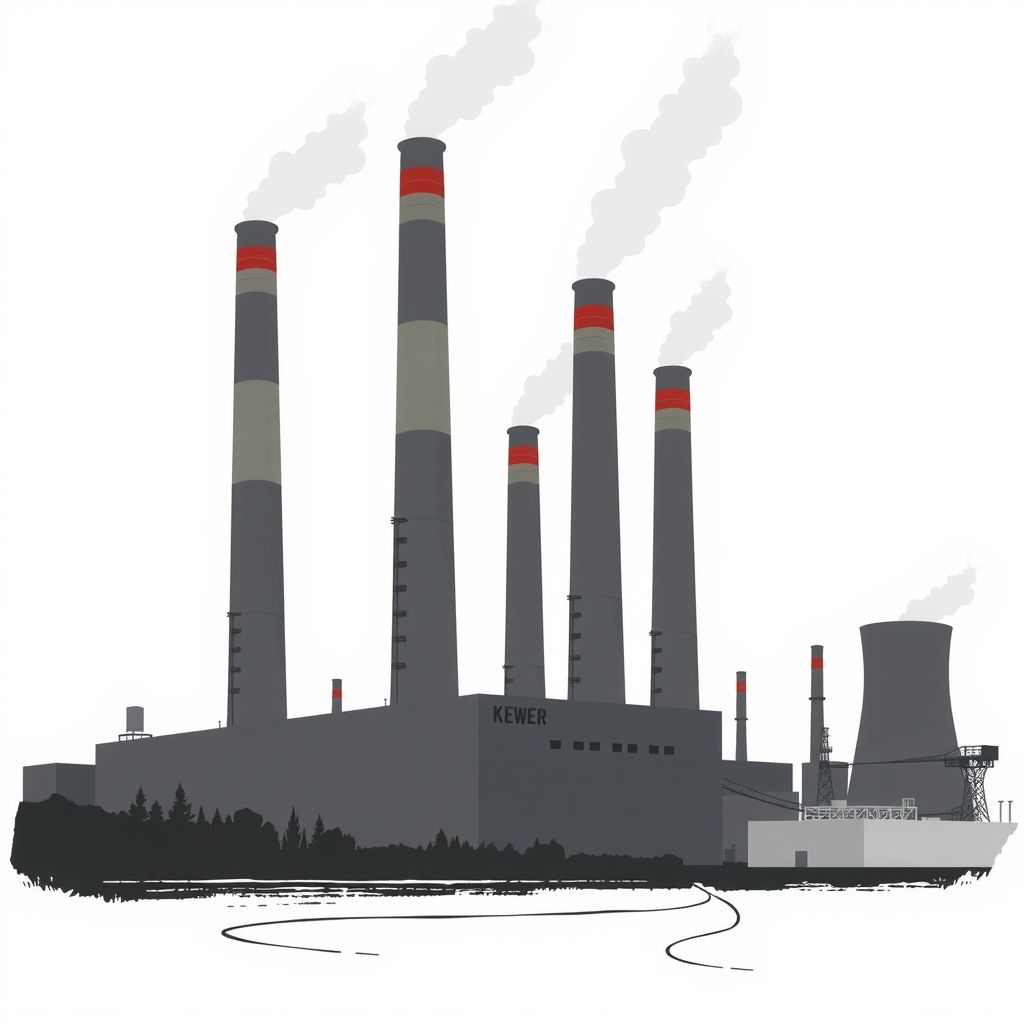
The Environmental Protection Agency announced September 14 that it will repeal the remaining federal standards limiting greenhouse gas emissions from coal and natural gas power plants, eliminating the last regulatory floor on carbon pollution from a sector responsible for roughly a quarter of total U.S. greenhouse gas output. EPA Administrator Lee Zeldin announced the rollback alongside Interior Secretary Doug Burgum and Energy Secretary Chris Wright at a G20 energy ministerial meeting on energy abundance in Houston.
What the rule actually repeals
The action eliminates the Biden-era 2024 power plant rule, which would have required coal plants to either capture their smokestack emissions or shut down. The EPA also proposed a separate rule intended to prevent any future administration from regulating greenhouse gas emissions from power plants at all — a move designed to outlast the current administration's own term. The agency's legal justification is that greenhouse gases from fossil fuel plants do not contribute significantly to dangerous pollution and therefore don't meet the Clean Air Act's threshold for regulation, directly reversing the EPA's own prior endangerment finding.
The AI data center connection, stated explicitly
What sets this rollback apart from prior deregulatory actions is that industry groups defended it in terms of AI infrastructure, not just cost. Michelle Bloodworth, CEO of the industry group America's Power, cited the need to protect grid reliability amid surging demand from data centers, artificial intelligence, and advanced manufacturing as a central justification for the repeal, and argued the change would shield electricity consumers from higher costs. That framing — regulatory rollback as a direct response to AI's electricity appetite — has become explicit administration policy rather than an unstated subtext.
This is consistent with a pattern IRCNF has tracked across the AI industry this month: Microsoft's reported 38GW data center buildout target for 2032, Google's 22-year nuclear power deal tied to its Finland AI investment, and the Pentagon's reported $5 billion loan discussion with Fluidstack to secure data center power and supply chain capacity. Power availability, not chip supply, has become the binding constraint on AI scaling — and now it's reshaping federal environmental policy directly.
Reaction and the coming legal fight
Environmental groups reacted immediately. The Environmental Defense Fund's Vickie Patton said the rollback would carry enormous costs for the health, safety, and well-being of families, arguing that clean, affordable, and reliable power technologies are already widely available as alternatives. Former Vice President Al Gore said the move puts the United States in the exact opposite direction of the rest of the world on climate policy. Environmental groups are expected to immediately challenge both the rule repeal and the proposed prevention rule in court, setting up a legal fight that could take years to resolve.
Why this matters beyond climate policy
For the tech industry specifically, this rollback function as a direct subsidy to AI infrastructure buildout: fewer emissions controls on the fossil-fuel plants that increasingly back up or directly power new data center capacity means faster, cheaper grid connections for hyperscalers racing to secure electricity for GPU clusters. It also signals that the administration views AI power demand as a policy priority significant enough to justify eliminating climate regulations that survived two prior administrations. Whether that trade-off holds up in court — and whether it actually delivers the grid reliability industry groups are promising — will play out over the next several years, even as data centers keep getting built now.
Originally reported by MPR News / AP. Read the original article for additional details.
View original source