Elon Musk Wants AI Data Centers in Space. Masayoshi Son Says the Numbers Do Not Add Up.
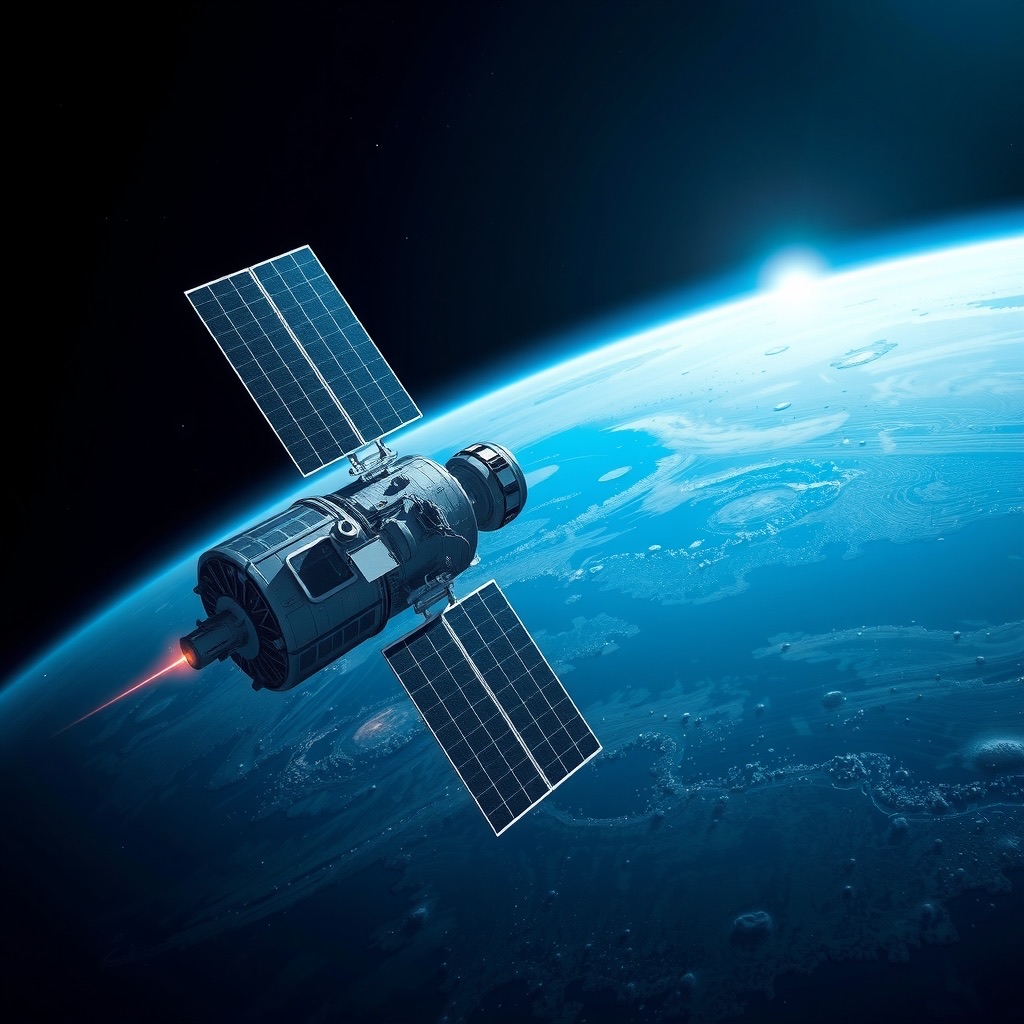
Elon Musk has spent months promoting the idea of AI data centers in orbit — solar-powered computing clusters circling Earth, free from terrestrial land constraints and increasingly expensive grid power. SoftBank CEO Masayoshi Son thinks the concept is science fiction dressed up as strategy, and he has the arithmetic to back him up.
"In the battle for AI, the next few years will be far more important than what might happen a decade or so from now," Son told shareholders at SoftBank's annual meeting. His argument is not that space data centers are technically impossible, but that they solve the wrong problem. Electricity, the cost that space-based solar would theoretically reduce, represents a small fraction of what data centers actually spend. Hardware and chips dominate the bill — and no satellite closes that gap.
Musk's Proposal
SpaceX filed an application with the Federal Communications Commission for a constellation of up to one million satellites that would serve as the foundation for an orbital AI data center. At a recent event in Austin, Musk reiterated his projection that space-based, solar-powered data centers would be more cost-effective than terrestrial alternatives within two to three years, driven primarily by Starship's improving launch economics.
The broader context makes the ambition understandable. Global data centers consumed 448 terawatt-hours of electricity last year — more than Saudi Arabia's entire national consumption — and the United Nations projects that figure will double by 2030, driven almost entirely by AI workloads. Jurisdictions are already restricting data center construction due to grid strain. If power is the bottleneck, space seems like a lateral solution.
Why the Economics Don't Work — Yet
Son's critique centers on cost structure. Even at optimistic Starship launch prices, sending hardware to orbit remains expensive per kilogram. Generating one gigawatt of solar power in space requires roughly one square kilometer of solar panels — panels that must be launched, assembled, and maintained. The communication round-trip between Earth and low Earth orbit introduces latency that is manageable for some AI inference workloads but problematic for others. And unlike terrestrial data centers, orbital ones cannot be easily upgraded when the next generation of chips arrives.
Morningstar analyst Nicolas Owens estimates that investors in SpaceX's IPO were effectively paying a $72 premium per share for the orbital data center option — but Morningstar assigns that scenario only a 7% probability of becoming cost-competitive within a relevant timeframe.
The Case for Taking Musk Seriously
Son's analysis uses current numbers. Starship, if it achieves the launch economics SpaceX projects, would change the cost-per-kilogram calculus significantly — potentially by an order of magnitude compared to Falcon 9's $2,720 per kilogram to low Earth orbit. If that happens, some of the fixed cost disadvantages of orbital infrastructure shrink.
The deeper question is whether the AI industry's power problem is structural enough to force unconventional solutions. Major cloud providers are already funding nuclear power plants, signing long-term geothermal contracts, and negotiating dedicated grid connections to secure the electricity their AI workloads require. If conventional energy options cannot scale fast enough, orbital solar becomes comparatively less implausible — though Son's point that terrestrial execution in the next three years is what determines AI leadership remains difficult to argue with.
Originally reported by Fortune / Bloomberg / TechCrunch. Read the original article for additional details.
View original source