Chrome 150 Removes the Last Lifeline for uBlock Origin on June 30
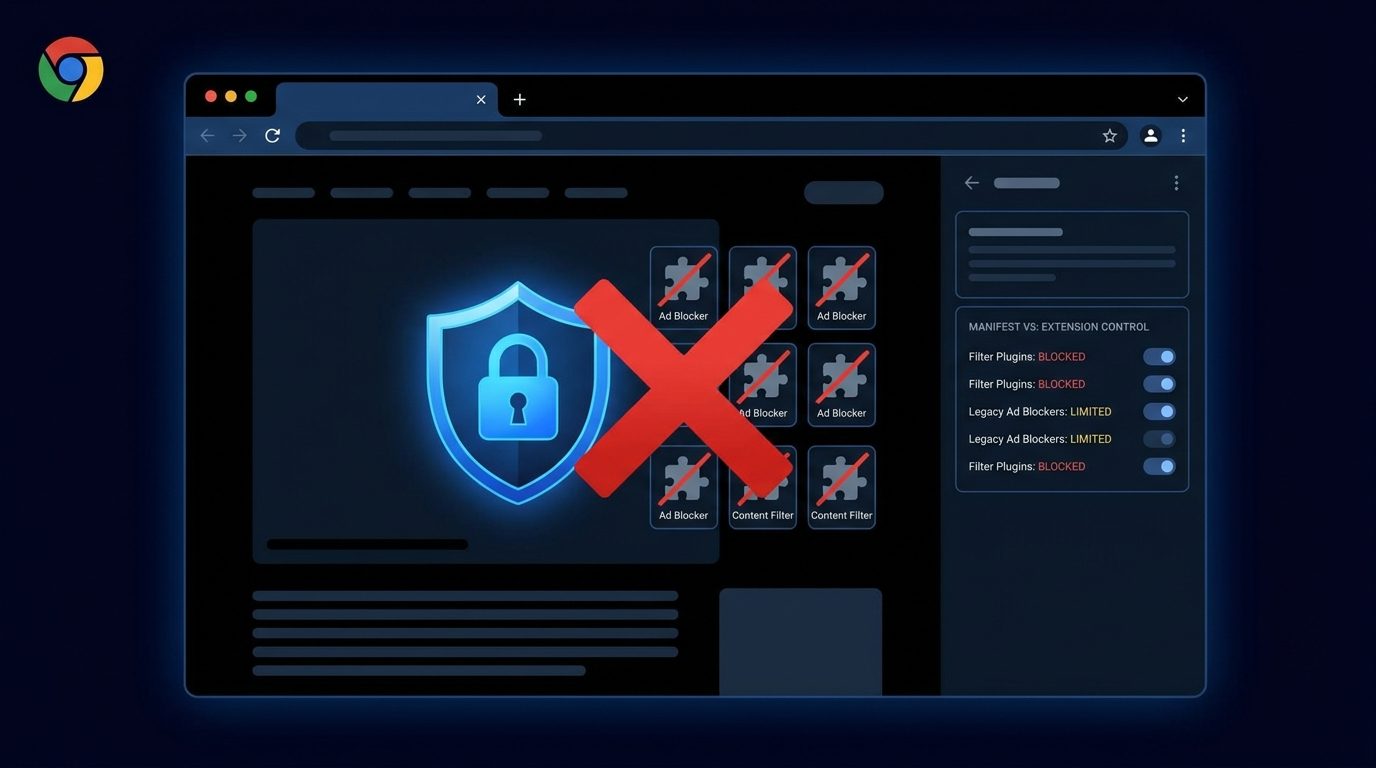
On June 30, 2026, Chrome 150 reaches the stable channel and removes the ExtensionManifestV2Disabled flag — the last mechanism that allowed users and enterprise administrators to keep Manifest V2 extensions running in Chrome. For the roughly 40 million people who use uBlock Origin on Chrome, the deadline is real this time. There is no override, no enterprise policy exception, and no hidden flag left to flip.
Why This Flag Mattered
Google began phasing out Manifest V2 in 2023 after years of delays following the original 2019 announcement. Each phase gave users and extension developers a reprieve: Chrome would warn about MV2 extensions, then disable them by default, but always leave a flag that advanced users could toggle to keep them running. Chrome 150 removes that last flag. Chrome 151, expected approximately four weeks later, will strip all remaining MV2-related infrastructure from the codebase entirely.
Google engineer Devlin Cronin confirmed the timeline in a Chromium code review commit that removes the flag infrastructure. The commit is already merged into the Chromium tree.
What Breaks and Why It Cannot Be Fixed
uBlock Origin works by intercepting network requests in real time and blocking them against filter lists before they reach the page. This relies on Chrome's webRequest API, which Manifest V2 provides. Manifest V3 replaces this with the declarativeNetRequest API, which requires extensions to pre-declare static filtering rules that Chrome enforces natively.
The distinction is not cosmetic. Raymond Hill, uBlock Origin's developer, has stated clearly that a Manifest V3 version cannot replicate the original's functionality. The static rule approach cannot handle dynamic filtering — blocking requests based on the full context of a page load, running custom JavaScript to remove cosmetic elements like cookie banners, or applying filter lists that update frequently. The existing MV3 port, uBlock Origin Lite, supports a subset of filter lists and does not perform cosmetic filtering at all.
Google's Security Argument
Google's case for the change is not purely commercial. The webRequest API gives extensions deep access to every network request Chrome makes, which means a compromised extension can silently intercept login credentials, redirect traffic, or inject code into any page. A recent incident involving the "Save Image As Type" extension — hijacked to steal affiliate commissions for months before detection — illustrates the attack surface.
The declarativeNetRequest model is genuinely more auditable: Chrome enforces the rules natively, extension code never sees the raw request data, and rule sets are inspectable. The security trade-off is real, not invented. The question is whether the privacy and functionality cost is worth it.
Your Options Before June 30
Firefox: The most complete replacement. Firefox supports Manifest V2 indefinitely and uBlock Origin runs at full capability. Firefox's market share gains since Google's MV3 announcements have been measurable — the browser added approximately 15 million new users between Q3 2025 and Q1 2026 according to StatCounter data.
uBlock Origin Lite (Chrome MV3): Available in the Chrome Web Store now. Blocks the most common ad networks and trackers via static rules. Does not support custom filter lists, cosmetic filtering, or dynamic mode. Suitable for users whose primary goal is blocking large ad networks rather than comprehensive tracker blocking.
Brave: Ships with a built-in ad and tracker blocker that is not a Chrome extension and therefore not affected by Manifest V3. Brave's blocker uses its own implementation outside the extension system entirely.
AdGuard for Chrome (MV3): AdGuard has invested more resources in its MV3 migration than most extension developers and currently offers better coverage than uBlock Origin Lite, though still below the original uBlock Origin in dynamic filtering capability.
Enterprise Impact
Enterprise Chrome deployments that relied on uBlock Origin or similar MV2 extensions for phishing protection — a common configuration in security-conscious IT environments — face a forced migration. Chrome's enterprise policy documentation does not include any provision to maintain MV2 after Chrome 151. Organizations have until June 30 to identify replacement tooling or migrate affected users to a different browser profile.
Originally reported by The Next Web. Read the original article for additional details.
View original source