China's Long March 7A rocket explodes 85 seconds after liftoff, destroying ChinaSat 4B
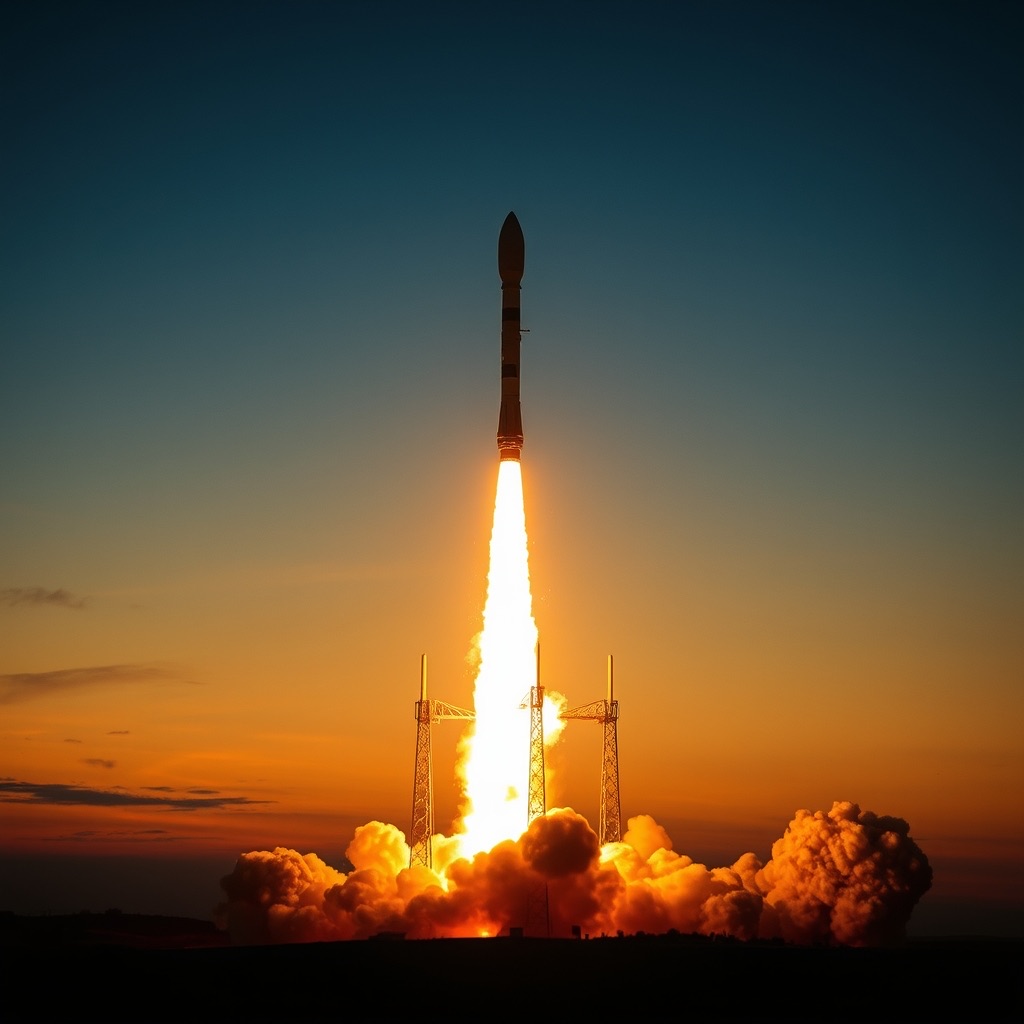
A Chinese Long March 7A rocket exploded approximately 85 seconds after liftoff from the Wenchang Space Launch Site in Hainan province on the evening of August 10, destroying both the vehicle and its payload, the ChinaSat 4B communications satellite. The launch, conducted by the state-owned China Aerospace Science and Technology Corporation (CASC), took place at 8:02 p.m. local time, with video footage showing the rocket breaking apart in a large fireball well before its scheduled first-stage separation.
ChinaSat 4B was intended for geostationary transfer orbit, where it would have provided telecommunications and broadband internet services. The failure occurred during the vehicle's main-stage engine burn, before the roughly three-minute mark at which first-stage separation typically happens, indicating the anomaly struck during the most demanding phase of ascent.
A Concerning Engine, Not Just a Lost Mission
The failure carries weight beyond the loss of a single satellite. The Long March 7A's first stage is powered by the YF-100 engine, which is also the most widely used engine across China's medium- and heavy-lift rocket fleet. If investigators trace the failure back to a design or manufacturing issue with the engine itself rather than a vehicle-specific fault, it could force China to ground multiple rocket families that share the same propulsion hardware — a significantly larger disruption than a single mission loss.
This marks the 18th flight of the Long March 7A variant since its debut in March 2020, when its inaugural launch also ended in failure due to an engine anomaly shortly after stage separation. In the years since, China's state launch program has posted a strong reliability record while scaling to more than 50 flights annually, with only a small number of failures across that stretch.
Limited Transparency on the Cause
Chinese authorities have confirmed an investigation is underway but have not released a technical statement on the root cause. CASC's launch program has historically operated with limited public disclosure around anomaly investigations, and space industry analysts note that a definitive public explanation for this failure may never materialize, consistent with the program's past handling of launch failures.
Why This Matters for the Broader Launch Market
China has positioned its Long March family as the backbone of an aggressive satellite deployment schedule, including military, commercial, and national broadband constellation missions. A grounding of vehicles sharing the YF-100 engine, even a temporary one pending investigation, would ripple through China's launch cadence at a moment when the country has been racing to match the pace of reusable rocket programs elsewhere in the industry. The incident is also a reminder that even mature, frequently flown rocket families are not immune to catastrophic first-stage failures, regardless of an otherwise strong recent track record.
Originally reported by Space.com. Read the original article for additional details.
View original source