China's LandSpace lands a reusable rocket booster for the first time, closing the gap with SpaceX
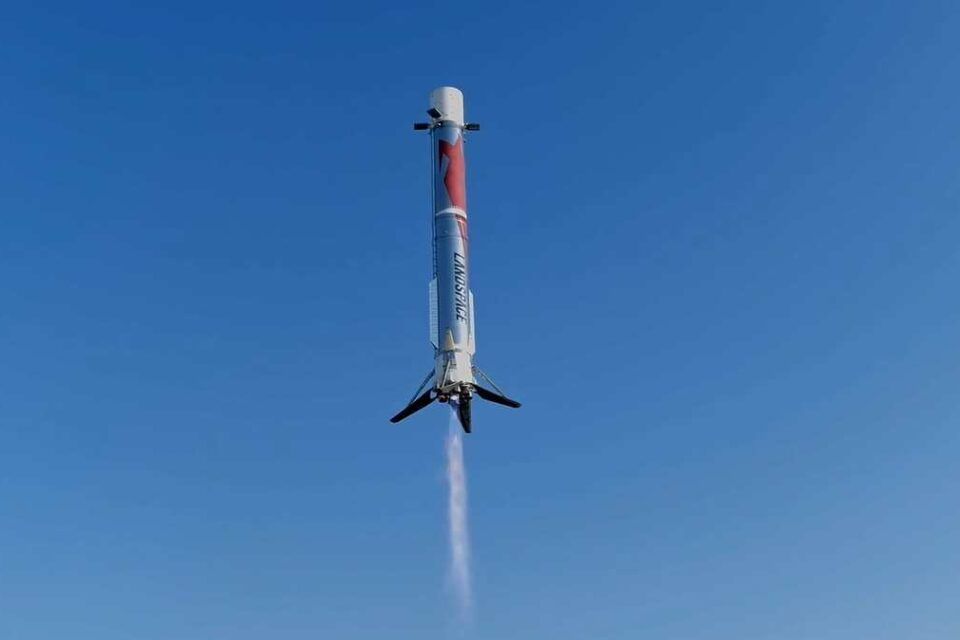
Chinese commercial space company LandSpace successfully landed the first stage of its Zhuque-3 rocket on August 19, marking China's first successful land-based recovery of an orbital-class rocket booster using deployable landing legs. The achievement puts LandSpace in a small group of companies worldwide — alongside SpaceX and Blue Origin — that have demonstrated vertical booster recovery on an orbital launch vehicle.
The Zhuque-3 Y2 rocket lifted off from the Dongfeng Commercial Space Innovation Pilot Zone in northwest China at 07:35 local time. Roughly 137 seconds after liftoff, the first and second stages separated. The second stage continued to orbit and successfully delivered Hongqing Technology's Honghu 03 satellite into its designated orbit, while the first stage began its descent back to Earth.
A Controlled Landing 390 Kilometers Downrange
At approximately 07:41 local time, the first stage performed a soft touchdown at LandSpace's dedicated Landing Site #1 in Minqin County, Gansu Province — roughly 390 kilometers downrange from the launch pad. The booster fired its engines for a final landing burn before touching down vertically on solid ground, following its planned reentry and descent trajectory. LandSpace confirmed the flight as a full success in a post on X, stating the mission achieved both successful orbital insertion for the payload and first-stage recovery.
The landing validated several of the hardest engineering steps in reusable rocketry working together in sequence: atmospheric reentry, a controlled descent phase, and a precision final landing burn. This was LandSpace's second attempt at a land-based recovery of the Zhuque-3 first stage.
Building on a 2023 Methane Rocket Milestone
Wednesday's landing extends a run of technical firsts for LandSpace. In July 2023, the company's Zhuque-2 became the first methane-fueled rocket to successfully reach orbit, beating competing methane-rocket programs from SpaceX and Relativity Space to that milestone. The Zhuque-3, a stainless-steel rocket often described as China's answer to SpaceX's Falcon 9, is designed for its booster to be reused up to 20 times, which would substantially cut the cost per launch if realized at that cadence.
Why This Matters for the Global Space Race
Reusable first-stage recovery has been one of the most consequential — and hardest to replicate — innovations in the launch industry since SpaceX first demonstrated it with Falcon 9 in 2015. Reusability directly determines launch cost per kilogram, which in turn shapes everything from satellite constellation economics to national space program budgets. China's private space sector has been racing to close the reusability gap with SpaceX for several years, and LandSpace's successful land recovery — as opposed to a sea-based platform — represents a meaningful technical step forward for the country's commercial launch capability.
LandSpace has not yet announced a target date for reflying a recovered Zhuque-3 booster, which would be the next major milestone in validating the vehicle's economic case.
Originally reported by Tech Startups. Read the original article for additional details.
View original source