Apple Raises Mac and iPad Prices by Up to $300, Blaming RAM Shortage and Tariffs
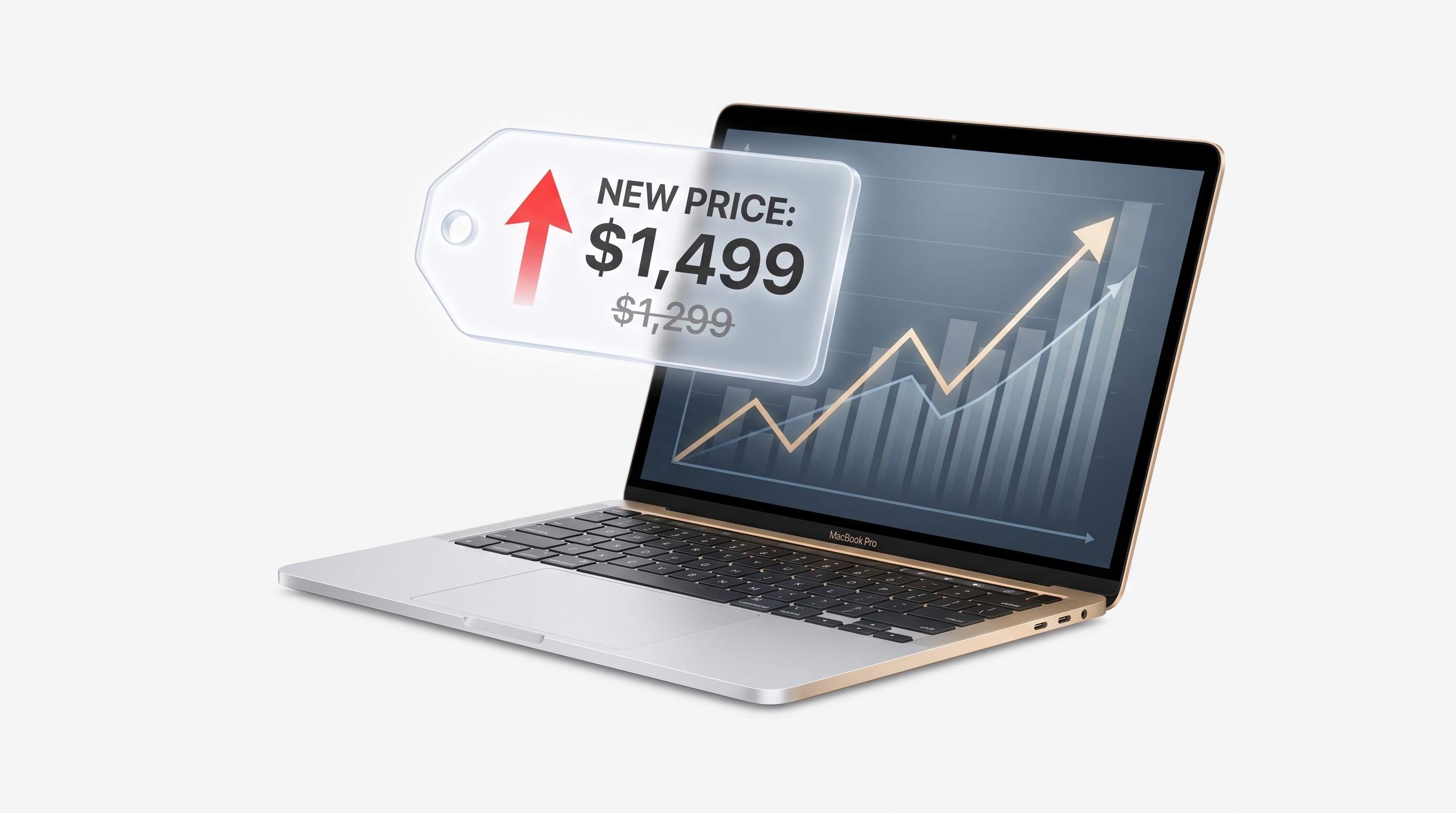
Apple raised prices across its entire Mac and iPad lineup on June 25, 2026, with increases ranging from $100 to $500 depending on the product. The company cited two compounding pressures: US tariffs on imported components and a global shortage of high-bandwidth memory driven by AI data center demand. iPhones, Apple Watch, and AirPods were spared from the current round of increases, as reported by 9to5Mac.
Tim Cook said in a statement that the company had "shielded customers from these increases so far" but had reached the point where further absorption was no longer possible. "We have never seen a component price increase this much, this quickly," Cook said. "We have now reached a point where we need to begin raising prices."
The Full Price Table
MacBook prices saw the largest absolute increases. The entry-level MacBook Neo rises from $599 to $699. The 13-inch MacBook Air, Apple's best-selling laptop, jumps from $1,099 to $1,299 — a $200 increase. The 15-inch MacBook Air follows at $1,299 to $1,499. MacBook Pro models with M5 chips see larger absolute jumps: the base M5 Pro goes from $1,699 to $1,999, and the M5 Max configuration rises from $3,599 to $4,099.
iPad increases are proportionally steeper at the entry level. The base iPad climbs from $349 to $449 — a 28% increase. The iPad mini goes from $499 to $599. iPad Air models jump $150 to $200, while iPad Pro models increase by $200 across the 11-inch and 13-inch versions. The iMac, Mac Studio, Mac mini, Apple TV 4K, HomePod, and HomePod mini also received increases.
The Memory Shortage Driving the Increases
The underlying cause is more structural than it might appear. High-bandwidth memory (HBM) — the specialized DRAM used in AI accelerators like Nvidia's H100 and H200 GPUs — is produced by the same manufacturers (Samsung, SK Hynix, Micron) that supply standard DRAM for consumer devices. As AI data centers have consumed an increasing share of advanced memory production capacity, supplies of standard LPDDR and DDR5 memory for consumer electronics have tightened, pushing up component costs. Micron's Q3 FY2026 earnings, reported June 24, showed quarterly revenue of $41.46 billion — up from $9.3 billion in the same quarter a year ago — driven almost entirely by AI-related HBM demand. Consumer device makers are paying the price for that demand spike.
Tariffs compound the problem. Apple manufactures most of its products in Asia, and US tariffs on imported electronics components have added material cost to each unit shipped into the American market.
Microsoft Is Also Raising Prices
Apple is not alone. Microsoft announced similar price increases for its Surface line around the same time, citing identical reasons. The broader pattern suggests that the AI infrastructure buildout is beginning to create tangible cost pressure on consumer hardware — a second-order effect that will affect any manufacturer relying on the same memory supply chain as large-scale AI deployments.
The iPhone is exempt from the current round of increases, which Apple may be protecting given its higher margin and the competitive sensitivity of smartphone pricing. That exemption likely will not last indefinitely if the memory shortage persists.
Originally reported by 9to5Mac. Read the original article for additional details.
View original source