Amazon Leo Satellite Constellation Reaches Initial Service Threshold After Latest Launch
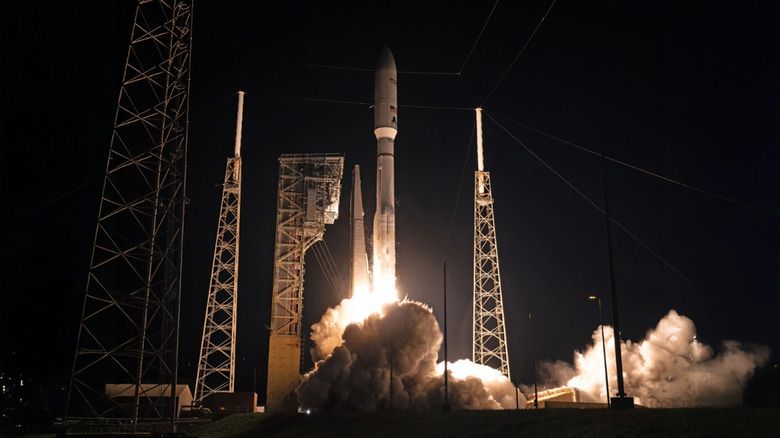
Amazon Leo, the company's satellite broadband service formerly known as Project Kuiper, reached a milestone toward commercial launch on Thursday when a United Launch Alliance Atlas V rocket delivered 29 satellites into orbit, pushing the constellation's total past 390 operational units. According to Amazon Leo vice president Chris Weber, the company now has enough satellites in orbit to support continuous broadband service across its initial target latitudes.
The July 2 launch marked the final Atlas V mission dedicated to the Leo constellation, bringing the total satellites deployed via that rocket family to 224 across all missions. Amazon's deployment plan unfolds in five phases, with full initial service originally targeted to begin once the first 578 satellites reached orbit. Thursday's milestone means the constellation can now support continuous, if geographically limited, coverage before that full first-phase target is complete — a materially faster path to revenue than the original schedule implied.
The remaining work is largely mechanical rather than logistical: the newly deployed satellites still need to be raised from their deployment orbit to their assigned operational altitude of 392 miles before they can join active service. Amazon has indicated initial service rollout is planned for later this year.
Amazon's launch cadence is set to accelerate significantly beyond the Atlas V program that just concluded. United Launch Alliance's newer Vulcan rocket can carry more than 40 Leo satellites per mission with a faster turnaround than Atlas V, and Blue Origin's New Glenn — owned by Amazon founder Jeff Bezos — is slated to carry 48 or more satellites per launch once its launchpad, damaged in a May 2026 explosion, returns to operational status by year-end. Melissa Wuerl, Amazon Leo's director of launch systems, said the company now has "a clear path to increase launch and deployment cadence" using this expanded rocket portfolio.
The competitive backdrop remains stark: SpaceX's Starlink currently operates more than 10,000 satellites, roughly 25 times the size of Leo's current constellation, and has had commercial service running since 2020. Amazon's bet is that its access to AWS cloud infrastructure, existing Prime subscriber relationships, and Bezos's parallel investment in Blue Origin launch capacity can compress the gap faster than the raw satellite count suggests — though Leo will launch as a clear second mover in a market Starlink has spent five years defining on price, coverage, and hardware cost.
Neither pricing nor specific initial availability regions have been disclosed. Given the "initial latitudes" framing in Amazon's own announcement, early service is expected to prioritize the mid-latitude bands where the current satellite shells provide the most consistent coverage, likely including parts of North America and Europe, before expanding toward global coverage as later launch phases complete.
For the broader satellite broadband market, Leo's arrival as a credible second operator — backed by Amazon's balance sheet and AWS's ground infrastructure — is likely to intensify pricing and coverage competition with Starlink in regions where both operators eventually overlap, a dynamic regulators in several countries have said they want to see develop as a check on Starlink's current market position.
As first reported by Engadget based on Amazon's own mission updates, the July 2 Atlas V launch closes out one chapter of Leo's deployment and opens the more capital-intensive phase of scaling toward the full planned constellation.
Originally reported by Engadget. Read the original article for additional details.
View original source