AI coding agent startup Factory triples valuation to $5 billion in five months
Factory, a startup building autonomous AI agents for enterprise software development, raised $200 million in a new funding round that more than triples its valuation to $5 billion — just five months after it was valued at $1.5 billion in an April raise. The round brings Factory's total funding past $400 million and drew a notably broad investor mix: Blackstone, Sequoia Capital, Khosla Ventures, Insight Partners, NEA, Clearlake, and Mantis VC, alongside angel investors including Marc Benioff, Brad Gerstner, and former F1 driver Nico Rosberg.
What Factory Actually Sells
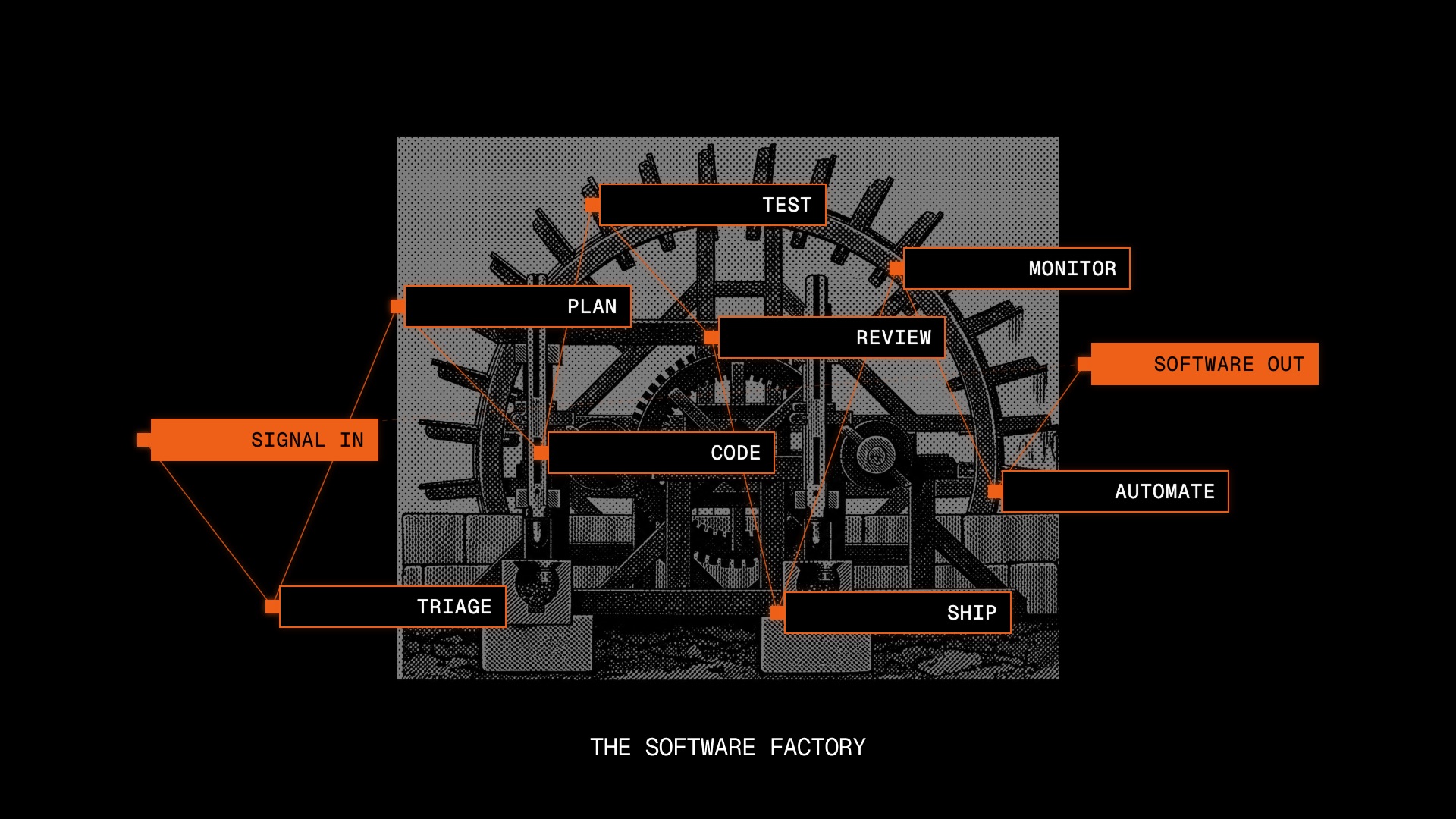
Founded in 2023 by Matan Grinberg and Eno Reyes, Factory builds what it calls "Droids" — purpose-built AI agents that each handle a specific stage of the software development lifecycle, from code review and testing to pull requests and production monitoring, rather than a single general-purpose coding assistant. As of an April 2026 update, the company reported hundreds of thousands of developers using Droids daily at enterprise customers including Nvidia, Adobe, EY, Palo Alto Networks, and Adyen.
The company's stated thesis, laid out by Grinberg and Reyes, is that improving a single engineer's productivity with a coding assistant has diminishing returns once most of an engineering organization already uses one — the next gain comes from making the entire development pipeline, not just individual coding sessions, agent-native. They call this end-to-end system a "software factory," which is also the source of the company's name.
Why Investors Are Pricing This So Aggressively
A more-than-3x valuation increase in five months is an unusually steep trajectory even by 2026 AI-funding standards, and it reflects a specific bet: that the AI coding tools market is shifting from selling individual developer productivity (the Copilot/Cursor model) to selling organizational-scale automation of the software delivery pipeline itself. If that shift happens, the addressable market and pricing power look very different — enterprises pay for outcomes across an entire engineering function rather than per-seat licenses for a coding assistant.
The investor list itself is a signal. Blackstone's participation is notable for a company at this stage — private equity firms typically enter AI infrastructure rounds later, once revenue is more predictable, which suggests Factory's enterprise contracts already look closer to recurring revenue than typical usage-based AI tooling.
The Risk in the "Software Factory" Bet
The thesis carries real execution risk that the funding round doesn't resolve. Handing multiple pipeline stages — code review, testing, deployment, monitoring — to coordinated AI agents rather than a single assistant a developer directly supervises raises the stakes of any single agent's mistake, since errors can now compound across stages before a human reviews the output. Enterprise customers named by Factory operate in regulated or security-sensitive environments (Palo Alto Networks, Adyen), meaning the company's ability to demonstrate reliable, auditable agent behavior across the full pipeline — not just at the code-generation step — will likely determine whether this valuation holds up at the next round.
Originally reported by Factory. Read the original article for additional details.
View original source