A Russian satellite closed to within 26 meters of a commercial spacecraft used by Ukraine
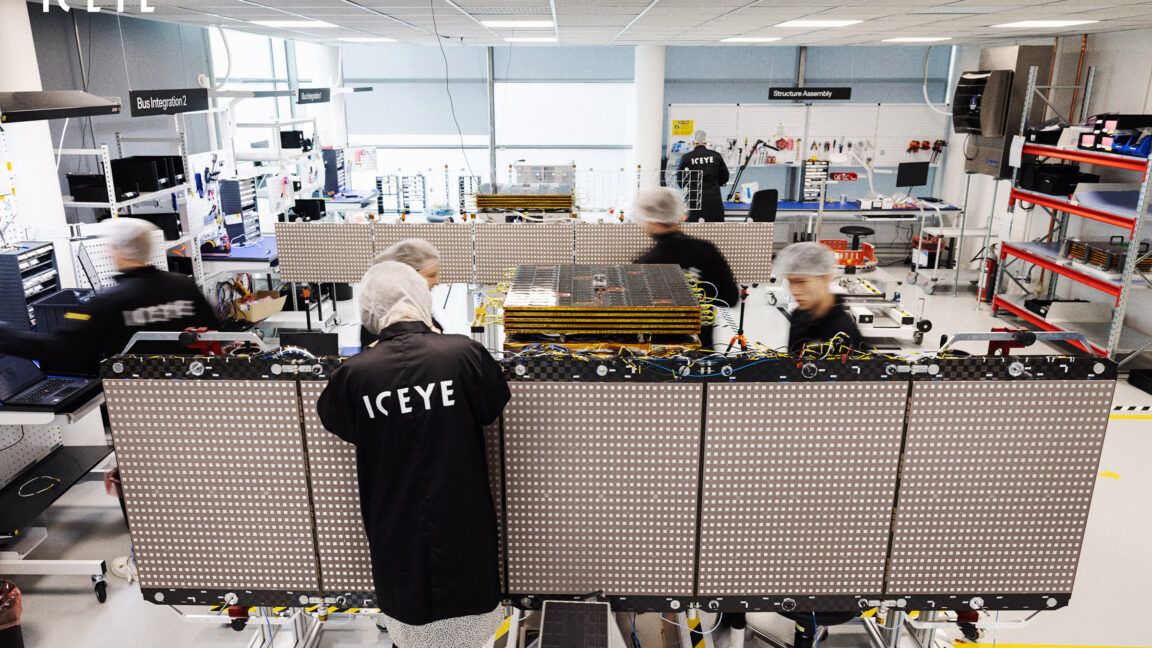
A Russian military satellite designated Kosmos 2612 closed to within roughly 26 meters of ICEYE-X36, a commercial radar-imaging satellite used by Ukraine, in what orbital tracking firms describe as the first documented unsanctioned rendezvous between two active spacecraft in low-Earth orbit where the target's operator gave no consent, as first reported by Ars Technica.
A months-long pursuit
Kosmos 2612 launched in April on a Soyuz rocket from a spaceport in northern Russia alongside five other payloads. Within weeks, at least four of those six satellites adjusted their flight paths to align with the orbital plane of ICEYE-X36 — a spacecraft owned by the American subsidiary of the Finnish radar-imaging company ICEYE, which supplies commercial satellite imagery used in support of Ukraine. Orbital intelligence firm LeoLabs, which operates a global radar network capable of tracking objects as small as two centimeters, monitored the slow pursuit for months before it shifted from passive tracking to active maneuvering in late September.
According to a report from the Center for Strategic and International Studies, Kosmos 2612 executed a propulsion burn on October 12 that changed its velocity by roughly 27.9 meters per second, lifting its orbit to approximately 555 kilometers — matching ICEYE-X36's working altitude. Tracking data compiled by satellite monitoring service satellitemap.space then showed the Russian spacecraft holding station two to three kilometers from the commercial satellite, before shifting to positions directly ahead of and behind its target. Over the following weekend, separation narrowed sharply, with some trackers reporting a closest approach of around 26 meters — a distance measured in the same scale as the satellites themselves, not the kilometers that typically separate objects in a crowded orbital shell.
Why the distance matters
Proximity operations between satellites aren't inherently hostile — inspection, docking, and servicing missions all require close maneuvers, and they're normally coordinated in advance between operators. What makes this case unusual is the combination of distance and consent: ICEYE's operators did not sanction the rendezvous, and a 26-meter separation between two uncooperative spacecraft carries real collision risk, since neither side necessarily knows the other's exact trajectory or intentions in real time. A collision at orbital velocities, even between small objects, would generate a debris field that threatens every other satellite sharing that altitude band.
Part of a broader pattern around Ukraine's satellite support
The incident follows other recent friction over commercial space infrastructure supporting Ukraine. Ukrainian President Volodymyr Zelenskyy said earlier this month that restrictions on Starlink and Starshield service in Ukraine looked deliberate, with SpaceX and U.S. officials offering no public explanation. ICEYE's radar imagery, like Starlink's connectivity, is commercial infrastructure that has become militarily relevant simply by being useful to one side of an active conflict — which increasingly puts the operators of ordinary commercial satellites in the path of state-level orbital pressure they have no military framework to respond to.
What happens next
As of the most recent tracking, Kosmos 2612 had widened its distance from ICEYE-X36 and begun a slow retreat, though its intentions remain unclear. The U.S. military and independent trackers continue to monitor the satellite alongside the other payloads from its April launch. For now, the episode stands as a precedent: a demonstration that a state actor can maneuver a military satellite to within tens of meters of a commercial spacecraft it has no ownership stake in, without consequence beyond public reporting, and the absence of any binding international framework governing non-consensual proximity operations means the next such incident has no clearer rules to follow than this one did.
Originally reported by Ars Technica. Read the original article for additional details.
View original source