Why Wi-Fi 7 Will Matter When Multi-Link Networking Goes Mainstream
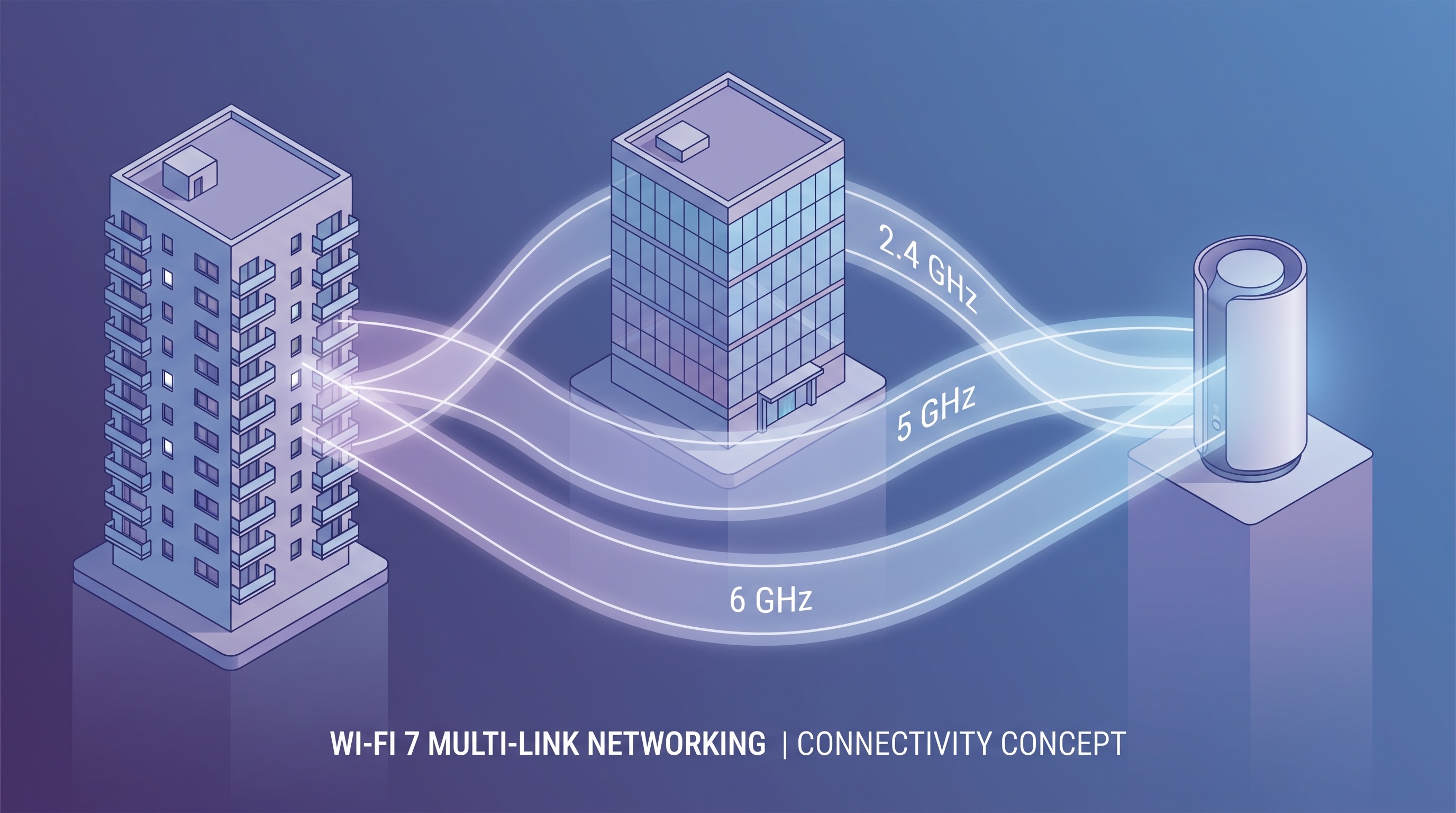
Wi-Fi 7 (802.11be) is here, often heralded for its dazzling theoretical speeds. But while those peak numbers are impressive, the real story, especially as we look towards 2026 and beyond, lies in a less-talked-about but far more impactful innovation: Multi-Link Operation, or MLO. This isn't just about making your downloads faster; it's about making your entire wireless experience more stable, more reliable, and ultimately, more predictable.
Understanding Multi-Link Operation: More Than Just Speed
At its core, MLO allows compatible Wi-Fi devices to simultaneously utilize multiple frequency bands – the familiar 2.4 GHz and 5 GHz, plus the newer, expansive 6 GHz band – to transmit and receive data. Traditionally, a device connects to just one of these bands at a time. If that band gets congested or experiences interference, your connection suffers. MLO changes this paradigm entirely.
Imagine a multi-lane highway. With traditional Wi-Fi, your data travels on a single lane. If that lane gets backed up, you're stuck. MLO, however, opens up multiple lanes, allowing your data to flow across several simultaneously. This isn't just about increasing the number of cars (throughput); it's about intelligently managing the traffic flow, ensuring that even if one lane is jammed, your journey continues smoothly on another.
The Real-World Impact: Why MLO is a Game Changer
While peak theoretical speeds grab headlines, the true value of MLO emerges in the everyday scenarios that challenge our wireless networks. By 2026, as MLO-capable laptops, smartphones, and access points become standard, these benefits will become undeniable for the average user.
A New Era of Latency Consistency
For applications where every millisecond counts – think cloud gaming, real-time video conferencing, or even remote surgery simulations – consistent, low latency is paramount. MLO delivers this by providing a more robust and responsive connection. If one link experiences a momentary lag or interference, traffic can instantly shift to another, ensuring your video call doesn't freeze and your game doesn't stutter. This isn't just lower latency; it's predictable lower latency, a critical distinction for mission-critical tasks.
Conquering Congestion in Dense Environments
Our homes and offices are increasingly crowded with Wi-Fi devices. Living in a densely populated apartment building means your Wi-Fi is constantly battling dozens of neighboring networks for airtime. In a busy office, hundreds of devices compete for bandwidth. MLO offers a powerful solution. By enabling devices to spread their traffic across multiple bands, it effectively reduces contention on any single channel. If the 5 GHz band is saturated, MLO can seamlessly offload traffic to the less-congested 6 GHz band or even utilize the 2.4 GHz band for less demanding tasks, ensuring a smoother experience for everyone. This intelligent traffic management is key to unlocking reliable performance in even the most challenging environments.
Enhanced Reliability and Predictability
One of the most frustrating aspects of Wi-Fi is its occasional flakiness. A sudden drop, a momentary freeze, or inexplicable slowdowns can disrupt work or leisure. MLO significantly boosts reliability. If one of the links encounters interference (perhaps from a microwave oven on 2.4 GHz or an old, inefficient device hogging 5 GHz), MLO can dynamically shift the data stream to a cleaner, more stable link without interrupting your connection. This "failover" capability makes your Wi-Fi connection far more resilient and your experience far more predictable, reducing those annoying moments of wireless uncertainty.
Seamless Performance in Mixed-Device Households
Even if not every device in your home or office is Wi-Fi 7 MLO-capable, the overall network still benefits. As more client devices adopt MLO by 2026, they will intelligently utilize the available spectrum, freeing up capacity on older bands for legacy devices. This leads to a more efficient and less congested network for everyone, ensuring that your new MLO-enabled laptop isn't just faster for itself, but also contributes to a better experience for the older tablet streaming video in the next room.
The Road to Mainstream: What to Expect by 2026
While early Wi-Fi 7 deployments focused on high-end routers and a handful of flagship devices, the real transformation will occur as MLO becomes a standard feature across a broader range of products. Expect to see MLO support integrated into mid-range smartphones, laptops, and even smart home hubs. This widespread adoption will be the tipping point, moving MLO from a niche capability to a fundamental expectation for modern wireless networking. As more access points and client devices support MLO, the network effects will amplify its benefits, making a tangible difference in our daily digital lives.
A Balanced Perspective: MLO Isn't a Magic Bullet
It's important to temper expectations with a dose of reality. While MLO is a powerful technological leap, it's not a panacea for all network woes. Its full benefits depend on several factors:
First, you need compatible client devices. An MLO-capable router won't magically give MLO benefits to an older Wi-Fi 6 phone. The widespread adoption of MLO clients by 2026 is crucial for its impact.
Second, a robust internet backhaul is essential. Wi-Fi 7, even with MLO, cannot compensate for a slow or unreliable internet service provider connection. If your internet coming into the house is 100 Mbps, MLO won't make it 10 Gbps.
Third, thoughtful deployment and router placement still matter. Even the most advanced Wi-Fi technology can be hampered by poor signal coverage or interference from physical obstructions.
Conclusion: The Future of Wi-Fi is Consistent, Not Just Fast
As we move further into the digital age, our reliance on robust, high-performance wireless networks will only grow. Wi-Fi 7's Multi-Link Operation is more than just an incremental upgrade; it's a foundational shift towards a more resilient and intelligent wireless experience. By enabling devices to dynamically leverage multiple frequency bands, MLO promises to deliver not just faster speeds, but, more importantly, a consistently low-latency, highly reliable, and predictable connection, even in the most demanding environments. As MLO goes mainstream by 2026, it will redefine our expectations for what wireless connectivity can truly deliver.