Why UWB Is Quietly Becoming the Smart Home Radio That Matters
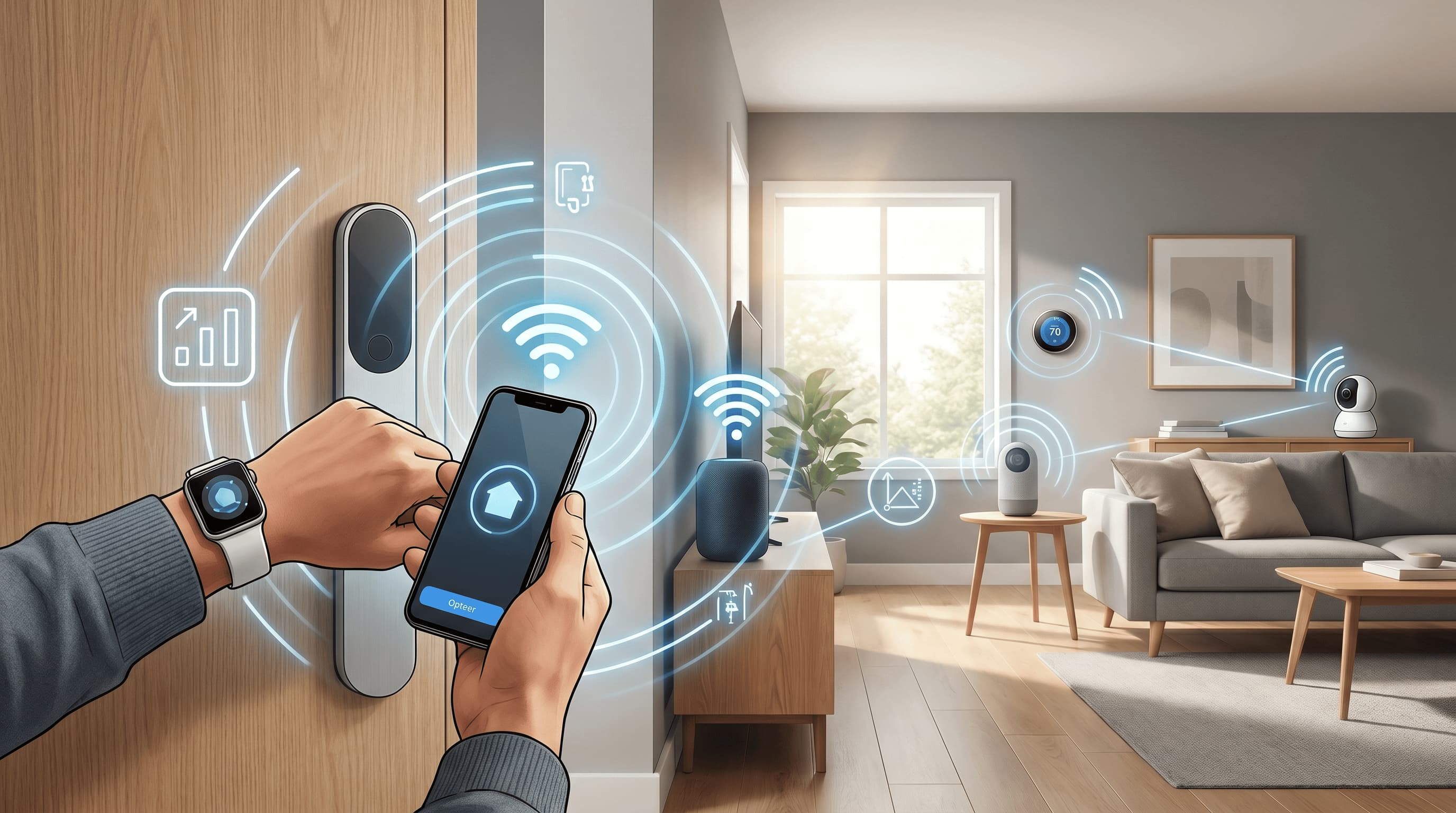
In the bustling world of smart home technology, Wi-Fi and Bluetooth often hog the spotlight. They’re the workhorses, connecting everything from your smart speakers to your light bulbs and thermostats. But beneath the surface, a quieter, yet incredibly powerful, radio technology is gaining traction, poised to fundamentally change how our smart homes understand and interact with us: Ultra-Wideband (UWB).
UWB isn't a newcomer, but its recent adoption in mainstream consumer devices like smartphones and wearables is setting the stage for a revolution in spatial awareness. Imagine a smart home that doesn't just know you're in the house, but precisely where you are, which room you're in, and even which direction you're facing. That's the promise of UWB, and it's why this unassuming radio might just be the smart home radio that truly matters.
What is Ultra-Wideband (UWB), Anyway?
At its core, Ultra-Wideband is a short-range wireless technology that excels at one thing: incredibly precise distance and direction measurement. Unlike Wi-Fi or Bluetooth, which rely on signal strength to estimate proximity (which can be easily influenced by obstacles or interference), UWB uses a different approach. It transmits very short, low-power radio pulses across a wide spectrum of frequencies. By measuring the "time of flight" – the exact time it takes for these pulses to travel between two devices – UWB can determine the distance between them with centimeter-level accuracy.
Think of it like an indoor GPS, but far more precise and without needing satellites. This precision isn't just about knowing "how far," but also "in what direction." Devices equipped with multiple UWB antennas can triangulate signals to pinpoint not only distance but also the angle of arrival, giving them a clear sense of direction. This capability is a game-changer for creating truly context-aware environments.
Beyond Basic Connectivity: The UWB Advantage
While Wi-Fi connects devices to the internet and Bluetooth connects them to each other over short distances, UWB adds a crucial layer of spatial intelligence. This isn't just a niche feature; it unlocks a range of practical benefits that address some of the most persistent frustrations in smart home usability.
Enhanced Security and Accuracy
One of UWB's most compelling advantages lies in its inherent security and resistance to certain types of attacks. Because UWB relies on precise time-of-flight measurements, it's significantly more difficult to spoof or "relay" signals compared to traditional proximity systems that depend solely on signal strength, like some Bluetooth-only solutions. Industry leaders like Qorvo have highlighted how UWB can dramatically improve secure access applications by making it much harder for malicious actors to intercept and retransmit signals to trick a lock or a car into thinking the legitimate owner is present.
For the smart home, this translates directly into more robust security for digital keys and smart locks. Imagine a front door lock that doesn't just unlock when your phone is nearby, but only when your phone is actually at the door, confirming your precise location and preventing "relay attacks" where a thief might try to amplify your phone's signal from a distance. This enhanced security makes UWB an ideal candidate for applications where trust and accuracy are paramount.
Contextual Awareness for a Truly Smart Home
This is where UWB truly shines in making smart homes feel less clumsy and more intuitive. Current smart home automations often rely on simple triggers: motion sensors, time schedules, or basic proximity. UWB adds a layer of precise spatial awareness that can transform these interactions.
-
Effortless Item Finding: We've all seen the magic of Apple AirTags or Samsung SmartTags+, which leverage UWB for highly accurate item finding. Misplaced keys or wallets become much easier to locate, with your phone guiding you directly to them, not just telling you they're "somewhere in the living room."
-
Seamless Digital Car Keys: UWB is already powering digital car keys in many modern vehicles. As you approach your car, it unlocks automatically. As you sit inside, the car confirms your presence and allows you to start the engine, all without taking your phone out of your pocket. This same principle can be extended to your home.
-
Intelligent Door Locks: Beyond basic unlocking, UWB-enabled smart locks could differentiate between you approaching from the outside and you simply walking past the door inside. It could unlock only when you're directly in front of it, ready to enter, and relock securely once you're inside.
-
Presence-Aware Automation: This is perhaps the most exciting application. Instead of lights turning on in an entire room based on a single motion sensor, UWB could enable granular control. As you walk into the kitchen, only the kitchen lights illuminate. As you move to the dining room, those lights fade up while the kitchen lights dim. Your thermostat could adjust based on which part of the house you're occupying, optimizing energy usage and comfort. This moves beyond simple "occupancy" to true "presence."
-
Wearable-Based Home Access: Imagine your smartwatch or fitness tracker becoming your secure digital key. With UWB, your wearable could authenticate your presence and unlock doors, disarm security systems, or activate personalized settings as you move through your home, all without needing to pull out your phone or fumble with keys.
UWB in the Wild: Current Adoption and Future Potential
UWB isn't a futuristic pipe dream; it's already here. Apple's U1 chip, found in iPhones since the iPhone 11, and Google's UWB implementation in Pixel phones, along with Samsung's SmartTags+, are bringing this technology to millions of consumers. The Car Connectivity Consortium (CCC) has embraced UWB for secure digital car keys, ensuring interoperability across different car manufacturers and phone brands. The FiRa Consortium is also working to develop and promote UWB use cases and standards across a broader range of applications.
This widespread adoption in flagship devices is crucial. It means the infrastructure for UWB-powered smart home devices is steadily growing. As more phones, smart speakers, and other hub devices integrate UWB, the potential for a truly spatially aware home ecosystem expands dramatically.
The Hurdles on the Path to Ubiquity
Despite its immense potential, UWB faces several challenges before it becomes as ubiquitous as Wi-Fi or Bluetooth in the smart home.
-
Cost: Integrating UWB chips and antenna arrays adds to the manufacturing cost of devices. This can make UWB-enabled smart home gadgets more expensive than their non-UWB counterparts, potentially slowing adoption in budget-conscious segments.
-
Ecosystem Fragmentation: While standards bodies are working on interoperability, the smart home market is notoriously fragmented. Different manufacturers might implement UWB in proprietary ways, leading to compatibility issues unless a strong, universal standard emerges and is widely adopted.
-
Uneven Device Support: While premium smartphones are increasingly adopting UWB, it's not yet a standard feature across all price points or device categories. For a truly seamless smart home experience, UWB needs to be present in a wider array of devices, from door locks to light switches and home hubs.
-
Integration with Broader Standards: UWB is a radio technology, not a complete smart home platform. For its benefits to be fully realized, it needs to integrate seamlessly with existing and emerging smart home standards like Matter, HomeKit, and Google Home. It provides the "where," but these platforms provide the "what to do with that information."
-
User Education: Explaining the nuanced benefits of UWB – beyond just "finding things" – to the average consumer can be challenging. Its value often lies in subtle improvements to security and convenience that aren't immediately obvious.
Why UWB Matters
UWB is not here to replace Wi-Fi or Bluetooth; it's here to augment them, adding a critical layer of spatial intelligence that has been largely missing from the smart home equation. Wi-Fi connects us to the internet, Bluetooth connects nearby devices, and UWB tells us precisely where those devices, and more importantly, we are in relation to them.
Its ability to provide centimeter-level accuracy and robust directional awareness opens up possibilities for automations that are truly intelligent, secure, and intuitive. From digital keys that are virtually unhackable to lights that follow you from room to room, UWB promises to make our smart homes feel less like a collection of gadgets and more like a responsive, aware environment.
While it still has hurdles to overcome, UWB is quietly laying the groundwork for a future where our homes don't just react to commands, but proactively anticipate our needs based on our precise location. It might not be the loudest radio in the smart home, but its quiet precision could be the key to unlocking a new era of effortless, secure, and truly intelligent living.