Why Software Provenance Is Becoming a Security Baseline
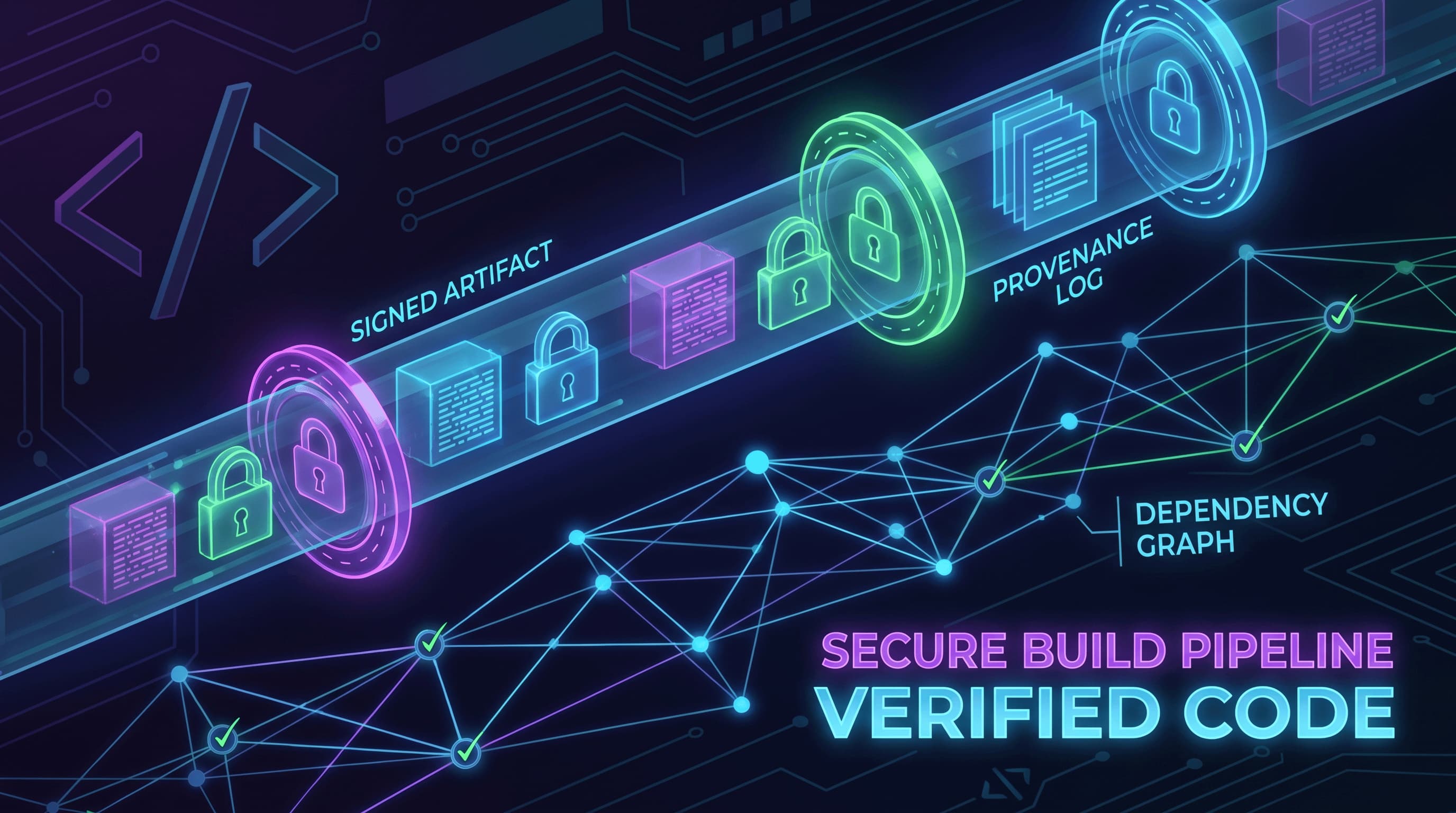
For decades, the bedrock of software security has been vulnerability management. Find a bug, patch it, rinse, repeat. This remains a critical discipline, but the landscape of software development has evolved dramatically. Today, our applications are intricate tapestries woven from countless open-source components, automated build pipelines, and continuous integration/continuous delivery (CI/CD) systems. This complexity introduces a new frontier of security challenges, shifting the focus from merely inspecting the final code for flaws to scrutinizing the entire journey of that code – from its source to the shipped artifact. This is where software provenance steps in, rapidly becoming an indispensable security baseline.
Beyond Patching: Understanding the Software Supply Chain
Think of software development not just as writing code, but as manufacturing. Just as a physical product moves through a supply chain – raw materials sourced, components assembled, quality checks performed – software artifacts traverse a similar, albeit digital, path. Source code is written, dependencies are pulled, compilers and build tools process everything, tests are run, and finally, a deployable artifact is produced. Each step in this digital supply chain represents a potential point of vulnerability, not necessarily due to a coding error, but due to tampering, misconfiguration, or unauthorized access.
The traditional approach of scanning the final product for known vulnerabilities, while necessary, is akin to inspecting a car only after it's rolled off the assembly line, without any knowledge of where its parts came from or how it was put together. What if a malicious actor injected code into a build tool, compromised a dependency, or tampered with the artifact *after* it was built but *before* it reached you? These scenarios highlight the limitations of a solely post-build scanning approach.
This is precisely the problem that frameworks like SLSA (Supply-chain Levels for Software Artifacts) aim to address. SLSA isn't about finding bugs in your application code; it's about ensuring the integrity and authenticity of the software supply chain itself. It provides a set of standards and controls designed to prevent tampering, improve the integrity of build processes, and ensure that the software artifact you receive is exactly what the producer intended, built in a verifiable manner.
What is Provenance, Anyway?
At its core, provenance refers to the origin and history of an object. For an antique, it's the record of its previous owners and where it was made. For a car, it's the service history and manufacturing details. In software, provenance is the comprehensive, verifiable record of how a software artifact was created. It answers critical questions:
- Where did the source code come from?
- What specific commit was used?
- What build system and environment were utilized?
- Which dependencies were included, and at what versions?
- Who authorized and executed the build process?
- When and where was the artifact published?
This isn't just metadata; it's a digital "birth certificate" for your software, detailing its entire journey from source to binary. It provides the crucial context needed to evaluate the trustworthiness of a software artifact, allowing both producers to prove its authenticity and consumers to verify its integrity.
SBOMs, Attestations, and the Trust Factor
Two key concepts work hand-in-hand with provenance to build a robust trust model:
- Software Bill of Materials (SBOMs): An SBOM is essentially an ingredients list for your software. It's a formal, machine-readable inventory of all components, both open-source and proprietary, that make up a software artifact. This includes direct dependencies and their transitive dependencies. While an SBOM tells you *what* is inside the software (and thus helps identify known vulnerabilities within those components), it doesn't tell you *how* that software was built or whether the components themselves were tampered with during the build process.
- Provenance Attestations: This is where provenance truly shines. An attestation is a cryptographically verifiable statement about a specific event or property. For software provenance, an attestation is a signed statement asserting details about the build process – for example, "this artifact was built from this specific source code commit, using this build system, by this identity, at this time." These attestations are generated and signed by the build system itself, providing an immutable, tamper-proof record of the build's integrity.
Together, SBOMs provide transparency into the composition, while provenance attestations provide transparency and verifiability into the creation process. This combination allows consumers to not only see what's in their software but also to confirm that it was built in an expected and untampered manner, significantly elevating the trust factor.
Sigstore: Signing the Digital Journey
While the concept of provenance is powerful, implementing it securely and scalably has been a challenge. This is where Sigstore comes into play. Sigstore is an open-source project designed to make cryptographically signing software artifacts and their associated provenance easy and accessible for everyone. Think of it as a trusted notary public for your software supply chain.
Sigstore provides a free-to-use service that allows developers to sign their software artifacts using short-lived cryptographic keys. These keys are generated on-demand and immediately discarded after use, reducing the risk associated with long-lived signing keys. Crucially, Sigstore also records these signatures and their corresponding provenance information in public, tamper-proof transparency logs (like Rekor). This means that anyone can verify the authenticity of a signed artifact and its build provenance, ensuring that the software they're using hasn't been altered since it was built and signed by the original producer.
For producers, Sigstore simplifies the process of generating and managing cryptographic signatures for their software and build attestations. For consumers, it provides a straightforward mechanism to verify that the software they download is exactly what the producer shipped, built as attested, and hasn't been tampered with along the way.
The Path Forward: A Realistic Outlook
Adopting software provenance practices, including SBOM generation and Sigstore integration, is a journey, not a destination. Many organizations are still in the early stages of implementing these controls, and the ecosystem is continually evolving. It requires changes to build pipelines, integration with existing tools, and a shift in mindset. These tools do not eliminate all risks; no security measure ever does. They are not a silver bullet that will magically solve every software security problem.
However, the direction of travel is clear and undeniable. Given the pervasive use of open source, the ubiquity of automated CI/CD pipelines, and the increasing sophistication of supply chain attacks, understanding and verifying software provenance is no longer a niche concern but a fundamental requirement for a resilient security posture. It's about shifting from reactive vulnerability patching to proactive supply chain integrity.
For engineering leaders, embracing provenance means building greater confidence in the software delivered, reducing exposure to supply chain risks, and potentially meeting evolving regulatory compliance requirements. For developers, it means having verifiable proof that their hard work is delivered securely and untampered. For security teams, it means gaining unprecedented visibility and control over the integrity of their software assets.
Building a More Resilient Software Ecosystem
Software provenance, supported by tools like SBOMs, attestations, and Sigstore, represents a pivotal shift in how we approach software security. It acknowledges that the integrity of software is not just about the code itself, but about the entire process that brings it into existence. By demanding and providing verifiable records of software's origin and build history, we collectively move towards a more transparent, trustworthy, and ultimately more resilient software ecosystem. It's an investment in the foundational trust of our digital infrastructure, ensuring that what we build, deploy, and consume is genuinely what it claims to be.