Why Regulation Is Now a Product Design Constraint
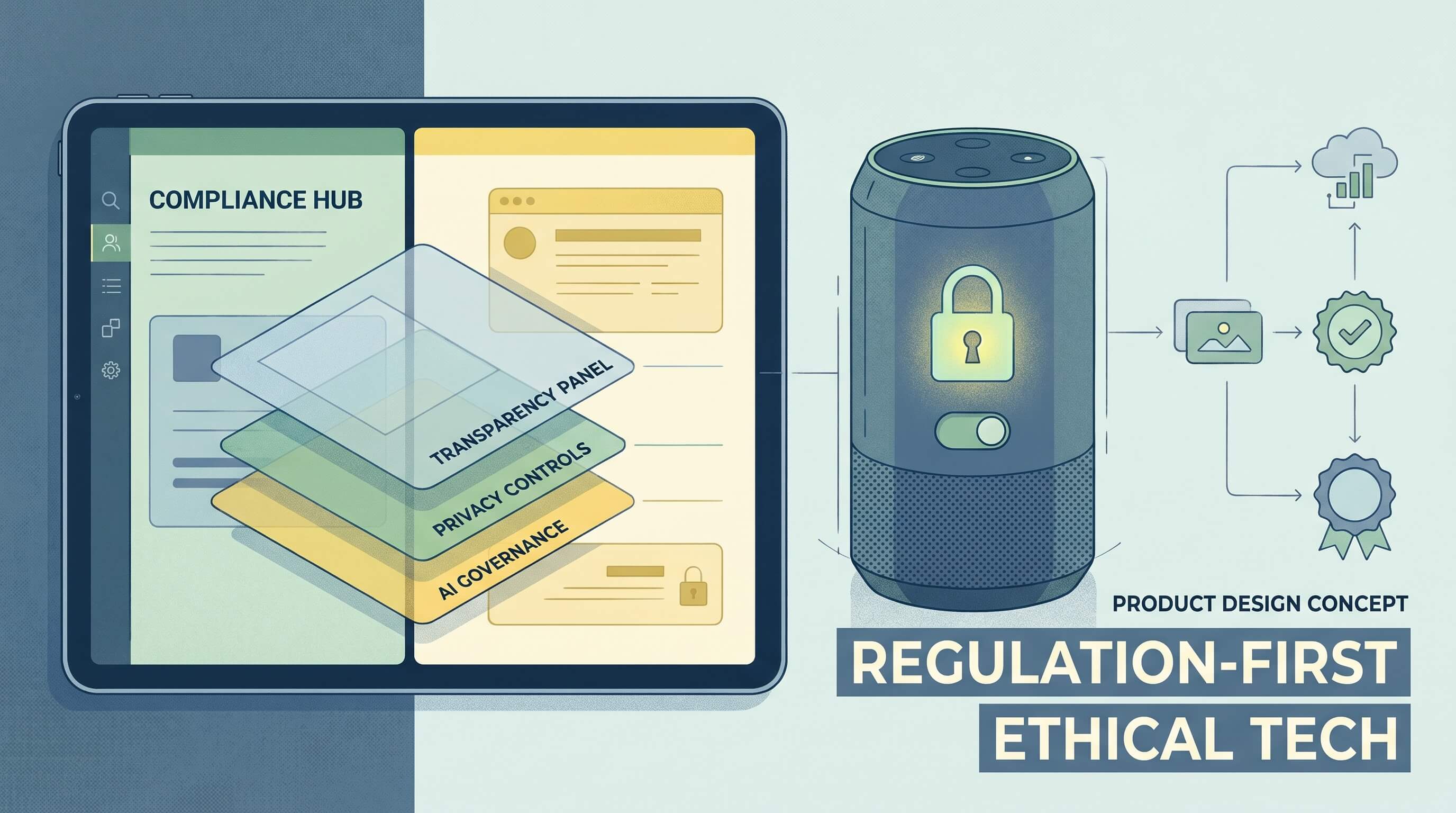
For decades, the world of product development largely operated on a simple premise: build first, then figure out the legal implications. Compliance was often seen as a necessary, albeit sometimes cumbersome, final checklist item, handled by legal teams just before launch. Today, that paradigm has fundamentally shifted. Regulation is no longer a post-design consideration; it has become a foundational constraint, shaping everything from initial concept to user interface, data architecture, and even the underlying algorithms.
The New Reality: Regulation as a Design Input
The days of legal teams swooping in at the eleventh hour to review a nearly finished product are fading. We’re now in an era where regulatory requirements, much like technical specifications or user experience principles, must be integrated into the very fabric of product design from day one. This isn't just about avoiding fines; it's about building products that are inherently trustworthy, transparent, and user-centric in a world that increasingly demands it.
Think about it: how users onboard, the default settings they encounter, the prompts they receive, how their data is accessed and used, the level of explainability for complex systems, consent flows, interoperability with other services, and the audit trails maintained – all these elements are now directly influenced, if not dictated, by evolving regulatory frameworks. This shift is profound, transforming compliance from a legal burden into a core product architecture challenge.
The AI Act: Designing for Trust and Transparency
Perhaps no piece of legislation embodies this shift more clearly than the upcoming AI Act. Far from a simple set of rules, it introduces a comprehensive, risk-based approach to artificial intelligence. For product designers working with AI, this means a new set of non-negotiables.
At its core, the Act categorizes AI systems based on their potential to cause harm. Certain "prohibited practices," deemed unacceptable due to their inherent risk to fundamental rights, are already in force. This immediately sets boundaries for what AI systems can and cannot be designed to do. For instance, systems that manipulate human behavior in ways that could cause significant harm are out of bounds from the drawing board.
But the real design implications come with "high-risk" AI systems – those used in critical infrastructure, employment, law enforcement, or credit scoring, among others. For these systems, the obligations are stringent and deeply embedded in product architecture:
- Risk Management Systems: Designers must integrate robust risk assessment and mitigation processes from the outset, not as an afterthought.
- Data Governance: The Act mandates high-quality datasets, free from bias where possible, and subject to rigorous data governance practices. This impacts how data is collected, labeled, and managed – a fundamental design consideration for any AI product.
- Technical Documentation and Logging: Products must be designed to generate detailed technical documentation and automatically log events throughout their lifecycle. This isn't just a paper trail; it requires specific architectural choices to ensure data capture, storage, and retrievability.
- Transparency and Explainability: Users need to understand that they are interacting with an AI system, and in many cases, how it works. This translates into user interface elements that clearly identify AI interaction and, for high-risk systems, mechanisms to explain the system's output.
- Human Oversight: High-risk AI systems must be designed to allow for effective human oversight, meaning interfaces and control mechanisms that empower humans to intervene, override, or stop the system when necessary.
- Accuracy, Robustness, and Cybersecurity: These aren't just quality metrics; they are explicit regulatory requirements that demand specific design choices in model development, testing, and deployment to ensure reliability and resilience against attacks.
These requirements are not merely legal checks; they are fundamental design constraints that dictate how AI products are conceived, built, and deployed. They push teams to consider ethics, safety, and user control at every stage.
The Digital Markets Act (DMA): Reshaping Digital Ecosystems
Another powerful example is the Digital Markets Act, aimed at making digital markets fairer and more contestable by imposing specific obligations on large online platforms designated as "gatekeepers." The DMA directly impacts how these dominant platforms design their services, fostering competition and user choice.
Consider some of its key provisions and their product design implications:
- Interoperability: In certain situations, gatekeepers must allow their messaging, voice, and video calling services to interoperate with smaller providers. This is a monumental design challenge, requiring open APIs, standardized protocols, and a willingness to integrate with competitors – a complete reversal of traditional walled-garden strategies.
- Data Access for Business Users: Gatekeepers must give business users access to the data they generate when using the gatekeeper’s platform. This means designing robust data dashboards, APIs, and export functionalities that provide granular, usable data to third parties.
- No Self-Preferencing: Gatekeepers cannot unfairly favor their own products or services over those of competitors in ranking or display. This directly impacts search algorithms, app store listings, and default service integrations, requiring a neutral design approach.
- Easy Uninstallation: Users must be able to easily uninstall pre-installed applications or change default settings. This demands straightforward UI/UX for app management and clear choices during device setup.
- Consent for Targeted Advertising: Gatekeepers cannot track users for targeted advertising across their various services without effective user consent. This necessitates sophisticated, transparent, and user-friendly consent management platforms and privacy controls.
The DMA compels gatekeepers to fundamentally rethink their product architecture, moving away from proprietary lock-ins towards more open, user-controlled, and competitive designs.
The Balance: Challenges and Opportunities
It’s undeniable that this new regulatory landscape presents challenges. Integrating compliance early can increase development costs, slow down initial launches, and add layers of complexity to product roadmaps. Legal and engineering teams need to collaborate more closely than ever, often requiring new skill sets and processes.
However, viewing regulation solely as a burden misses a crucial point: it also presents significant opportunities. By forcing product teams to consider safety, transparency, and user control from the outset, regulations can drive better product quality, foster innovation in ethical design, and ultimately build greater user trust. Safer defaults, clearer user controls, robust documentation, and more transparent data practices are not just compliance checkboxes; they are features that enhance user experience and differentiate products in a crowded market.
Furthermore, while many of these groundbreaking regulations originate in the EU, their impact is global. Large technology platforms, operating across multiple jurisdictions, often find it more efficient and strategically sound to redesign their products globally to meet the highest common denominator of regulatory standards. This means that even if your primary market isn't the EU, these principles are likely to influence your product development sooner rather than later.
Conclusion: Design for Regulation, Not Around It
The era of treating regulation as an external, late-stage legal hurdle is over. For modern product teams, especially those building advanced technology like AI or operating large digital platforms, regulatory compliance has become an intrinsic part of product design and architecture. The winning teams will be those that embrace this reality, treating regulatory requirements as valuable design inputs from the earliest conceptual stages. They will integrate legal and policy experts into their core development cycles, fostering a culture where ethical considerations, user rights, and systemic safety are as important as functionality and performance. In this new landscape, designing with regulation, rather than attempting to design around it, will be the key to building successful, sustainable, and trusted technology products.