Why Passkeys Are Moving From Good Idea to Default Security Choice
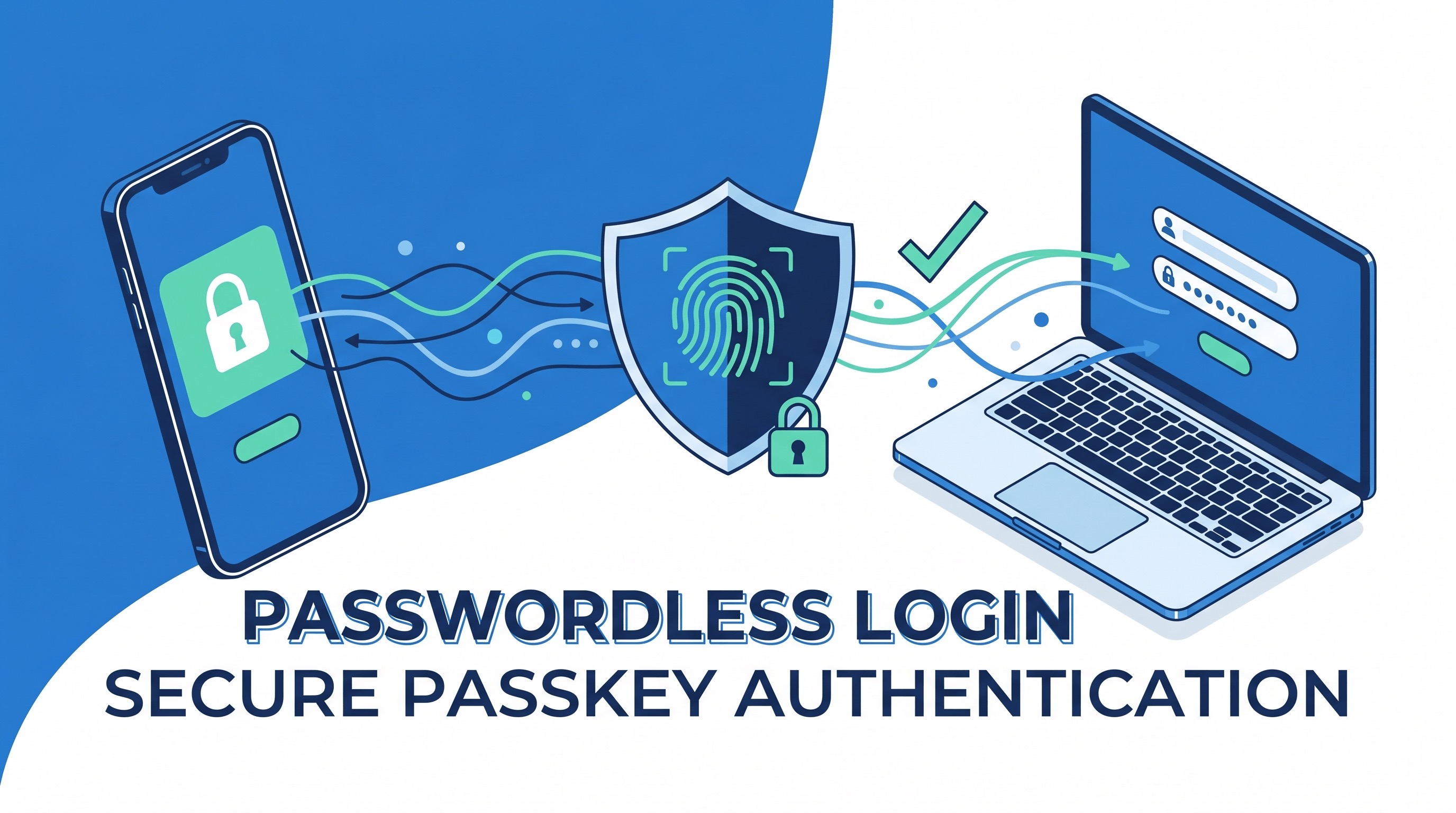
The End of Passwords (Again)? Not Quite, But Close.
For years, we’ve heard the same refrain: passwords are broken. They’re too weak, too easily phished, too often reused, and a constant source of frustration. Yet, despite countless innovations like two-factor authentication (2FA) and biometric logins, the humble password has stubbornly remained the gatekeeper to our digital lives. Now, however, something genuinely revolutionary is happening: passkeys are moving from a good idea into a practical, widely supported default security choice, promising a future where logging in is both safer and simpler.
If you're like most people, you've probably heard the term 'passkey' but might still be a little fuzzy on what it actually entails, how it works, or whether it truly solves the myriad problems that plague traditional passwords. You might be wondering about recovery if you lose your device, how they sync across your various gadgets, or whether they'll play nice between your Apple phone and your Windows PC. These are all valid concerns, and the good news is that the industry has been working hard to address them.
What Exactly Are Passkeys, and Why Are They Better?
At their core, passkeys are a new type of digital credential designed to replace passwords. The FIDO Alliance, a global industry association dedicated to reducing reliance on passwords, describes passkeys as FIDO credentials tied to an account and unlocked with the same simple action you use to unlock your device – think a fingerprint scan, facial recognition, or a PIN. This immediately highlights two massive advantages: they’re incredibly easy to use and inherently phishing-resistant.
Unlike passwords, which are secrets you type into a website, passkeys don't involve a shared secret that can be stolen or guessed. Instead, they leverage public key cryptography. When you create a passkey for a service, your device generates a unique pair of cryptographic keys: a public key and a private key. The public key is sent to the service, while the private key remains securely on your device. When you log in, your device uses its private key to prove your identity without ever sharing it. This fundamental design means that even if a malicious actor sets up a fake website, your passkey won't be tricked into revealing a secret, because there's no secret to reveal to the attacker.
Google has emphasized this point, stating that biometric data used to unlock a passkey stays on your device and is never shared with Google. This local processing of sensitive biometric information further enhances security and privacy, positioning passkeys as significantly more secure against phishing than passwords.
Addressing Your Biggest Concerns: Recovery, Syncing, and Cross-Platform Use
For many, the appeal of passkeys has been tempered by practical questions. What happens if you lose your phone? How do your passkeys move from your old laptop to your new one? And will they work across different operating systems?
Seamless Syncing and Recovery
One of the most significant advancements in passkey technology is the robust support for syncing and recovery. Apple, for instance, explains that passkeys sync securely across your devices through iCloud Keychain, protected by end-to-end encryption. This means if you create a passkey on your iPhone, it's automatically available on your iPad, Mac, and even your Apple TV, provided they're signed into the same iCloud account. Losing a single device no longer means losing access to all your accounts; your passkeys are safely backed up and can be restored on a new device.
Microsoft echoes this commitment to flexibility and accessibility. They support saving passkeys locally on your device, on your phone, on dedicated security keys, or within synced credential managers. This multi-faceted approach ensures that users have options for how and where their passkeys are stored and accessed, making recovery much more straightforward than remembering a forgotten password.
Cross-Platform Harmony
The beauty of passkeys, built on FIDO standards, is their inherent interoperability. While individual companies like Apple and Google provide their own syncing mechanisms, the underlying technology is designed to work across different platforms. This means you can create a passkey on an Android phone and use it to log into a website on a Windows PC, or vice versa. The ecosystem is broadly committed to making passkeys a universal solution.
For example, if you're using a Windows computer, you can often use a passkey stored on your nearby iPhone or Android device to authenticate. This eliminates the need for separate password managers or complex setups for each device or operating system. The goal is a unified, frictionless login experience regardless of the device you're holding.
The Industry's Unwavering Commitment
The shift towards passkeys isn't just a niche trend; it's a concerted effort by the biggest players in tech. Google, Apple, and Microsoft—the giants behind the world's most popular operating systems and web browsers—have all thrown their full weight behind passkeys. This broad commitment is what truly makes passkeys a viable default security choice.
Their combined support means that the infrastructure for creating, using, and managing passkeys is rapidly becoming ubiquitous. From operating system updates to browser integrations, the path to a passwordless future is being paved by these industry leaders. This widespread adoption is crucial for overcoming the chicken-and-egg problem that often plagues new security technologies: users won't adopt it if services don't support it, and services won't support it if users don't adopt it. With Apple, Google, and Microsoft leading the charge, that barrier is rapidly falling.
The Path Forward: A Safer, Simpler Digital Life
Passkeys represent a monumental leap forward in online security and user experience. They eliminate the weakest link in our digital defenses—the human element of remembering and protecting complex passwords—and replace it with something intrinsically more secure and intuitive. No more weak passwords, no more phishing scams tricking you into giving away your credentials, and no more frustrating password resets.
However, it's important to have a balanced perspective. Passkeys are not magic. Adoption will be uneven, and some older services may take time to implement support. There will undoubtedly be edge cases and learning curves as users adapt to this new paradigm. But make no mistake: the industry finally has a security model that is both significantly safer and remarkably easier for ordinary users. The era of the password may not end overnight, but its days as the default security choice are certainly numbered, making way for a future where secure authentication is simply a part of how our devices work.