Why Multimodal AI Is Becoming the Interface to Messy Enterprise Work
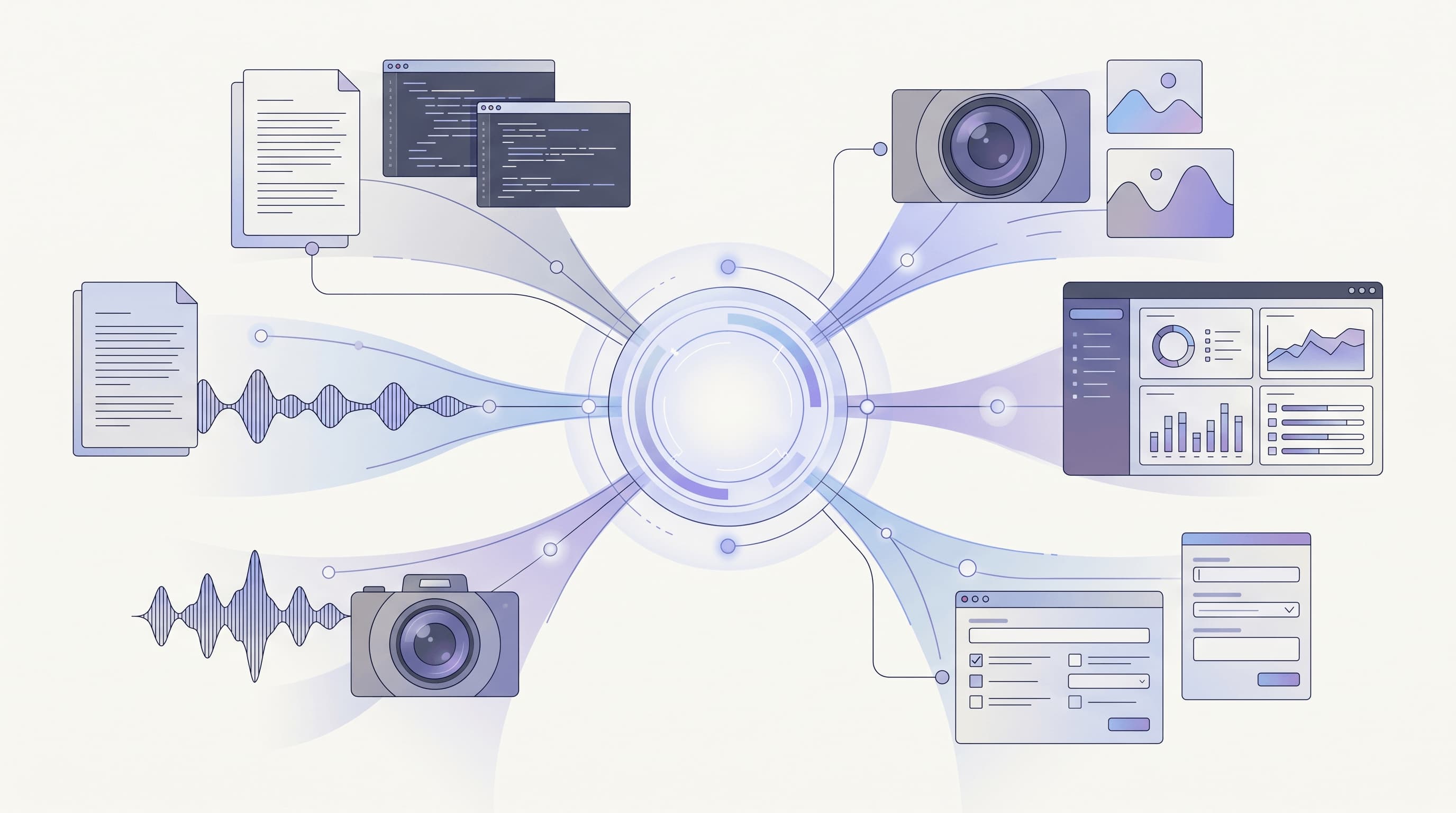
For years, the promise of Artificial Intelligence in the enterprise has been a tantalizing one: smarter automation, deeper insights, and unprecedented efficiency. Yet, for many organizations, AI has often felt like a collection of specialized tools, each excellent in its niche but struggling to connect the dots across the truly messy, multifaceted reality of daily operations. We've seen text-based AI analyze documents, computer vision interpret images, and speech recognition transcribe audio. But what happens when a business problem isn't neatly confined to a single data type?
This is where multimodal AI steps onto the stage, rapidly moving from an academic curiosity to an enterprise necessity. It's becoming the intuitive interface to the inherently complex, often chaotic world of enterprise work, where information rarely arrives in a pristine, uniform format. Real work isn't just about spreadsheets or emails; it involves call recordings, security camera feeds, customer screenshots, handwritten forms, sensor logs, and much more. Multimodal AI is designed precisely for this reality, allowing AI systems to perceive, interpret, and reason using a combination of text, images, video, audio, and structured data, all within a single, cohesive workflow.
The Messy Truth of Enterprise Data
Think about any complex business process. A customer support agent isn't just reading a chat transcript; they might also be looking at a screenshot the customer provided, listening to a previous call recording, and checking their purchase history in a CRM system. A manufacturing quality engineer doesn't just review sensor data; they also visually inspect components, read production logs, and consult design blueprints. An insurance claims adjuster evaluates text descriptions, photographs of damage, and perhaps even video footage from an accident scene.
These scenarios highlight a fundamental truth: enterprises do not operate in neat, text-only inputs. Human experts naturally integrate information from various senses and sources to form a complete understanding. For AI to truly augment human capabilities and automate complex tasks, it must also learn to do the same. Bolting together separate AI tools—one for text, one for vision, one for audio—often results in fragmented insights, increased complexity in integration, and a lack of holistic understanding. The real power emerges when these different modalities are processed not just in parallel, but in an integrated fashion, allowing for cross-modal reasoning.
Beyond Silos: The Power of Cross-Modal Reasoning
At its heart, multimodal AI isn't simply about having multiple AI models working side-by-side. It's about enabling these models to understand the relationships and context between different data types. This is "cross-modal reasoning." For example, an AI system analyzing a manufacturing defect might not just see a visual anomaly in a camera feed; it might also correlate that anomaly with a spike in vibration data from a nearby sensor, a specific batch number from a production log, and a relevant warning in a maintenance manual's text. This integrated understanding leads to far more accurate diagnoses and predictive capabilities than any single-modal system could achieve.
Why does this matter so profoundly? Because it allows AI to build a richer, more contextualized understanding of a situation, much like a human expert would. A picture of a damaged product gains immense meaning when combined with a customer's textual description of how the damage occurred, the product's purchase date, and its warranty status. This holistic view enhances accuracy, reduces ambiguity, and unlocks insights that would otherwise remain hidden within data silos. It moves AI from being a sophisticated pattern matcher within a single domain to a genuine problem-solver that can synthesize information across an entire enterprise ecosystem.
Multimodal AI in Action: Transforming Enterprise Workflows
The practical applications of multimodal AI are vast and impactful, addressing some of the most challenging and data-intensive aspects of enterprise operations:
Manufacturing Quality Control
Imagine an AI system monitoring a production line. It combines real-time video feeds to detect visual defects, acoustic sensors to identify unusual machinery noises, thermal imaging to spot overheating components, and structured data from production logs to track batch quality. This multimodal approach can identify subtle anomalies, predict equipment failures before they occur, and ensure higher product quality with unprecedented precision.
Medical Diagnosis and Patient Care
In healthcare, multimodal AI can integrate patient records (text), medical images like X-rays or MRIs (visual), lab results (structured data), and even audio recordings of patient symptoms or doctor's notes. By correlating these diverse inputs, AI can assist clinicians in making more accurate diagnoses, personalizing treatment plans, and identifying potential risks earlier.
Insurance Claims Processing
Processing insurance claims is notoriously complex. Multimodal AI can ingest claim forms (text), accident photos or videos (visual), police reports (text), and audio transcripts of calls with claimants. It can rapidly assess damage, verify details against policy terms, detect potential fraud by cross-referencing discrepancies across modalities, and significantly accelerate the claims resolution process.
Retail Returns and Inventory Management
When a customer returns an item, multimodal AI can analyze their textual reason for return, compare it with photos or videos of the returned product, and cross-reference purchase history. This helps retailers quickly verify return eligibility, identify damaged goods, understand common return patterns, and improve inventory forecasting.
Security Monitoring and Threat Detection
Security operations centers can leverage multimodal AI to analyze live video feeds for suspicious movements, audio feeds for unusual sounds (e.g., breaking glass, alarms), and access logs or network traffic data. The AI can correlate these inputs to identify genuine threats more accurately and rapidly, reducing false positives and enabling quicker responses.
Enhanced Customer Support
Customer support is a prime candidate. AI can process chat transcripts, analyze sentiment from call recordings, interpret screenshots provided by customers showing technical issues, and pull relevant information from CRM systems. This allows AI agents to provide more accurate and empathetic responses, resolve issues faster, and escalate complex cases with richer context to human agents.
Navigating the Path to Multimodal AI: Challenges and Considerations
While the benefits are compelling, implementing multimodal AI is not without its challenges. Enterprises must approach this transformation thoughtfully:
Data Integration Complexity
The biggest hurdle is often data integration. Most enterprises have data silos, with information spread across disparate systems, formats, and departments. Creating robust data pipelines to ingest, clean, normalize, and align diverse modalities is a significant undertaking. A unified data strategy is paramount.
Governance, Privacy, and Compliance
Handling multiple data types, especially those containing sensitive information (like medical images, personal audio, or customer data), introduces complex governance, privacy, and compliance requirements. Adhering to regulations like GDPR, HIPAA, or CCPA becomes even more critical, demanding robust data anonymization, access controls, and transparent usage policies.
Computational Resources and Cost
Processing and training multimodal models are computationally intensive. Analyzing high-resolution video, large audio files, and extensive text datasets simultaneously requires significant computing power, storage, and specialized hardware, which can translate into substantial infrastructure and operational costs.
Model Complexity and Explainability
Multimodal models are inherently more complex than their single-modal counterparts. While they offer superior performance, their decision-making processes can be harder to interpret, posing challenges for explainability, especially in regulated industries where understanding "why" an AI made a certain decision is crucial.
Talent and Expertise
Developing and deploying multimodal AI solutions requires a specialized skill set. Enterprises need data scientists, machine learning engineers, and domain experts who can work across different data modalities and understand the nuances of cross-modal reasoning.
The Interface to the Future of Enterprise Work
Multimodal AI represents a significant leap forward in how artificial intelligence can truly integrate into the fabric of enterprise operations. It acknowledges the inherent "messiness" of real-world data and provides a powerful framework for AI systems to perceive and reason more like humans do. By moving beyond siloed data processing, multimodal AI offers a holistic understanding that drives unparalleled efficiency, accuracy, and insight across complex workflows.
While the path to full implementation requires strategic investment in data infrastructure, governance, and talent, the strategic advantages are clear. Multimodal AI isn't just another technological advancement; it's becoming the essential interface that bridges the gap between the structured world of computing and the rich, diverse, and often chaotic reality of enterprise work. It's the future of how AI will truly unlock its full potential, transforming businesses one complex, multimodal problem at a time.