Why LPCAMM2 Could Fix What Is Broken About Laptop Memory
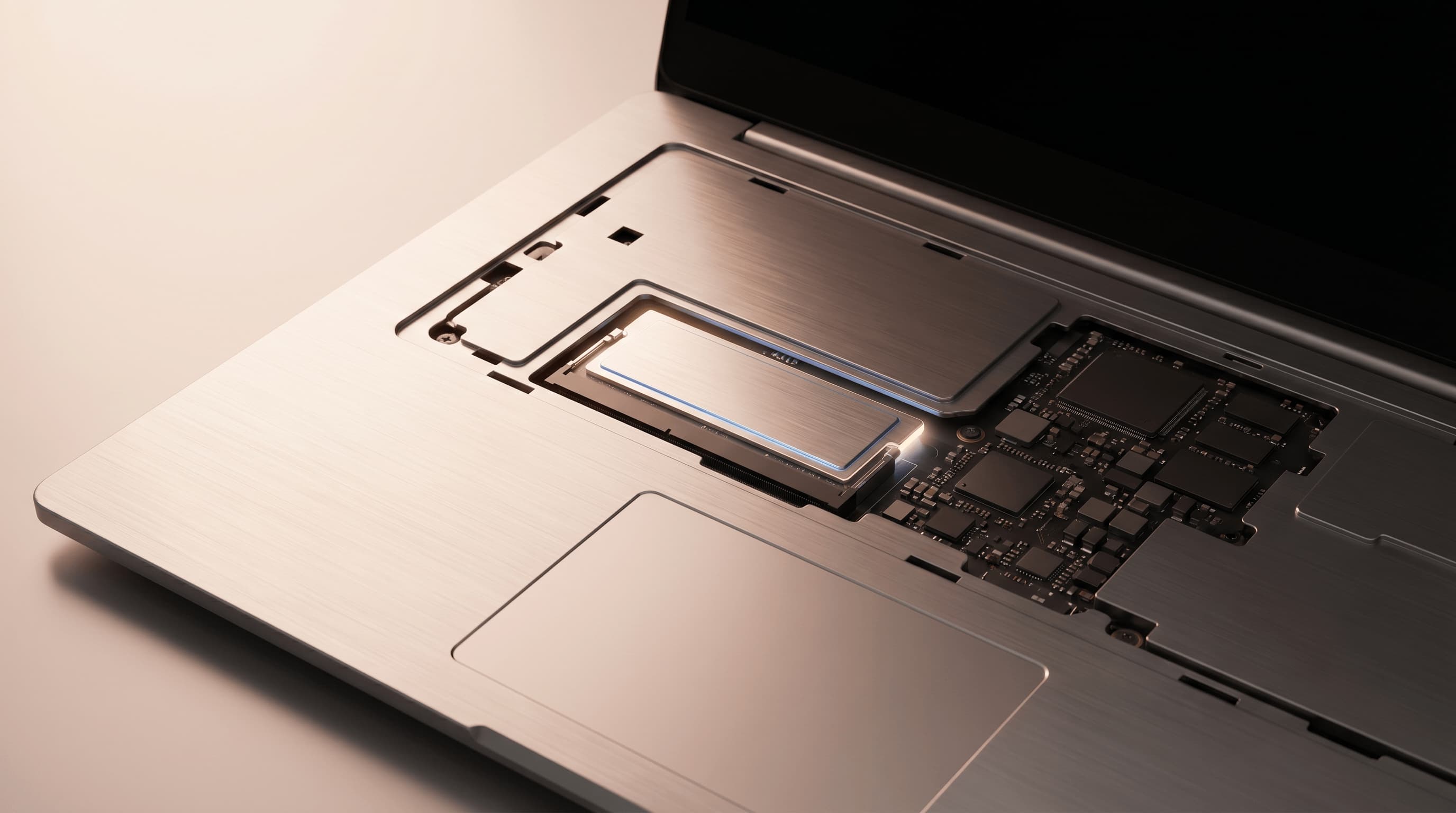
For years, a silent battle has been waged inside our laptops. On one side, manufacturers push for ever-thinner, lighter, and more power-efficient designs. On the other, users crave repairability, upgradeability, and the freedom to extend the life of their devices. Often, memory has been a casualty in this conflict, increasingly soldered directly onto the motherboard, much to the frustration of anyone who’s ever tried to upgrade or repair a modern laptop.
But what if there was a way to have our cake and eat it too? What if we could enjoy the sleek aesthetics and battery life of today's thin-and-light machines without sacrificing the fundamental ability to upgrade or replace our RAM? Enter LPCAMM2, a new memory standard that promises to bridge this divide and potentially fix what many consider a broken aspect of laptop design.
The Soldered Memory Dilemma: Why It Became the Norm
To understand why LPCAMM2 is such a big deal, we first need to grasp the forces that led to soldered memory becoming so prevalent. Modern laptops, especially ultrabooks and premium models, prioritize thinness and battery life above almost all else. Soldering memory directly onto the motherboard offers several compelling advantages for manufacturers:
Design and Manufacturing Benefits:
Space Savings: Soldered memory chips take up less vertical space than traditional SODIMM modules, allowing for thinner chassis designs. Every millimeter counts in the quest for the slimmest laptop.
Simpler Assembly: For manufacturers, soldering memory can streamline the assembly process by reducing the number of components that need to be individually installed by the end-user or even by factory workers.
Improved Signal Integrity: Shorter electrical traces between the CPU and memory chips can lead to better signal integrity, potentially allowing for higher memory speeds and greater stability.
Lower Power Consumption (LPDDR): This is perhaps the most significant factor. Many thin laptops use Low Power Double Data Rate (LPDDR) memory, such as LPDDR4X or LPDDR5X. LPDDR is designed for maximum power efficiency, which is critical for extending battery life in portable devices. Historically, LPDDR has been designed to be soldered directly to the motherboard due to its specific electrical requirements and the need for very short, optimized traces to achieve its power and performance targets.
The User's Perspective: A Trade-Off
No Upgrades: The most obvious drawback is the inability to upgrade your RAM. If you buy a laptop with 8GB of soldered memory and later find you need 16GB for your tasks, you're out of luck. Your only option is to buy a new laptop.
Difficult and Costly Repairs: If a memory chip fails, the entire motherboard often needs to be replaced, which can be prohibitively expensive, sometimes costing as much as a new laptop. This significantly shortens the practical lifespan of the device.
Forced Obsolescence: The inability to upgrade memory means that as software demands grow, your laptop might become functionally obsolete sooner than its other components would suggest, pushing you towards an earlier replacement.
Guessing Future Needs: Buyers are forced to make a difficult decision at the point of purchase, trying to predict their memory needs years into the future. Underestimate, and you're stuck; overestimate, and you've paid for capacity you might not use.
LPCAMM2: Bridging the Divide
This is where LPCAMM2 (Low Power Compression Attached Memory Module 2) steps in. Developed by industry leaders like Micron and standardized by JEDEC, LPCAMM2 aims to offer the best of both worlds: the power efficiency and performance of LPDDR5X memory combined with the modularity and upgradeability of traditional SODIMM modules.
What Makes LPCAMM2 Different?
Unlike SODIMM, which uses a slotted connector, LPCAMM2 modules are secured with a compression connector. This design allows for a much thinner profile than SODIMM, making it suitable for the same thin-and-light laptop designs that typically rely on soldered LPDDR memory. Crucially, it uses LPDDR5X memory chips, meaning it retains the excellent power efficiency and high bandwidth that LPDDR is known for.
Imagine a memory module that's as thin as a piece of cardboard, yet packs the punch of high-performance LPDDR5X RAM, and can be easily swapped out. That's the promise of LPCAMM2.
The Potential Benefits of LPCAMM2:
Retained LPDDR Efficiency: Laptops can still leverage the power-saving benefits of LPDDR5X, leading to longer battery life and cooler operation, without having to solder the chips directly.
Modular and Upgradeable: This is the game-changer. Users can finally upgrade their laptop memory post-purchase, just like with traditional SODIMM. Need more RAM for a new creative project or a demanding game? Simply swap out the module.
Enhanced Repairability: If a memory module fails, it can be replaced individually, dramatically reducing repair costs and extending the lifespan of the laptop. This is a huge win for sustainability.
Design Flexibility for OEMs: Manufacturers can continue to design thin and sleek laptops, but now with the option to offer modular memory. This could allow for more diverse product lines and cater to different user segments.
Space Efficiency: LPCAMM2 modules are significantly more compact than SODIMM modules, allowing for thinner device profiles while still being removable.
Why LPCAMM2 Matters for You
For the average laptop user, LPCAMM2 represents a significant step forward. It means greater control over your device, potentially saving you money and reducing electronic waste. No longer would you be locked into a fixed memory configuration for the life of your laptop. It empowers you to make your device last longer and adapt to your evolving needs.
For businesses and educational institutions, the implications are also profound. Easier upgrades and repairs can lead to lower total cost of ownership and more sustainable technology deployment strategies.
The Road Ahead: Adoption is Key
While the technical promise of LPCAMM2 is exciting, it's important to be realistic. Standards, no matter how elegant, only matter if original equipment manufacturers (OEMs) actually adopt and widely ship products incorporating them. We've seen many promising technologies fail to gain traction simply because manufacturers didn't see enough incentive to switch from established, cost-optimized practices.
Early adoption is still in its nascent stages. We're beginning to see some high-end workstations and a few premium laptops incorporate LPCAMM2, but it will take time for it to trickle down to mainstream and budget-friendly devices. The industry needs to embrace this standard for its full potential to be realized.
However, the benefits of LPCAMM2 are so compelling – a genuine win-win for both manufacturers (design flexibility, LPDDR efficiency) and consumers (upgradeability, repairability, longevity) – that there's strong hope for its widespread integration. It's a chance to rectify a long-standing frustration in the laptop market and usher in an era where sleek design doesn't have to come at the expense of user empowerment.
LPCAMM2 isn't just a new memory module; it's a statement about the future of computing, one where efficiency and modularity can coexist. Keep an eye on new laptop announcements – the presence of LPCAMM2 could be a strong indicator of a laptop designed with both performance and user longevity in mind.