Why EV Charging Reliability Is Becoming the Real Market Differentiator
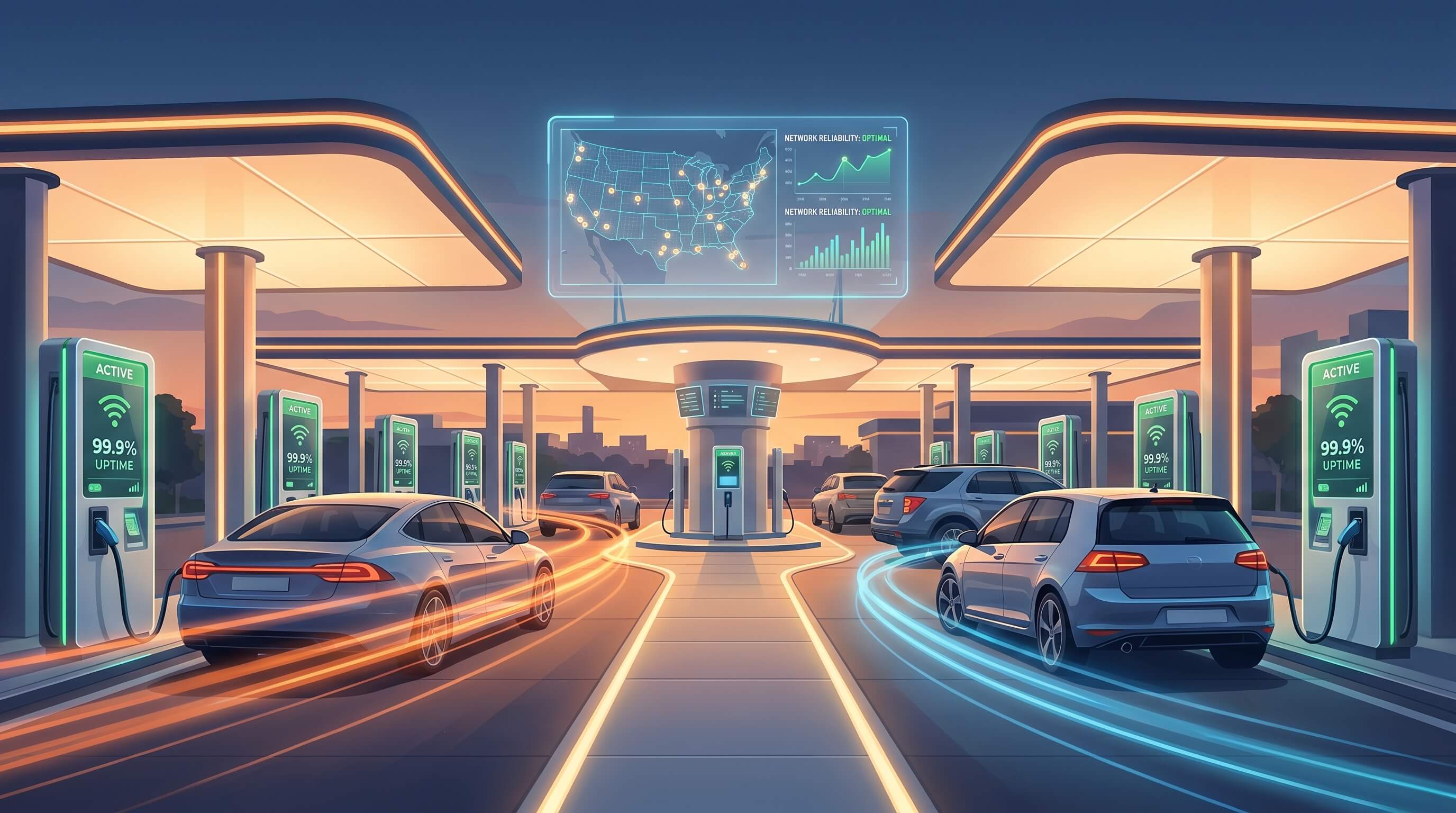
Public discussion about electric vehicles often gets stuck on range. Buyers ask how many miles a car can travel, brands advertise battery size, and skeptics imagine being stranded with nowhere to charge. But for many drivers, the more immediate issue is simpler: will the charger actually work when they arrive? That question is why charging reliability is becoming one of the most important competitive variables in the EV market.
Research from Harvard based on more than a million charging-station reviews suggested that public charging reliability in the United States was roughly 78 percent, which means about one in five charging attempts may involve a problem. That headline matters because it reframes the adoption debate. Consumers do not experience infrastructure as an average national rollout statistic. They experience it as a moment of trust. The station either starts charging quickly and predictably, or it creates stress, delay, and doubt about owning an EV at all.
Reliability is broader than uptime
It is tempting to treat reliability as a narrow technical measure, but drivers use the word more broadly. A charger may be online in a network dashboard and still fail the real-world test. Broken connectors, frozen screens, payment failures, software handshake errors, poor lighting, blocked stalls, confusing signage, and long queues all degrade the experience. In practice, reliability is the ability to arrive, understand the site, authenticate payment, plug in, and leave with usable energy at a reasonable speed.
That broader definition matters because EV charging is part infrastructure, part software, and part retail operations. A gas pump that takes cards, dispenses fuel, and sits in a visible, well-lit forecourt solves a mature operational problem. Public charging still too often behaves like an immature distributed system. It depends on hardware maintenance, network connectivity, app design, payment interoperability, field service response, and site host cooperation. Any weak link is visible to the customer.
Why reliability now beats spec-sheet theater
For early adopters, occasional charging friction was tolerable because the broader appeal of EVs outweighed the inconvenience. That audience helped prove demand, but the next wave of drivers is less forgiving. Mainstream buyers compare EV charging against ordinary daily habits, not against a technology enthusiast’s patience. If public charging feels inconsistent, every good product trait, from acceleration to quiet cabins, is undermined at the moment of refueling.
That is why reliability is becoming a real market differentiator. Automakers, charging networks, fleet operators, and site hosts all have incentives to move past raw charger-count announcements toward service quality. A smaller network that works consistently can earn more trust than a larger network with erratic maintenance. Over time, trust changes behavior. Drivers plan shorter buffers, take more road trips, and recommend EVs more confidently when they believe charging will simply work.
Policy is pushing the market in the same direction
US policy is reinforcing that shift. The Federal Highway Administration’s NEVI program does not just fund new chargers. It explicitly pulls operation, maintenance, data reporting, and reliability-related requirements into the build-out model. That is significant because it recognizes a hard truth about infrastructure: installed hardware is not the same thing as delivered service.
NEVI-funded chargers must also be non-proprietary, support open-access payment, and share data. Those rules matter because they reduce the number of ways a network can quietly fail users. Open payment lowers app friction. Non-proprietary equipment can help broaden vendor choice and maintenance options. Data sharing improves transparency and route planning. Put together, those requirements nudge the market toward charging as a dependable public utility layer rather than a scattered collection of semi-functional endpoints.
The customer experience is physical as well as digital
A reliable charging site is not defined only by electronics. Placement, lighting, weather protection, queue design, and access hours all shape whether drivers feel confident using it. A charger hidden behind a dealership gate or placed in a dark corner of a parking lot may technically exist, but it does not generate trust. Likewise, a site with too few stalls can feel unreliable even if every unit is operational, because long queues make availability unpredictable.
This is why the strongest operators increasingly think like hospitality businesses as much as utility providers. They need clear wayfinding, visible support, functioning amenities, and maintenance practices that minimize downtime. Reliability is experienced as a whole journey, not a backend metric. Networks that understand that will likely outperform those still optimizing only for hardware deployment counts.
Data and maintenance will decide winners
The next phase of competition will be operational. Winning networks will be the ones that detect failures quickly, dispatch maintenance fast, manage parts inventory intelligently, and use software telemetry to catch degraded chargers before drivers complain. Payments and software integration matter too. If a charger works electrically but fails at authorization, customers still record the stop as a failure.
For automakers, this creates strategic pressure. They can no longer treat charging as someone else’s problem. Brand perception gets damaged when the vehicle owner cannot refuel smoothly, even if the network is run by a separate company. That is why automakers are investing in partnerships, in-car routing improvements, plug-and-charge experiences, and in some cases dedicated network access. The market is converging on a simple idea: vehicle quality and charging quality are part of the same ownership experience.
Reliability shapes adoption economics
Reliable charging does more than improve convenience. It changes residual values, fleet confidence, financing assumptions, and total cost of ownership calculations. Delivery fleets, ride-hail operators, and apartment-dwelling consumers all depend heavily on predictable charging access. For them, one broken charger is not an annoyance but a scheduling and revenue problem. Better reliability expands the set of people for whom an EV is practical, which directly expands market demand.
That is also why the debate over charging should move beyond raw station counts. A network with strong uptime, clean data, easy payment, and rapid repair cycles creates more real utility than a larger network with persistent friction. If the industry wants EV adoption to become boringly normal, boring reliability is exactly what it has to deliver.
The quiet winner in the EV race
Range still matters, and battery technology will keep improving. But the daily experience of owning an EV increasingly depends on infrastructure trust. Consumers remember the station that would not start, the broken connector, the queue with no status visibility, or the app that failed after midnight in bad weather. They also remember the site that simply worked.
That is why charging reliability is becoming the real differentiator. It sits at the point where hardware, software, operations, and public policy meet customer emotion. The networks and automakers that solve it will not just win better satisfaction scores. They will make EV ownership feel dependable enough for the mainstream, and that is the kind of advantage that changes markets.