Why Ethereum Layer 2 Fees Changed the Crypto User Experience
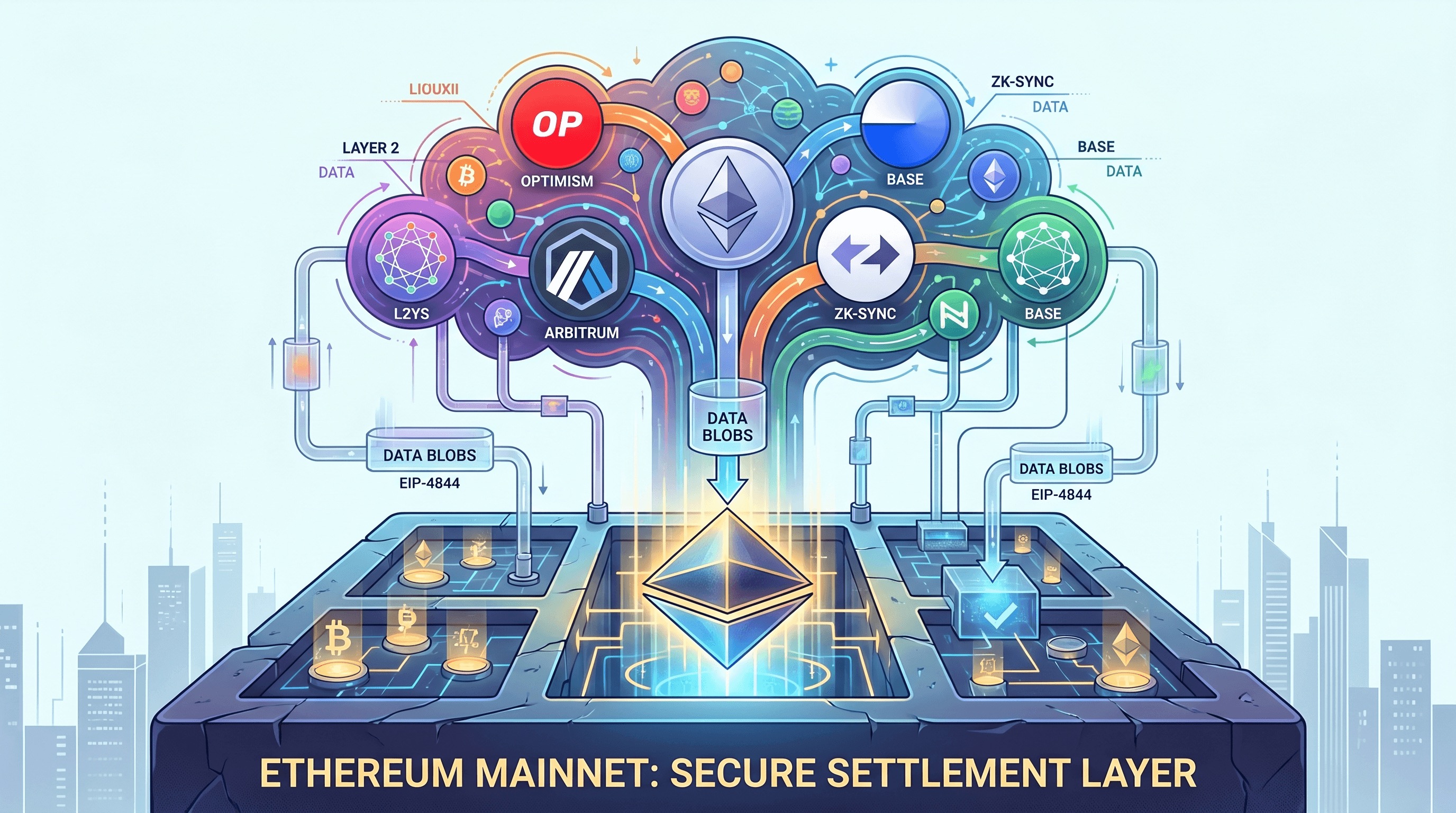
Remember the early days of interacting with Ethereum, when every click, every transaction, felt like a high-stakes gamble against soaring gas fees? Transferring a small amount of ETH could cost more than the transaction itself, and experimenting with a new decentralized application (dApp) often required a deep breath and a willingness to part with a significant sum just to approve a contract. This wasn't just an inconvenience; it was a fundamental barrier to mainstream adoption, making the promise of decentralized finance and web3 feel distant and exclusive.
Fast forward to today, and the landscape has dramatically shifted. Thanks to the rise of Ethereum Layer 2 (L2) networks and a pivotal upgrade known as EIP-4844 (proto-danksharding), the cost of interacting with the Ethereum ecosystem has plummeted. But this change isn't merely about saving a few dollars; it has profoundly altered the very feel of using crypto, transforming it from an expensive, clunky experience into something far more fluid, accessible, and practical for everyday users.
The High Cost of On-Chain Permanence
To understand this transformation, we need to revisit the core challenge. Ethereum mainnet, by design, is a robust and secure decentralized computer. Every transaction, every piece of data, is processed and stored permanently on its blockchain. This permanence, while critical for security and immutability, comes at a cost. When the network became congested with increasing demand for DeFi, NFTs, and other dApps, the competition for block space drove transaction fees (gas) to astronomical levels. These fees were primarily for two things: computation and data storage. Storing transaction data (known as "calldata") forever on the mainnet was particularly expensive, as it contributed to the ever-growing size of the blockchain that every full node needed to store.
This economic reality meant that many potential use cases for crypto were simply non-starters. Micro-transactions, frequent in-game actions, small token swaps, or even just casually exploring new dApps became economically unfeasible for most users. The promise of a decentralized internet where anyone could participate felt limited to those with deep pockets or very specific, high-value use cases.
Layer 2s: The Scalability Solution
The solution emerged in the form of Layer 2 networks, primarily "rollups." Rollups work by executing transactions off the main Ethereum chain, bundling hundreds or even thousands of these transactions together, and then posting a highly compressed summary or cryptographic proof of these transactions back to the Ethereum mainnet. Ethereum, in this architecture, acts as the ultimate security and settlement layer, ensuring the integrity of the data posted by the rollups. Users, however, spend most of their time interacting directly with the L2s, benefiting from their significantly higher throughput and lower transaction costs.
Initially, even with rollups, the cost of posting the bundled transaction data back to the mainnet could still be substantial, as this data was still stored as expensive "calldata." This is where EIP-4844, also known as proto-danksharding, entered the picture as a game-changer.
EIP-4844 and the Magic of Blobs
EIP-4844 introduced a new type of transaction data specifically designed for rollups: "blobs" (or "data blobs"). Unlike regular calldata, which is stored permanently on the Ethereum blockchain, blobs are designed for temporary storage. They are available for a relatively short period (typically a few weeks) for L2s to verify their transactions, and then they are pruned from the mainnet. This temporary nature means blobs are significantly cheaper to store than permanent calldata.
The impact of this seemingly technical upgrade has been profound. By providing a dedicated, cheaper channel for L2s to post their transaction data, EIP-4844 drastically reduced the operational costs for rollups. This reduction directly translated into plummeting transaction fees for end-users on networks like Arbitrum, Optimism, zkSync, and Base. What once cost dollars now costs cents, or even fractions of a cent.
How Low Fees Reshaped the User Experience
The shift from expensive to negligible fees has done more than just save users money; it has fundamentally altered the crypto user experience in several key ways:
Enabling Micro-Transactions and Experimentation
With fees so low, small-value transactions are now economically viable. Sending a friend $10 in stablecoins, participating in a small-stakes game, or even claiming a free NFT no longer feels like paying a premium for the privilege. This opens the door for a wave of new dApps and use cases that were previously stifled by high costs. Users can now experiment freely with new protocols, swap tokens without significant slippage being eaten by gas, and explore the vast web3 ecosystem without constant anxiety about transaction costs.
A Smoother, More Responsive Feel
The psychological barrier of high fees is gone. Interacting with dApps now feels more akin to using traditional web applications. The friction is significantly reduced, making the entire experience smoother and more responsive. This subtle but powerful change makes crypto feel less like a specialized, high-finance tool and more like an integral part of an everyday digital experience. It fosters a sense of freedom and encourages deeper engagement with decentralized services.
Ethereum as a Settlement Layer, L2s as Execution Layers
This evolution solidifies Ethereum's role as a robust, secure "settlement layer" – the ultimate arbiter of truth and security for the entire ecosystem. The L2s, meanwhile, have become the "execution layers" where the vast majority of user activity and computation takes place. This modular blockchain architecture is not just a theoretical concept; it's the lived reality for millions of crypto users today. Most users now spend their time on L2s, only interacting with the mainnet when absolutely necessary, usually for large value transfers or bridging assets.
Navigating the Tradeoffs: The Path Ahead
While the benefits of cheaper L2 fees are undeniable, this architectural shift isn't without its complexities and tradeoffs. It's important to be candid about the challenges that arise from this new paradigm:
Fragmented Liquidity and Bridging Complexity
With assets spread across multiple L2s and the mainnet, liquidity can become fragmented. Finding deep liquidity for specific trading pairs might require hopping between networks. This necessitates "bridges" – protocols that allow users to move assets between different chains. While essential, bridges introduce complexity, potential security risks (as they are often targets for exploits), and can sometimes involve delays or additional fees. The user experience of moving assets between chains is still far from seamless.
Chain Confusion and User Onboarding
For new users, the proliferation of L2s (Arbitrum, Optimism, Base, zkSync Era, Linea, Scroll, and many more) can be bewildering. "Which chain am I on?" "Which network should I use?" "Why do I need to switch networks in my wallet?" These are common questions that add friction to the onboarding process. While beneficial for scalability, the current multi-chain reality presents a significant challenge for user education and simplicity.
Governance and Value Accrual
Many L2s have their own tokens and governance models, adding another layer of political and economic complexity to the ecosystem. Furthermore, the long-term question of how much economic value ultimately accrues back to the Ethereum mainnet remains an open discussion. While L2s pay fees to Ethereum for security, the exact mechanisms and extent of this value flow are still evolving and subject to ongoing debate.
A Necessary, But Not Sufficient, Step
In conclusion, the dramatic reduction in transaction fees on Ethereum Layer 2 networks, largely driven by innovations like EIP-4844 and data blobs, represents a monumental leap forward for the entire crypto ecosystem. It has moved beyond mere cost savings to fundamentally reshape the user experience, making decentralized applications more accessible, more experimental, and simply more enjoyable to use. The vision of Ethereum as a secure settlement layer underpinning a vibrant, scalable multi-chain future is increasingly a reality.
However, cheaper transactions, while necessary, are not sufficient for true mainstream adoption. The next phase of evolution must focus on enhancing the overall user journey. This includes developing more intuitive and user-friendly wallets that abstract away network complexities, building seamless interoperability solutions that make moving assets between L2s effortless, and refining the user interface of dApps to be as simple and engaging as their Web2 counterparts. The foundation for an accessible crypto future has been laid, but the journey towards a truly frictionless and universally adopted decentralized internet continues, with user experience at its very heart.