Why Data Clean Rooms Are Becoming Core Privacy Infrastructure
The digital world is undergoing a profound transformation. For years, the internet ran on a relatively simple premise: track users across sites, aggregate data, and target ads. The ubiquitous third-party cookie was the workhorse of this system, enabling everything from personalized recommendations to cross-site attribution. But those days are rapidly fading into the rearview mirror.
The demise of third-party cookies, coupled with an ever-tightening regulatory landscape (think GDPR, CCPA, and their global counterparts), has created a new imperative. Privacy is no longer a mere compliance checkbox; it's becoming an architectural problem, demanding fundamental shifts in how data is collected, shared, and analyzed. In this evolving environment, a powerful solution is rising to prominence: the data clean room.
What Exactly is a Data Clean Room?
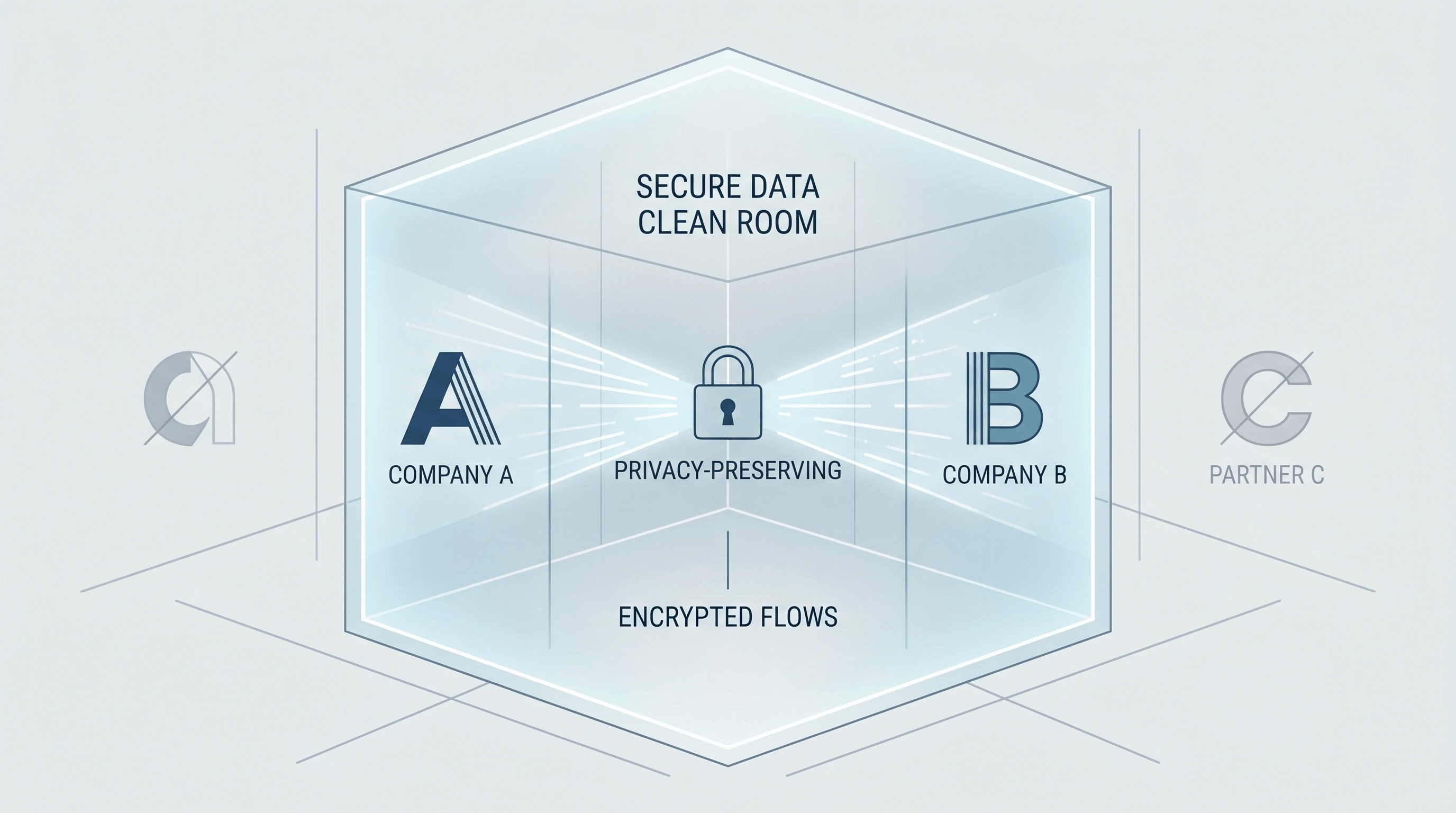
Imagine a secure, neutral space where multiple parties can bring their data together, but crucially, without ever fully exposing their raw, user-level information to each other. That, in essence, is a data clean room. It's a controlled, privacy-preserving environment designed for secure data collaboration and analysis.
Here's how it generally works: Companies upload their first-party data (often pseudonymized or hashed) into the clean room. The clean room then uses cryptographic techniques, differential privacy, or other advanced methods to perform specific analyses – like matching audience segments, measuring campaign performance, or identifying customer overlaps – without either party seeing the other's underlying raw data. The output is aggregated insights, not individual user profiles.
Think of it like a secure laboratory where scientists can collaborate on an experiment, sharing only the aggregated results and never revealing their proprietary raw materials to one another. The goal is to extract valuable insights and enable powerful measurement, all while safeguarding individual privacy and maintaining data ownership.
Why the Urgency? The Post-Cookie, Post-Easy-Tracking World
The shift towards data clean rooms isn't just a technical curiosity; it's a direct response to critical industry challenges:
The End of Easy Tracking
With major browsers phasing out third-party cookies and mobile operating systems introducing stricter tracking consent requirements, the traditional methods of cross-site and cross-app measurement are breaking down. Businesses still need to understand their customers, measure ad effectiveness, and optimize campaigns, but they can no longer rely on the old infrastructure.
Mounting Privacy Regulations
Global privacy laws are making it increasingly risky and complex to share raw user data. Companies face significant fines and reputational damage for mishandling personal information. Data clean rooms offer a pathway to collaboration that aligns with these stringent requirements, allowing for data utility without compromising privacy.
The Rise of First-Party Data
As third-party data becomes less reliable, first-party data – information a company collects directly from its customers – is becoming the most valuable asset. Clean rooms enable companies to leverage their first-party data more effectively, collaborating with partners to enrich insights without directly sharing their proprietary customer lists.
Who Benefits and How?
The appeal of data clean rooms spans across the digital ecosystem:
- Retailers: Can securely collaborate with brands to understand shared customer journeys, measure the impact of joint marketing campaigns, and develop more relevant loyalty programs, all without exposing their sensitive customer databases.
- Advertisers: Gain the ability to measure campaign reach and frequency, attribute conversions, and analyze audience overlap across different publishers or platforms, even in a world without pervasive individual tracking. This allows for more effective ad spend and better ROI.
- Publishers: Can prove the effectiveness of their ad inventory to advertisers by securely demonstrating audience quality and campaign performance, leveraging their valuable first-party data without giving it away.
- Large Platforms: Can offer their partners secure ways to collaborate on data, enabling measurement and analytics that respect user privacy, fostering trust and maintaining their ecosystem's integrity.
Beyond Clean Rooms: A Broader Architectural Shift
While data clean rooms are central to this transformation, they are part of a larger movement towards privacy-preserving analytics. Adjacent techniques reinforce the architectural shift:
- Differential Privacy: Adding statistical noise to data to prevent re-identification of individuals, while still allowing for aggregate insights.
- Secure Multiparty Computation (SMPC): Cryptographic protocols that allow multiple parties to jointly compute a function over their inputs while keeping those inputs private.
- Federated Learning: Training machine learning models on decentralized datasets (e.g., on user devices) without requiring the raw data to be centralized.
- Server-Side Measurement: Shifting tracking logic from the client-side browser to a server, offering more control and resilience against browser-based tracking restrictions.
These techniques, often integrated within or complementing clean room environments, underscore the idea that privacy is no longer an afterthought but a fundamental design principle built into the very infrastructure of data collaboration.
The Road Ahead: Challenges and Considerations
Despite their promise, data clean rooms are not without their complexities:
- Interoperability and Vendor Lock-in: The ecosystem is still maturing, and different clean room providers may use varying standards and technologies, potentially leading to silos and vendor lock-in.
- Governance and Complexity: Managing data within a clean room requires robust governance frameworks, clear data usage policies, and specialized technical expertise, which can be a significant hurdle for some organizations.
- Quality of First-Party Data: The effectiveness of a clean room heavily relies on the quality and completeness of the first-party data ingested. Companies with weak or fragmented first-party data will struggle to derive meaningful insights.
- Risk of "Compliance Theater": There's a risk that some companies might adopt clean rooms primarily for compliance optics rather than a genuine commitment to privacy-preserving practices, potentially undermining the true spirit of the technology.
Conclusion: Privacy as an Architectural Imperative
The era of easy, pervasive tracking is over. In its place, a new paradigm is emerging where privacy is not just a legal obligation but a core architectural principle. Data clean rooms are at the forefront of this shift, providing a sophisticated, secure, and scalable way for businesses to continue deriving value from data while rigorously protecting user privacy.
As the digital landscape continues to evolve, the ability to collaborate on data without compromising trust or breaking regulations will be a defining competitive advantage. Data clean rooms, alongside other privacy-enhancing technologies, are not just a trend; they are becoming fundamental building blocks of the future of digital measurement and collaboration.