Why Data Center Power Is Becoming the Big Tech Bottleneck
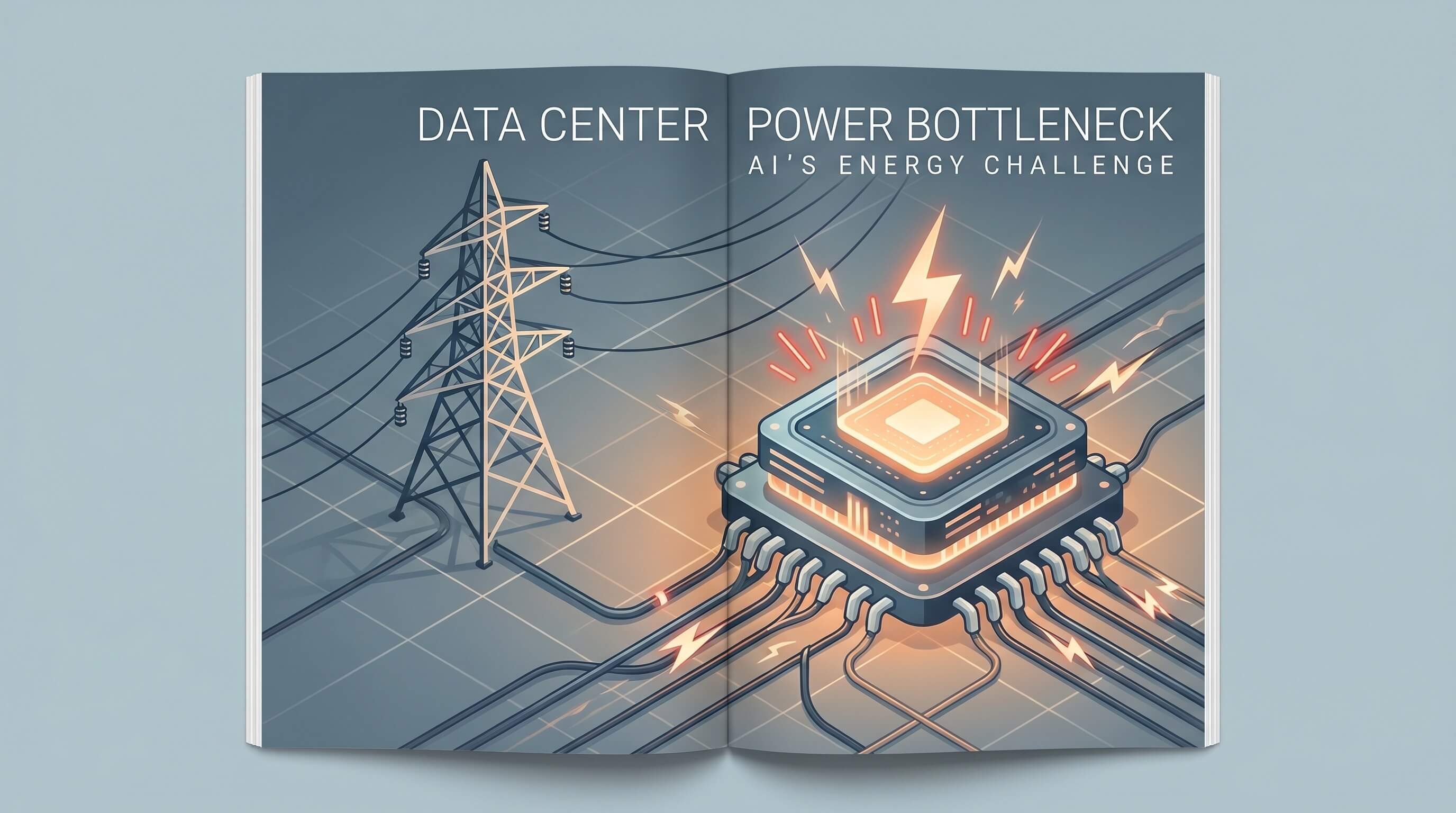
The digital age, for all its ethereal wonder, runs on a very physical foundation: electricity. For decades, the tech industry’s grand narratives revolved around shrinking transistors, ever-smarter algorithms, and the limitless potential of the cloud. We spoke of Moore's Law and the exponential growth of data, assuming the underlying infrastructure would simply keep pace. But a profound shift is underway, one that is quietly but fundamentally reshaping the future of technology: the availability of power for data centers is becoming the single biggest constraint on innovation and growth.
Imagine the internet, artificial intelligence, and all the cloud services we rely on as a vast, interconnected city. For a long time, the focus was on building taller skyscrapers (more powerful chips), designing more efficient transportation systems (faster networks), and creating smarter city management (advanced software). Now, however, the city is running out of power. The electrical grid, the very lifeblood of this digital metropolis, is struggling to keep up with the insatiable demands of an increasingly digitized world, particularly the explosion of AI infrastructure.
The Staggering Scale of Digital Demand
The numbers are stark. Data centers, the physical homes of our digital world, are already massive consumers of electricity. In 2024, these facilities are estimated to have consumed approximately 415 terawatt-hours (TWh) globally. To put that into perspective, it represents about 1.5 percent of the world's total electricity consumption. While that might sound modest, the trajectory is anything but. Projections suggest that this demand could roughly double, reaching around 945 TWh by 2030 in a base-case scenario. This isn't just a gradual increase; it's a surge, driven predominantly by one powerful force: artificial intelligence.
Accelerated servers, purpose-built for AI workloads, are growing at a pace far exceeding that of conventional server demand. Training and running large language models, powering generative AI applications, and processing vast datasets require immense computational horsepower, which, in turn, translates directly into immense electrical power. Each new generation of AI chip, while more efficient per operation, often consumes more raw power than its predecessor as it packs in more processing units. This creates a compounding effect, where the very innovations driving tech forward are simultaneously pushing the limits of our energy infrastructure.
Beyond the Chip: The Harder Limits of Infrastructure
For years, the tech story was primarily about silicon and software. The race was to build faster chips, more sophisticated models, and innovative applications. While those pursuits remain vital, the conversation is shifting. The new frontier of constraint isn't just about microchips; it's about macro-infrastructure. It's about the physical world that underpins our digital ambitions.
Grid Interconnection Delays
Building a new data center, especially a hyperscale facility, isn't just about pouring concrete and installing servers. It requires a massive electrical connection to the grid. These connections are complex, requiring new substations, transmission lines, and often significant upgrades to existing infrastructure. Grid interconnection queues are growing longer, with delays stretching into years. This isn't just a bureaucratic hurdle; it's a fundamental physical limitation, as utilities grapple with the immense planning, engineering, and capital investment required to accommodate these new loads.
Turbine and Transformer Constraints
The components that make up the electrical grid itself are also becoming bottlenecks. Manufacturing lead times for large power transformers, high-voltage switchgear, and even utility-scale turbines can be extensive. Supply chain issues, skilled labor shortages, and the sheer scale of global demand mean that even if a utility has the budget and the will, acquiring the necessary equipment can take years. This directly impacts the speed at which new power generation can come online or existing grids can be upgraded to handle increased demand.
Power Availability and Geography
The availability of sufficient, reliable, and affordable power is now a primary factor shaping where AI infrastructure can actually be built. Regions with abundant renewable energy potential or robust existing grids become highly attractive, but even these areas have limits. The concept of "stranded compute" – where a data center could be built, but there's simply no power to run it – is becoming a real concern. This forces tech companies to re-evaluate their global expansion strategies, prioritizing energy access over other factors that once held sway, such as proximity to fiber optic cables or specific labor markets.
Permitting, Transmission, and Cooling
Beyond the direct electrical connection, the entire ecosystem of data center development faces new challenges. Securing permits for large-scale facilities can be a protracted process, often involving environmental impact assessments and community consultations. Building new transmission lines to carry power from generation sources to data centers faces similar hurdles. And once the power is delivered, the sheer heat generated by modern high-density servers requires sophisticated and energy-intensive cooling solutions, adding another layer of demand and complexity.
Beyond Hyperscalers: Who Feels the Pinch?
While the headlines often focus on the multi-billion-dollar investments of hyperscale cloud providers, the power bottleneck has far-reaching consequences that extend across the entire technology ecosystem and beyond.
Startups and Innovators
For a startup, access to powerful compute resources is often the lifeblood of innovation, especially in AI. If hyperscalers face power constraints, it could translate into higher cloud compute costs, longer wait times for specialized hardware, or even a lack of availability in certain regions. This could stifle innovation, raising the barrier to entry for new companies and concentrating power (both literal and figurative) in the hands of a few established players.
Cloud Customers of All Sizes
Businesses relying on cloud services for everything from CRM to data analytics could experience the ripple effects. Increased operational costs for cloud providers might be passed on to customers. Furthermore, regional power constraints could impact service availability, latency, or the ability to scale operations quickly in specific geographies, forcing strategic reconsiderations for global deployments.
Local Communities and the Power Grid
The arrival of a new data center, while bringing jobs and investment, also places immense strain on local power grids. Communities might see their existing infrastructure stretched, leading to potential reliability issues or increased costs for residents and other businesses. There are also environmental considerations, as data centers contribute to local heat loads and often require significant water for cooling, leading to tensions between tech expansion and local resource management.
Industrial Policy and National Strategy
Governments worldwide are increasingly recognizing the strategic importance of digital infrastructure. The power bottleneck elevates this to a national security and economic competitiveness issue. Industrial policy will need to balance the desire to attract tech investment and foster AI innovation with the realities of energy supply, grid modernization, and sustainability goals. This could lead to new regulations, incentives for green energy integration, or even direct government involvement in infrastructure planning.
The Nuance: Efficiency Still Matters, But Timelines Are Different
It's crucial to acknowledge that the tech industry is not ignoring the power challenge. Significant strides are being made in energy efficiency, from more optimized chip architectures and liquid cooling technologies to advanced data center management systems. These efforts are vital and continue to push down the energy consumption per unit of compute. However, the sheer exponential growth in demand, particularly from AI, often outpaces these efficiency gains in terms of absolute power draw.
Furthermore, while AI is a major driver, it's not the whole story of grid demand. Electrification of transport, industrial processes, and heating also contribute to increasing electricity needs. The key distinction, however, lies in timelines. Software can be developed and deployed in weeks or months. New AI models can emerge and scale rapidly. Electrical infrastructure, by contrast, operates on timelines measured in years, often a decade or more for major transmission projects or new power plants. This fundamental mismatch in speed is at the heart of the emerging bottleneck.
A New Era of Strategic Planning
The era where tech growth was primarily limited by processing power or bandwidth is giving way to one where the most fundamental constraint is raw electrical energy. This shift demands a new approach to strategic planning, not just for hyperscalers, but for governments, utilities, and every business that relies on digital infrastructure. Collaboration between tech companies, energy providers, and policymakers will be essential to navigate this challenge. The future of digital innovation hinges not just on what we can compute, but on whether we have the power to compute it.