Why Browser Isolation Is Moving From Niche Control to Mainstream Enterprise Defense
The enterprise security landscape is in a constant state of flux, always adapting to new technologies and the ever-evolving tactics of cyber attackers. For years, the focus was on hardening the network perimeter, building formidable firewalls, and securing endpoints. These remain crucial, but a fundamental shift in how we work has opened up new, pervasive vulnerabilities: the web browser.
Today, the browser isn't just a window to the internet; it's the primary workspace for millions. From CRM platforms and HR tools to collaboration suites and cloud storage, nearly every critical business function now lives inside a web tab. This ubiquity, while empowering productivity, has inadvertently transformed the browser into a prime target and a common entry point for a dizzying array of threats: phishing attacks, malvertising, drive-by downloads, trojans, and sophisticated credential theft schemes. Traditional security tools, designed for a different era, often struggle to contain risks that originate and execute within the browser session itself.
What Exactly is Browser Isolation?
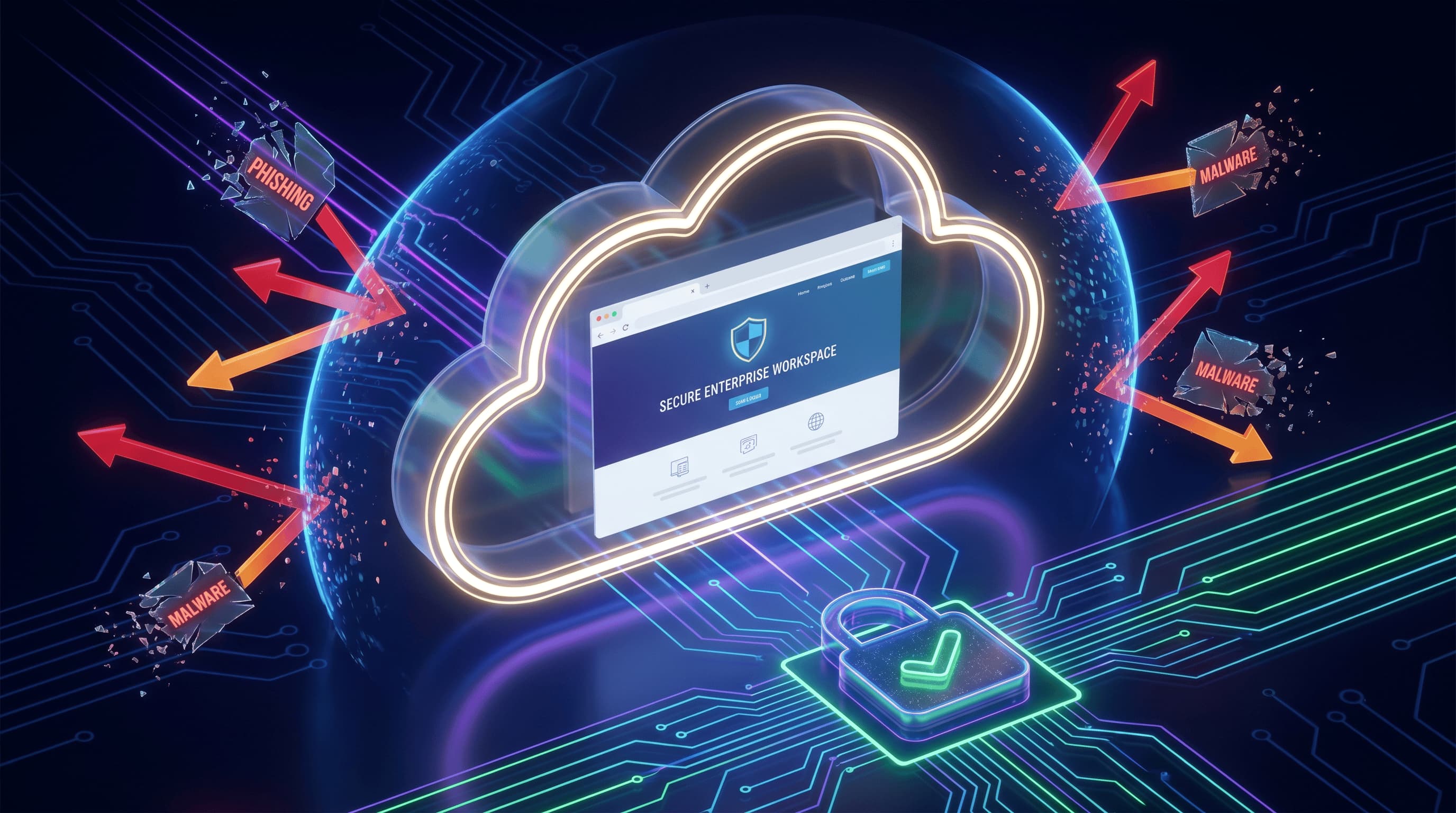
At its core, browser isolation is a security technology designed to protect users and corporate networks from web-borne threats by isolating the browsing session. Instead of the web content directly rendering on the user's local device, the entire browsing process – including all JavaScript execution, HTML rendering, and CSS styling – takes place within a secure, isolated container, typically in the cloud. This container acts as a sandbox, completely separate from the user's endpoint.
When a user navigates to a website, the isolated browser loads the page, processes all its elements, and then sends only a safe, interactive visual stream (like a video feed) back to the user's actual browser. If a malicious script or payload attempts to execute, it does so within the remote sandbox, not on the user's laptop, desktop, or mobile device. Any hostile code is contained and destroyed along with the ephemeral sandbox session once the user closes the tab or navigates away. This fundamentally breaks the attack chain, preventing malware from ever reaching the endpoint or the internal network.
The Shifting Enterprise Perimeter: Why Browser Isolation is No Longer a Niche
The move to cloud applications and Software-as-a-Service (SaaS) has profoundly redefined the enterprise perimeter. It's no longer a hard, static boundary around an office building or a data center. Instead, the perimeter has become distributed, dynamic, and often resides wherever an employee accesses corporate resources – which, more often than not, means inside a browser tab. This shift has left gaps in traditional defenses:
- Beyond the Firewall: While firewalls protect the network edge, they can't see or control what happens within an encrypted browser session once it's established.
- Endpoint Blind Spots: Endpoint detection and response (EDR) tools are powerful, but they are reactive. Browser isolation is proactive, preventing malicious content from ever reaching the endpoint to begin with.
- SaaS Application Risks: Even trusted SaaS applications can be compromised or used as vectors for phishing. Browser isolation adds a layer of defense even when interacting with legitimate, but potentially risky, cloud services.
- Remote Work and Unmanaged Devices: The rise of remote and hybrid work means employees often access corporate data from personal or unmanaged devices. These devices lack corporate security controls, making them prime targets.
In this environment, browser isolation isn't just an extra layer; it's becoming a foundational component of a zero-trust security architecture, assuming that no user, device, or application can be implicitly trusted, regardless of its location.
Where Browser Isolation Shines Brightest
While beneficial for all web browsing, browser isolation proves particularly effective in several high-risk scenarios:
Protecting Against Phishing and Malicious Links
Phishing remains one of the most prevalent and successful attack vectors. Employees are constantly targeted with emails containing malicious links. With browser isolation, even if a user clicks on a cleverly crafted phishing link, the dangerous website loads in an isolated environment. Credential harvesting attempts are thwarted, and drive-by downloads of malware are contained, preventing compromise of the local machine.
Securing Unmanaged Devices and BYOD Environments
For organizations embracing Bring Your Own Device (BYOD) policies or supporting a large remote workforce using personal machines, browser isolation offers a critical layer of protection. Corporate data accessed via a personal, potentially insecure device is rendered in isolation, ensuring that any threats encountered on that device cannot jump to corporate resources.
Managing Third-Party and Contractor Access
Granting network access to contractors, vendors, or temporary staff always carries inherent risks. Browser isolation provides a secure conduit for these external users to access specific web-based applications without exposing the internal network to their potentially compromised devices or unknown browsing habits.
High-Risk Browsing and Sensitive Data Handling
Certain roles within an organization, such as finance, legal, or executive teams, often handle highly sensitive data or engage in browsing activities that might expose them to greater risk. Isolating their browsing sessions adds an extra layer of defense, ensuring that their critical work remains protected from web-borne threats.
Enhancing Incident Response and Forensics
By containing threats in a disposable sandbox, browser isolation can significantly reduce the volume and severity of security incidents. This frees up security teams to focus on more complex threats and simplifies forensic analysis, as the "blast radius" of any potential compromise is severely limited.
The Practical Realities: Tradeoffs and Considerations
Like any advanced security technology, browser isolation isn't a silver bullet and comes with its own set of considerations:
- User Experience and Performance: While modern browser isolation solutions are highly optimized, the redirection of traffic through a remote server can sometimes introduce a slight latency or alter the user experience, particularly for highly interactive web applications.
- Cost: Deploying and managing a robust browser isolation solution, especially at enterprise scale, represents a significant investment. Organizations must weigh the cost against the potential financial and reputational damage of a successful web-borne attack.
- Complexity: Integration with existing security infrastructure, policy configuration, and ongoing management require expertise. It's not a set-it-and-forget-it solution.
- Complement, Not Replacement: Crucially, browser isolation complements, but does not replace, other essential security controls. It works best as part of a layered defense strategy that includes strong identity and access management, robust email security, comprehensive endpoint protection, and ongoing security awareness training. It's an additional, powerful tool in the arsenal, not the entire arsenal itself.
Conclusion
The browser has undeniably become the new battleground for enterprise security. As work continues to migrate to the cloud and users access critical applications from an ever-expanding array of devices and locations, the need for proactive, in-session protection has never been greater. Browser isolation, once considered a niche solution for highly sensitive environments, is rapidly transitioning into a mainstream, essential component of a comprehensive enterprise defense strategy. By containing web-borne threats before they can ever reach the endpoint, it offers a powerful and elegant solution to a pervasive modern security challenge, helping organizations maintain productivity without sacrificing security.