Why AI Meeting Assistants Are Becoming a New Software Layer
Meetings. For many, they’re a necessary evil, a black hole where productivity goes to die, or at best, a fleeting moment of connection whose insights vanish as soon as the "End Call" button is pressed. We’ve all been there: frantically scribbling notes, trying to keep up with action items, or simply zoning out, only to realize later we missed something crucial.
But what if meetings could be different? What if every discussion, every decision, every assigned task wasn't just spoken into the ether but captured, understood, and integrated directly into your workflow? This isn't a futuristic dream; it's the rapidly evolving reality of AI meeting assistants, which are quickly transcending their initial role as simple transcription tools to become a fundamental new layer in our software stack.
Beyond the Transcript: A New Era of Meeting Intelligence
Initially, AI meeting assistants were hailed for their ability to transcribe spoken words into text. This alone was a significant step, saving countless hours of manual note-taking. However, the technology has matured far beyond mere dictation. Today's advanced AI assistants are sophisticated engines capable of:
Smart Summarization and Key Takeaways
They don't just record; they understand. These tools can distill hours of conversation into concise summaries, highlighting key decisions, discussion points, and resolutions. Imagine a five-page transcript condensed into a paragraph of actionable insights.
Automated Task Creation and Follow-ups
No more "who was going to do what?" debates. AI can identify explicit (and sometimes implicit) action items, assign them to participants, and even push them directly into project management tools or calendar reminders. This dramatically improves accountability and ensures follow-through.
In-Meeting Catch-up and Contextual Search
Joined late? Need to recall a point made earlier? Many assistants now offer real-time catch-up features, providing a quick summary of what you missed. Post-meeting, the entire conversation becomes searchable, allowing you to pinpoint specific discussions, decisions, or data points with ease.
Multilingual Communication and Translation
In our globalized world, meetings often involve participants speaking different languages. Advanced AI can provide real-time translation or generate summaries in multiple languages, breaking down communication barriers and fostering inclusivity.
Post-Meeting Query and Knowledge Retrieval
Think of your meeting archive as a searchable knowledge base. Instead of sifting through recordings or transcripts, you can simply ask the AI questions about past meetings – "What was decided about the Q3 budget?" or "Who was responsible for the marketing initiative?" – and get instant, relevant answers.
The Connective Tissue: AI as a Workflow Integrator
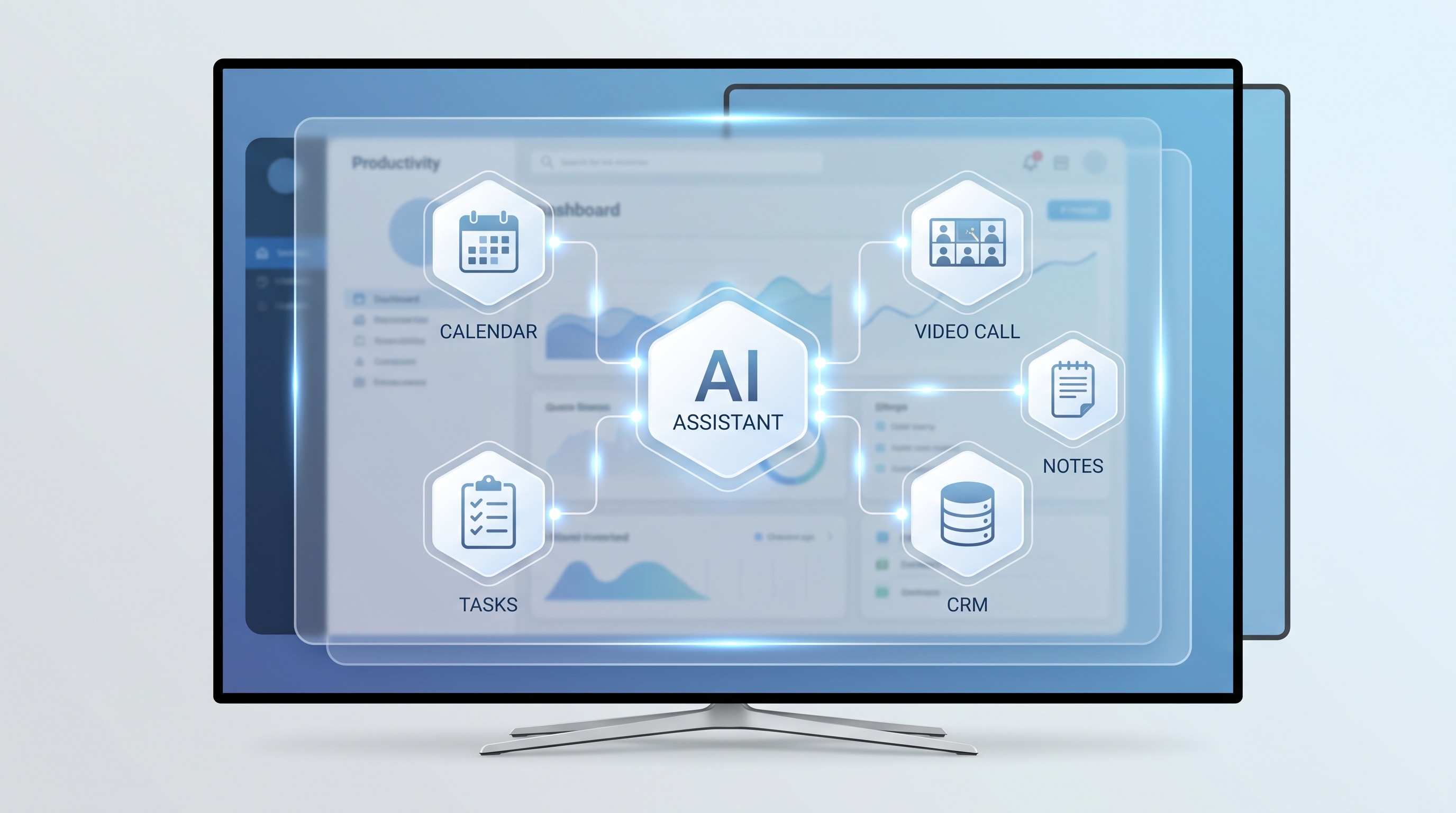
This evolution isn't just about better meeting management; it's about fundamentally changing how work gets done. AI meeting assistants are no longer standalone utilities; they are becoming the connective tissue that bridges disparate enterprise applications. They integrate with:
- Calendars: Automatically scheduling follow-ups or sending pre-meeting briefs.
- Chat Platforms: Sharing summaries and action items directly into team channels.
- Document Management Systems: Linking meeting discussions to relevant documents or creating new ones based on outcomes.
- CRM Systems: Updating customer records with notes from sales calls or client discussions.
- Project Management Tools: Populating task lists, updating project statuses, and tracking progress based on meeting outcomes.
The crucial shift here is that unstructured, ephemeral meeting data is being transformed into structured, actionable workflow input. This elevates the meeting from a mere discussion forum to a dynamic data source, powering collaboration, enhancing accountability, and making organizational knowledge retrieval significantly more efficient.
Rethinking Software Design: Meetings as Data Streams
For software developers and product designers, this trend demands a rethinking of how collaboration products are built. Meetings are no longer just events; they are data streams. This means:
- API-First Design: Collaboration tools must offer robust APIs to allow AI assistants to ingest and output data seamlessly.
- Semantic Understanding: The focus shifts from merely storing data to understanding its meaning and context within the broader workflow.
- User Experience for AI Interaction: Designing interfaces that make it intuitive for users to interact with AI-generated summaries, tasks, and insights, both during and after meetings.
- Data Governance and Security: With sensitive meeting data flowing across systems, robust security, compliance, and data governance features become paramount.
This new layer promises to reduce the friction between discussion and action, ensuring that valuable insights generated in meetings don't get lost in translation or forgotten in the flurry of daily tasks.
Navigating the Nuances: Risks and Responsible Adoption
While the benefits are clear, the widespread adoption of AI meeting assistants also presents a unique set of challenges and ethical considerations that must be addressed:
- Privacy Concerns: Recording and analyzing every word spoken in a meeting raises significant privacy questions. Clear consent mechanisms and transparent data handling policies are essential.
- The "Bot in the Room" Effect: The presence of a visible AI assistant in a call can feel intrusive or awkward, potentially stifling open discussion or making participants self-conscious.
- Noisy or Hallucinated Summaries: Not all AI is created equal. Poorly designed systems can generate summaries that are overly verbose, miss critical details, or even "hallucinate" action items or decisions that were never made.
- Compliance and Regulatory Hurdles: Industries with strict compliance requirements (e.g., finance, healthcare) must carefully evaluate how these tools fit into their regulatory frameworks, especially concerning data retention and confidentiality.
- Social Dynamics and Trust: Over-reliance on AI might erode the human element of note-taking and accountability. Building trust in these systems, and ensuring they augment rather than replace human judgment, is critical.
Addressing these risks requires a thoughtful approach, focusing on user education, robust ethical guidelines, and continuous improvement of AI models.
The Future is Integrated, Not Just Intelligent
The proliferation of AI meeting assistants is not a fleeting trend; it's a fundamental shift in how we manage information and drive productivity. As adoption rates continue to climb – with a significant percentage of companies already deployed and many more planning rollouts – these tools are cementing their place as an indispensable software layer.
The true winners in this space won't be the applications that generate the flashiest summaries or boast the most complex AI models in isolation. Instead, success will belong to those that integrate cleanly and seamlessly into existing workflows, transforming raw meeting data into genuinely structured, actionable input. The future of work is not just intelligent; it's deeply integrated, making every meeting count.