Why AI Agents Need Memory, Not Just Bigger Context Windows
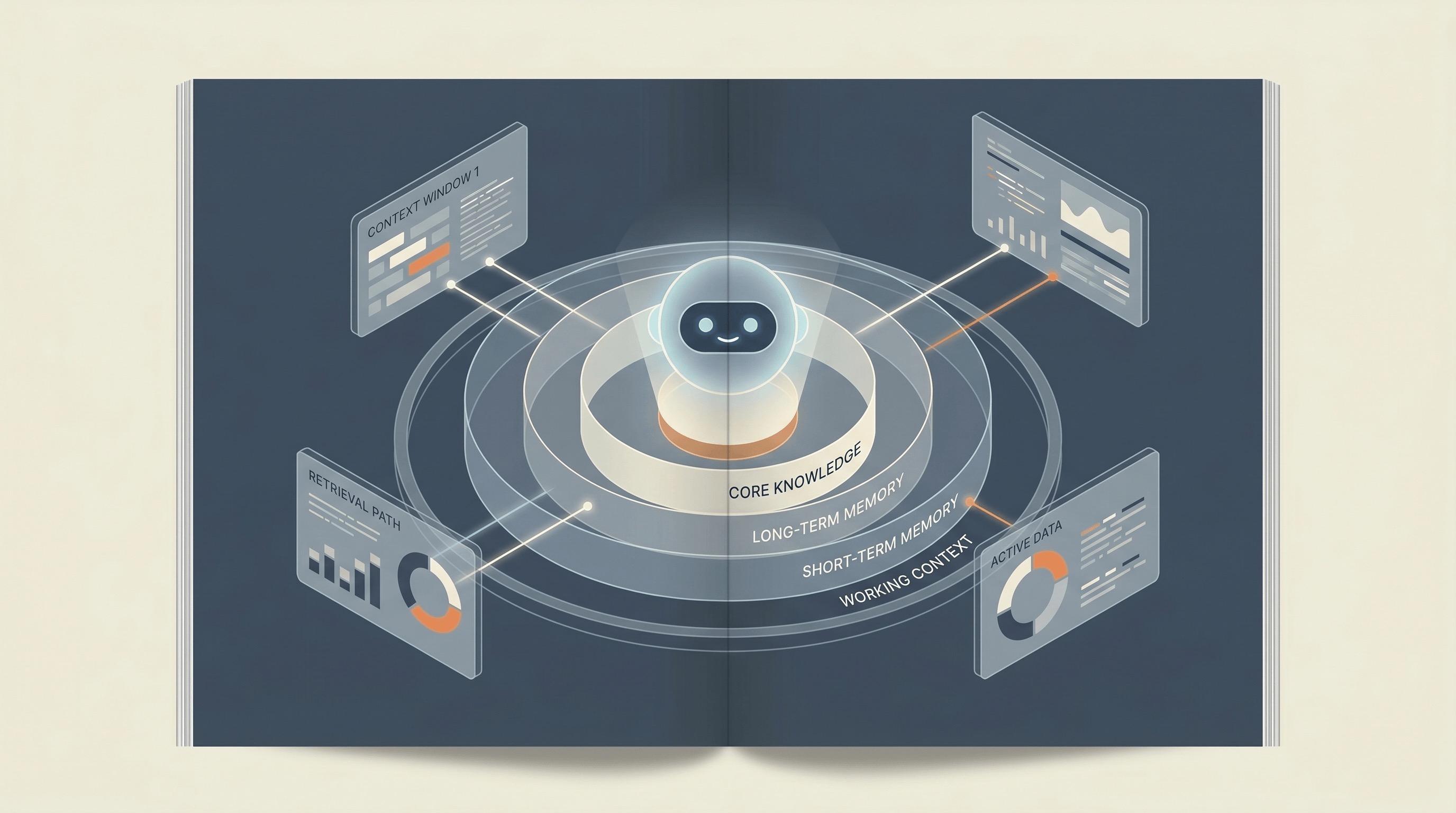
It's 2026, and the AI landscape is evolving at a breathtaking pace. We've seen context windows for large language models (LLMs) grow from mere thousands of tokens to well over a million, promising a future where agents can process vast amounts of information in a single prompt. This is undoubtedly a powerful advancement, yet for many in the trenches of enterprise AI, a critical realization is taking hold: bigger context windows alone aren't the silver bullet for truly effective, long-running AI agents. The real differentiator, as Cloudflare aptly framed it, is the ability to recall what matters without constantly filling the context window, addressing the very real production problem of 'context rot'.
The Limits of a Longer Prompt
Imagine trying to remember every detail of a year-long project by re-reading every single email, meeting transcript, and document from start to finish every time you need to make a decision. That's essentially what we ask an AI agent to do when we rely solely on an ever-expanding context window. While impressive, this approach has inherent limitations:
- Cost and Latency: Processing millions of tokens for every interaction is computationally expensive and introduces significant latency, making real-time applications challenging.
- Information Overload: Just like humans, AI models can struggle to identify the most relevant pieces of information when presented with an overwhelming volume of data. Important details can get buried, leading to less accurate or less efficient responses.
- Episodic Memory Gap: A large context window provides a snapshot of the current interaction, but it doesn't inherently build a durable understanding of past interactions, user preferences, or long-term goals. Each new prompt is largely a fresh start, albeit with more immediate context.
As Microsoft Learn wisely advises, the goal should always be to use the lowest complexity architecture that reliably works. Simply throwing more tokens at a problem often adds complexity, not elegant solutions.
Why Memory is the Game Changer
Instead of just making the prompt longer, true agentic intelligence hinges on durable memory and intelligent context orchestration. This allows an AI agent to build a persistent, evolving understanding of its environment, users, and tasks, much like a human does. It's about selective recall, not brute-force re-reading.
Different Flavors of Agent Memory
To understand how memory empowers AI agents, it's helpful to break it down into different layers:
- Working Context (Short-Term): This is the immediate, ephemeral memory within the current prompt window. It holds the most recent turns of a conversation or the immediate data being processed. It's crucial for coherent, real-time interaction.
- Retrieved Facts (Knowledge Base): Often implemented using Retrieval-Augmented Generation (RAG) and vector databases, this layer allows agents to access vast stores of external, factual information (documents, databases, web content). It's how an agent knows specific company policies or technical specifications without having them explicitly in its working context.
- User Preferences/Personalization: This durable memory stores long-term information about a specific user's habits, preferences, historical interactions, and demographic data (with appropriate privacy safeguards). It enables personalized experiences, remembering, for instance, a user's preferred language or common order history.
- Task History (Episodic Memory): This layer tracks the sequence of actions, decisions, and outcomes within a specific workflow or a series of interactions over time. It allows an agent to remember that a customer called last week about a similar issue, or that a particular task was paused and needs to be resumed. This is vital for continuity in complex, multi-step processes.
- Procedural Memory (Skills & Tools): This isn't about facts, but about 'how to do things'. It encompasses the learned patterns, tool-use capabilities, and API integrations that an agent can leverage to achieve goals. It's how an agent knows to call a specific API to check inventory or generate a report.
Real-World Impact: Enterprise Use Cases
For businesses, the implications of robust agent memory are profound. It transforms AI agents from reactive chatbots into proactive, intelligent assistants capable of handling complex, long-running tasks:
- Long-Running Support Workflows: An agent can remember a customer's entire support history, previous troubleshooting steps, and specific product configurations across multiple interactions, eliminating the need for the customer to repeat themselves.
- Coding Agents: A coding assistant can retain knowledge of a project's architecture, coding standards, preferred libraries, and past refactors. It can understand the developer's style and provide more contextually relevant suggestions over days or weeks.
- Research Assistants: For analysts or researchers, an AI agent can track previous queries, sources reviewed, key findings extracted, and the overall research goals, building a cumulative knowledge base that evolves with the project.
- Operational Automation: Agents monitoring complex systems can learn from past incidents, remember specific remediation steps that worked (or failed), and understand the historical state of various components, leading to more intelligent and resilient automation.
The Responsible Approach: Risks and Considerations
While powerful, agent memory isn't without its challenges. A balanced approach is crucial:
- Stale Memories: Information stored in memory can become outdated. Mechanisms for updating, invalidating, or refreshing memories are essential to prevent agents from acting on incorrect data.
- Bad Retrieval/Hallucinations: If the retrieval mechanism is flawed or the stored memories are inaccurate, the agent might 'hallucinate' or act on incorrect premises, similar to how an LLM can generate false information.
- Privacy and Security Leakage: Storing sensitive user or enterprise data in memory layers introduces significant privacy and security risks. Robust governance, access controls, and data anonymization techniques are paramount. Prompt injection through retrieved data is also a concern if external data isn't properly sanitized.
- Over-Engineering: As Microsoft Learn warned, don't overcomplicate. Multi-agent orchestration and complex memory architectures add coordination overhead, latency, and cost. For simple, one-off tasks, a larger context window might indeed be sufficient. The key is architectural discipline – choosing the right tool for the job.
- Governance: Who owns the memories? How are they audited? How do you ensure compliance with data retention policies? These questions become critical as memory systems mature.
Conclusion
In 2026, the discussion around AI agents has moved beyond just the size of their linguistic processing capacity. While ever-larger context windows are a valuable tool, they are not a substitute for intelligent memory systems. For real-world, enterprise-grade AI agents that need to operate effectively over time, durable memory and thoughtful context orchestration are paramount. It's about building systems that don't just process information, but truly understand, adapt, and learn from their experiences. By carefully designing memory layers and understanding their trade-offs, we can build AI agents that are not only powerful but also reliable, efficient, and genuinely useful, helping businesses navigate complex challenges without unnecessary architectural overhead.