Why 800-Volt EVs Matter More Than the Spec Sheet Suggests
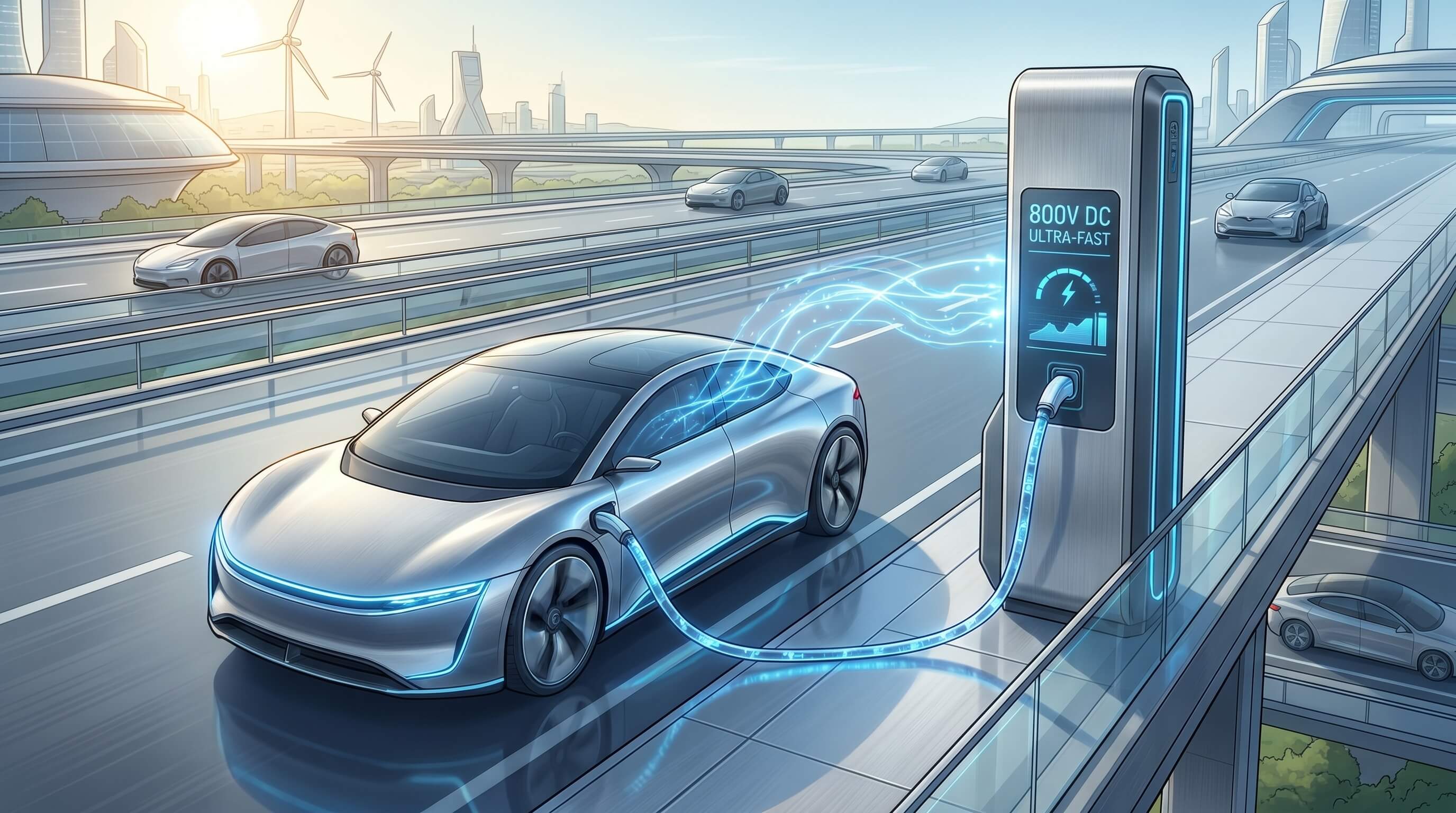
In the rapidly evolving world of electric vehicles (EVs), numbers often steal the spotlight. Range figures, horsepower ratings, and battery capacities dominate discussions. But beneath the surface of these headline-grabbing specs, a quieter, yet profoundly impactful, revolution is underway: the shift to 800-volt EV architecture. While '800-volt' might sound like just another technical detail, its implications for how we charge, drive, and experience electric cars are far more significant than the spec sheet alone suggests.
What Exactly is 800-Volt Architecture?
To understand why 800 volts matters, let's briefly touch upon the basics. Most electric vehicles today operate on a 400-volt architecture. This voltage dictates how power flows from the charging station to the battery, and from the battery to the motors. The fundamental principle at play here is Ohm's Law: Power (P) equals Voltage (V) multiplied by Current (I). So, P = V * I.
What this means in practice is that to deliver the same amount of power, a higher voltage system requires less current. Why is less current better? Current generates heat. Think of a garden hose: to get more water (power) through it, you can either increase the pressure (voltage) or increase the flow rate (current). If you increase the flow rate too much, the hose might burst or get very hot. In an EV, high current means more heat generated in the cables, connectors, and battery components. This heat needs to be managed, typically through heavier, more complex cooling systems.
By doubling the voltage from 400V to 800V, automakers can deliver significantly more power with half the current, dramatically reducing heat generation. This reduction in heat allows for thinner, lighter cabling throughout the vehicle, contributing to overall efficiency and potentially lighter vehicle weight. It's a fundamental engineering upgrade that touches nearly every aspect of an EV's electrical system.
The Charging Revolution: Speed and Efficiency
The most immediate and tangible benefit of 800-volt architecture for drivers is the promise of ultra-fast charging. With 400-volt systems, charging speeds typically peak in the range of 150 to 200 kW. While certainly faster than a household outlet, these speeds can still mean significant waiting times on longer journeys, especially as battery capacities grow.
Enter 800-volt systems. When paired with compatible charging infrastructure and a battery designed to handle it, these vehicles can achieve charging speeds of 300 kW and often much higher. We're talking about adding hundreds of kilometers of range in mere minutes – a game-changer for road trips and busy lifestyles. For instance, a Porsche Taycan or Hyundai Ioniq 5, both utilizing 800V architecture, can often go from 10% to 80% charge in under 20 minutes at a sufficiently powerful DC fast charger. This isn't just about a higher peak number; it's about sustaining that high power throughout a larger portion of the charging cycle, leading to significantly shorter overall charging stops.
This capability directly addresses one of the primary concerns for potential EV buyers: range anxiety and charging convenience. The ability to "fill up" almost as quickly as a gasoline car transforms the perception of long-distance EV travel, making it a far more practical and less disruptive experience.
Beyond Charging Speed: A Holistic Improvement
While faster charging is the headline, the advantages of 800-volt architecture extend far beyond the charging port:
Enhanced Thermal Management
As mentioned, lower current means less heat. This is crucial for battery health and longevity. Batteries perform best within a specific temperature range. By generating less heat during operation and charging, 800-volt systems reduce the strain on the battery's cooling system. This can lead to more consistent performance, better efficiency, and potentially a longer lifespan for the battery pack itself. Less heat also means less energy is wasted on cooling, freeing up more energy for propulsion.
Improved Efficiency
The reduction in resistive losses (I²R losses) throughout the entire electrical system, from the battery to the inverters and motors, translates to greater overall efficiency. This means more of the energy stored in the battery is actually used to move the car, potentially extending real-world range or allowing for smaller battery packs to achieve similar ranges, thus reducing vehicle weight and cost.
Lighter and More Compact Packaging
Thinner cables aren't just about weight savings; they also allow for more flexible packaging within the vehicle. This can free up space, simplify manufacturing, and potentially lead to more aerodynamic designs or greater interior volume. While the weight savings from cabling alone might seem minor, combined with optimized cooling systems and potentially smaller battery packs (due to better efficiency), the cumulative effect can be significant.
Future-Proofing and Performance
800-volt architecture provides a robust foundation for future advancements in EV technology. As motors become more powerful and battery energy densities increase, higher voltage systems will be better equipped to handle the demands. It also enables higher power delivery to motors, contributing to exhilarating acceleration and sustained performance without overheating components.
Who's Leading the Charge?
The adoption of 800-volt systems began with high-performance and premium EVs, where the demand for rapid charging and sustained power delivery is paramount. Porsche's Taycan was an early pioneer, showcasing the technology's capabilities. Hyundai and Kia quickly followed suit with their E-GMP platform, found in popular models like the Hyundai Ioniq 5 and Kia EV6, making 800V tech more accessible. Audi's e-tron GT and Genesis's GV60 further demonstrate the spread of this advanced architecture across luxury and performance segments. These vehicles have helped establish 800V as a visible competitive feature, setting a new benchmark for EV performance and convenience.
The Caveats and Challenges
While 800-volt architecture offers compelling advantages, it's not without its considerations:
Cost Implications
Implementing 800-volt components, from batteries to inverters and onboard chargers, can be more expensive than their 400-volt counterparts. This is one reason why the technology has primarily appeared in premium segments first. As economies of scale kick in and manufacturing processes mature, these costs are expected to decrease, making 800V more viable for a broader range of vehicles.
Charging Infrastructure Compatibility
For an 800-volt EV to truly leverage its fast-charging potential, it needs to connect to a compatible DC fast charger. While the charging network is rapidly expanding, many existing fast chargers are optimized for 400-volt systems, often topping out at 150-200 kW. Newer, high-power charging stations (350 kW and above) are designed with 800-volt compatibility in mind, but they are not yet ubiquitous. Drivers of 800-volt EVs will still be able to charge at 400-volt stations, but they won't experience the full benefit of their vehicle's architecture, as the car will typically convert the voltage down, which can introduce some efficiency losses.
Not Universally Necessary (Yet)
It's important to recognize that 800-volt architecture isn't a mandatory upgrade for every EV segment. For urban commuters or budget-conscious buyers, a 400-volt system with adequate range and reasonable charging speeds remains perfectly sufficient. The value proposition of 800V shines brightest for those who frequently undertake long journeys or demand the absolute quickest charging times and highest performance.
The Future is High Voltage
Ultimately, the move to 800-volt architecture in electric vehicles is much more than a number on a specification sheet. It represents a fundamental leap in EV engineering that addresses critical aspects of the electric driving experience. By enabling significantly faster charging, improving overall efficiency, enhancing thermal management, and allowing for lighter, more compact components, 800-volt systems are paving the way for a new generation of EVs that are more convenient, more performant, and more sustainable. While challenges in cost and infrastructure remain, the trajectory is clear: high voltage is crucial for unlocking the full potential of electric mobility, making the transition to an all-electric future smoother and more appealing for everyone.