Vertical AI startups are chasing labor budgets, not software budgets
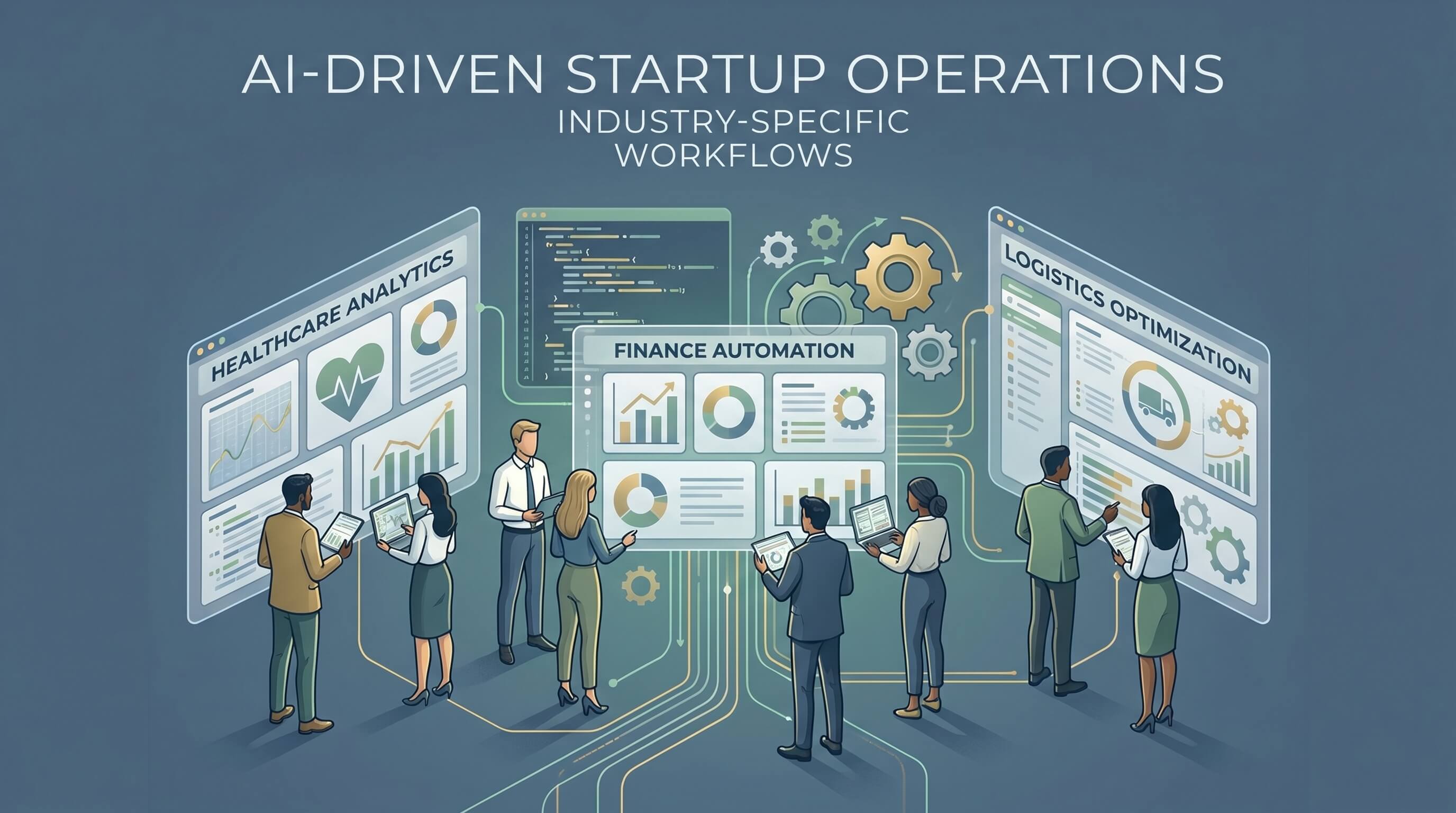
For years, venture-backed software companies mostly played the same game. They sold tools that made employees somewhat faster, a bit more organized, or easier to manage. That produced excellent businesses, but it also imposed a ceiling. Software budgets were still software budgets. Buyers expected pricing to feel like a modest percentage of headcount cost, and most SaaS companies were careful not to push too far beyond that boundary.
Vertical AI startups are trying to break that ceiling. The new thesis is not simply that industry-specific software can be more specialized than horizontal SaaS. It is that AI can automate enough high-value work inside a vertical workflow that the vendor no longer prices against a software line item. It prices against labor, throughput, recovery, or outcomes. In practice, that means an AI company selling into insurance, law, healthcare, logistics, or construction may be targeting budgets that were once reserved for service firms or internal teams, not just for application subscriptions.
This is why investors keep circling the category. Scale Venture Partners argues that vertical markets long dismissed as too small can become much larger once AI captures a meaningful share of labor value rather than just workflow convenience. Bessemer Venture Partners makes a similar point in its roadmap for the AI era, describing copilots, agents, and AI-enabled services as distinct business models with different pricing logic. The common thread is that the product is no longer just software access. It is work delivered.
Why the vertical thesis suddenly looks stronger
Traditional vertical software often struggled because the upgrade from old systems did not always create enough incremental value. Customers tolerated ugly, outdated products if migration was painful and the alternative was only marginally better. AI changes that equation because it can add something older systems often could not: automation of domain-specific language work. Parsing claims, summarizing legal material, drafting clinical documentation, reviewing construction paperwork, triaging support conversations, or handling regulatory evidence all create openings for tools that do more than tidy workflow.
That matters because many verticals are full of messy, expensive, high-friction tasks that were never very attractive to horizontal SaaS. They involve specialized terminology, fragmented documents, regulation, and real business consequences when something is missed. Those same features that once made markets hard to serve now make them defensible. Domain complexity becomes a moat instead of a warning sign.
The business model shift is the real story
Copilots were the first wave because they fit familiar procurement behavior. A company could add AI to an existing seat-based contract and frame it as a productivity upgrade. Bessemer notes that this looks a lot like classic SaaS pricing, just with a richer value proposition. But once AI moves from assisting a user to completing a chunk of work, the seat model starts to weaken.
Agents and AI-enabled services are the more disruptive formats. An agent that handles intake, triage, drafting, compliance checks, or follow-up at scale is not merely helping an employee. It is changing staffing assumptions. That is why pricing is increasingly tied to outputs, completed workflows, recovered revenue, or avoided headcount growth. The question becomes less “How many users do you have?” and more “How much work did the system actually absorb?”
This creates a larger revenue opportunity, but it also creates a more demanding burden of proof. If you want to charge against labor value, you need to show labor replacement, error reduction, or throughput gains that feel concrete enough for a business owner or operator to trust. Fancy demo quality is not enough. Startups have to prove that the workflow really closes.
Why the best vertical AI companies may look partly like services companies
One underappreciated feature of this market is that some winners may not resemble clean, pure software businesses in the early years. They may bundle implementation, workflow redesign, exception handling, compliance review, and human-in-the-loop support. That can make founders nervous because services tend to compress margins and scare SaaS investors.
But there is a practical reason this hybrid model keeps appearing. Many real workflows are too messy to automate completely on day one. The startup that wins often starts by owning the outcome, even if a human backstop remains inside the loop. Over time, automation improves, margins rise, and the product becomes more software-like. In other words, some of the best vertical AI businesses may begin as technology-heavy service layers before they mature into cleaner platforms.
What makes a vertical AI startup defensible
The standard fear is that foundation models will commoditize the whole stack. If every company can access similar base-model intelligence, why should a niche startup keep an edge? The answer is usually not raw model access. It is workflow depth. Defensibility comes from proprietary data feedback loops, embedded integrations, domain-specific evaluation, compliance fit, and the ugly operational knowledge required to make a system work inside a particular vertical.
That is why the strongest founders are not just building prompts on top of a model API. They are building execution systems. They know which exceptions break the flow, which documents matter, where human approvals are legally required, and how customers measure value in that domain. The moat is not abstract “AI.” It is the compounding know-how of getting real work done inside a hard industry.
Where the hype could outrun reality
The risk, of course, is that founders and investors oversell labor replacement before products are truly robust. Businesses will tolerate bugs in a note-taking assistant far more easily than in underwriting, claims handling, legal drafting, or medical documentation. If a startup prices against payroll but still depends heavily on hidden human cleanup, the economics can get ugly fast.
There is also a go-to-market challenge. Selling into verticals often means longer cycles, more integration work, and more skepticism from buyers who have been disappointed by software before. Vertical AI is not a shortcut around enterprise selling discipline. In many sectors, it is a harder version of it.
The practical takeaway
If you are evaluating vertical AI startups, look less at how broad their model sounds and more at what exact workflow they can own end to end. Ask what budget they are really displacing, what evidence supports the claim, and how much manual scaffolding still hides behind the curtain. If you are building one, the prize is not another modest SaaS multiple on seat expansion. The prize is a business that captures a slice of the labor economy because it can deliver work, not just software access.
That is why this category matters. Vertical AI startups are not simply reviving industry software with a new interface layer. The serious ones are redrawing the budget boundary between software and services. If they succeed, that is where the biggest startup outcomes will come from.