Ultra-wideband and battery-free charging are finally fixing smart locks
Smart locks have spent the better part of a decade earning a reputation as the smart home category you regret buying. The complaint list is always the same: the app takes three seconds too long to respond while you stand in the rain, the Bluetooth range is inconsistent, and the battery dies at the worst possible moment, usually while you're traveling. Two engineering changes shipping through 2026 finally attack the actual root causes instead of papering over them with a better app.
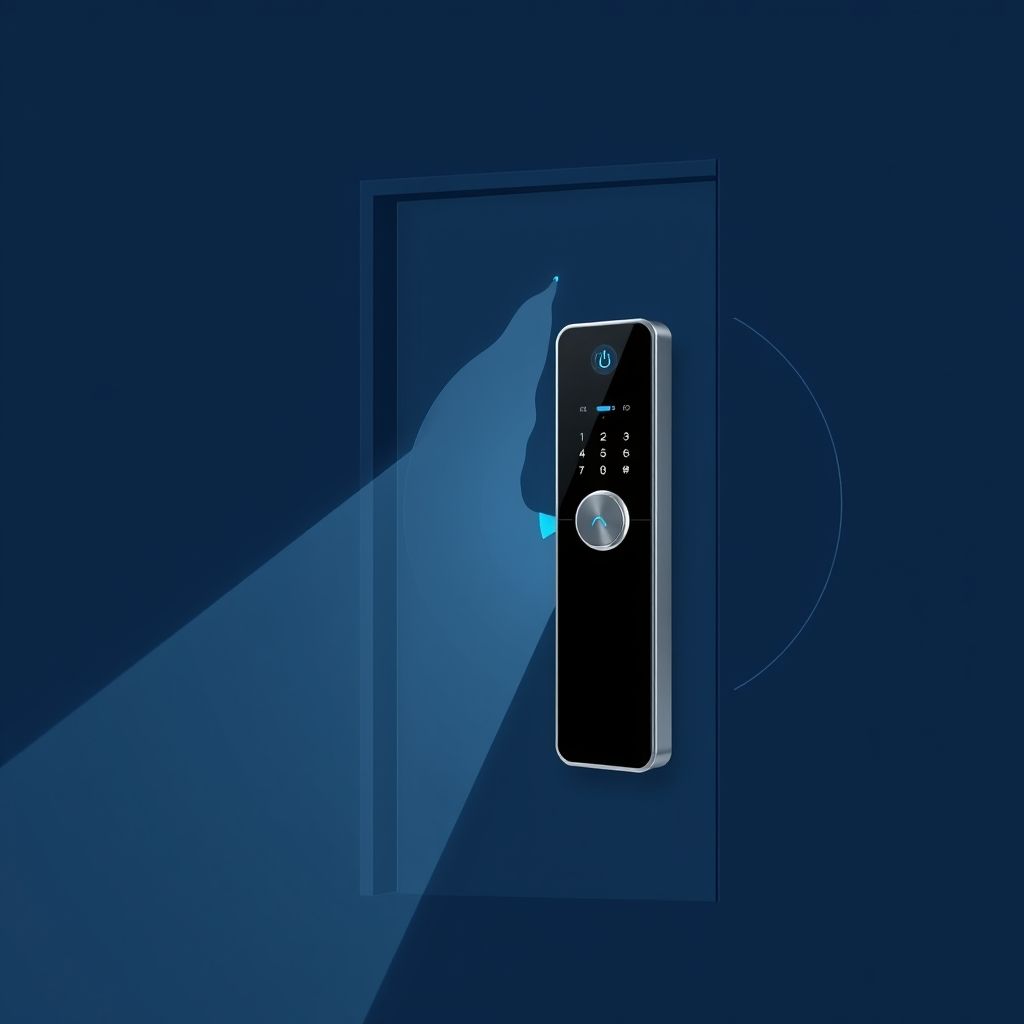
The first is Ultra-Wideband (UWB) proximity unlocking. Aqara's Smart Lock U400, one of the first third-party locks built around Apple's UWB chip, doesn't wait for you to tap a button or scan a fingerprint — it detects your iPhone or Apple Watch approaching the door and unlocks before your hand reaches the handle. That sounds like a gimmick until you understand why it matters: UWB measures distance and direction with centimeter-level precision, which is a fundamentally different reliability profile than Bluetooth Low Energy, the technology most smart locks have relied on since the category began.
Why Bluetooth was the wrong tool for the job
Bluetooth-based proximity unlocking has always been unreliable because Bluetooth signal strength is a poor proxy for actual distance — walls, other radios, and even body position can make a phone six feet away read as closer than a phone at the door. That's why so many Bluetooth smart locks either unlock too early (a security problem) or fail to unlock at all when you're standing right in front of them (a usability problem people eventually just disable the feature over).
UWB doesn't have that ambiguity. It uses time-of-flight measurement — literally timing how long a radio pulse takes to travel between devices — to calculate distance within centimeters, and it can determine directionality, not just proximity. That's the same technology behind Apple's Precision Finding for AirTags. Applied to a door lock, it means the system knows you're standing in front of the door, not just somewhere nearby, before it disengages the deadbolt.
The other half of the problem: batteries
UWB fixes the reliability of *when* a lock decides to open. It does nothing for the second recurring failure mode: dead batteries. Even Aqara's U400, for all its UWB sophistication, still runs on a rechargeable lithium-ion cell rated for roughly six months per charge, with a USB-C emergency port as the fallback when it dies at the wrong time.
Newer entries in the category are attacking the power problem directly rather than just making the battery last longer. Wireless charging systems built into the door itself — an infrared optical charging module mounted on the interior side that continuously trickle-charges the lock's internal capacitor — eliminate the battery-swap ritual entirely. The lock never fully depletes because it's always drawing a small amount of power whenever the door is closed, the same principle that keeps a cordless phone base charged. No battery replacement, no emergency charging cable, no risk of a dead lock locking you out.
Why this matters beyond the product category
The interoperability layer matters as much as the hardware here. Locks like the U400 ship with Matter over Thread support, meaning the lock isn't locked into a single ecosystem — it can talk to Apple Home, Google Home, Amazon Alexa, and Home Assistant simultaneously without the vendor lock-in that made earlier smart home purchases risky bets. Buy a UWB lock today and it should keep working with whatever smart home platform wins the next five years of market share, rather than becoming e-waste when a company pivots or shuts down its cloud service.
The combination of centimeter-accurate proximity detection, continuous wireless power delivery, and open interoperability standards is the first time all three of the category's chronic failure points have been addressed at once, rather than one at a time with the others left to compound. Previous generations of smart locks fixed the app UI and called it done, leaving the actual physics problem — bad distance sensing, finite batteries — untouched.
What to look for if you're buying one now
If you're in the market, prioritize UWB support over Bluetooth-only proximity unlocking — the reliability difference is not marginal, it's the difference between a feature you use daily and one you disable after the first false trigger. Confirm Matter over Thread compatibility so you're not locked into a single app ecosystem. And check the physical backup: even the best UWB lock should have a mechanical key override and a USB-C emergency charging port, because no wireless system should be the only way into your own home. The category finally has products worth trusting with a front door — but only the ones that got all three fixes right, not just the marketing headline.