Tokenized treasuries are giving crypto a more serious financial core
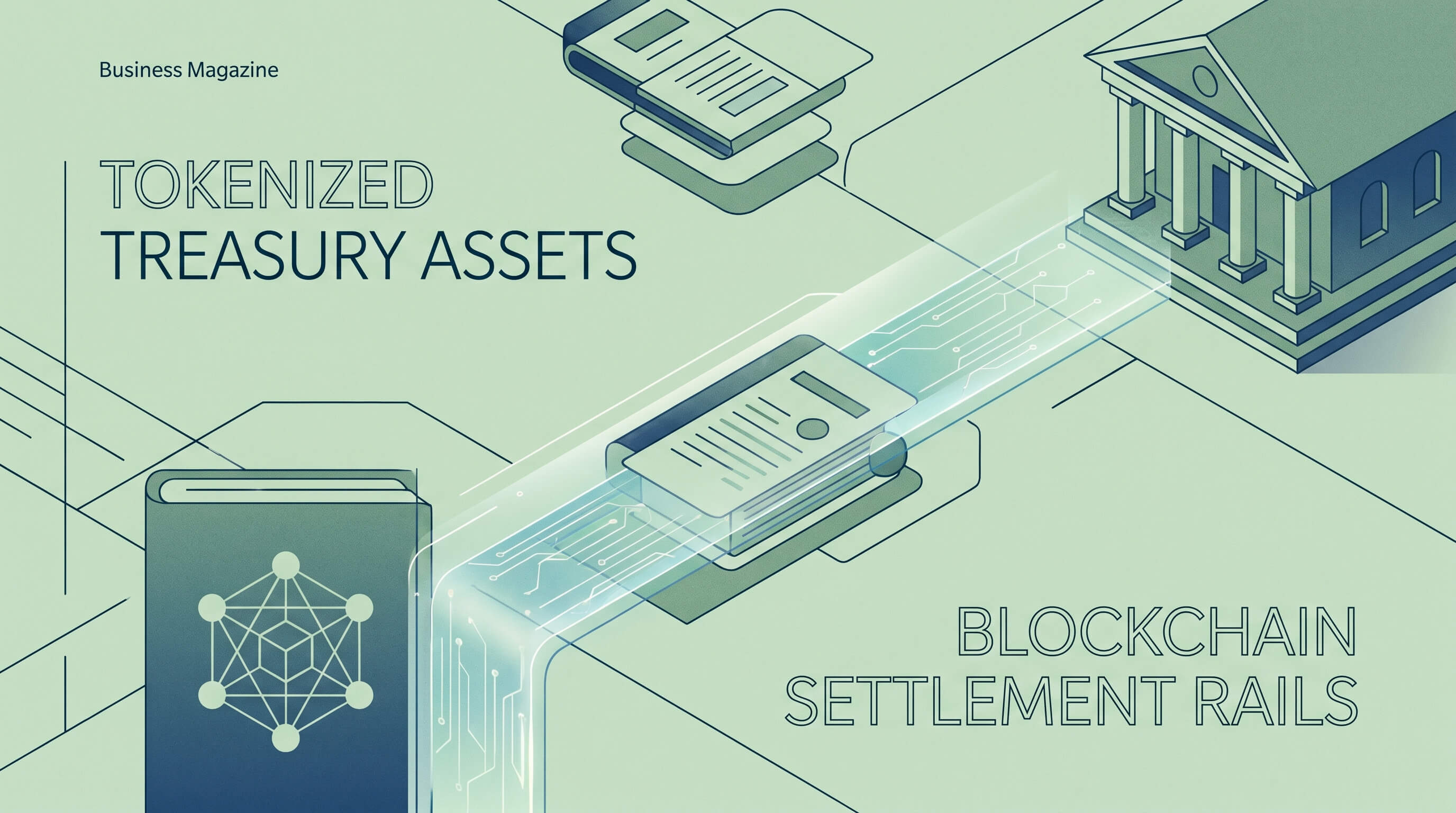
Crypto spent years promising to reinvent finance, then spent just as many years being dismissed as a casino with better branding. That is why tokenized treasuries matter. They are not exciting in the meme-coin sense, but they may turn out to be one of the more important structural shifts in digital assets.
The appeal is easy to understand. A short-duration Treasury fund onchain gives institutions and sophisticated users something crypto rarely offered cleanly at scale: dollar exposure, yield, near-continuous settlement, and programmable transfer rails in the same package. In other words, it starts to make blockchain infrastructure useful for conservative money, not just speculative money.
Why tokenized treasuries are getting traction
Traditional cash management is full of friction. Settlement windows are narrow, back offices are fragmented, and cross-border treasury movement still depends on aging financial rails. Tokenized treasury products promise a different operating model. If a fund or instrument can live onchain, it can settle faster, integrate with digital asset platforms more easily, and become usable collateral in ways that are awkward in legacy systems.
That does not mean every treasury token is magic. It means the distribution and settlement layer gets better. That distinction matters. Blockchain does not improve U.S. government debt itself. It improves how ownership and transfer can be handled, especially across systems that already use digital dollars and smart contract logic.
Stablecoins created the path
This trend would be much weaker without stablecoins. They trained users and institutions to think of blockchain as a settlement rail rather than only a speculative venue. Once digital dollars became normal for transfers, remittances, trading, and treasury movement, the next question was obvious: what other low-volatility, finance-native assets should live onchain?
That is where tokenized treasuries fit naturally. Stablecoins are useful cash-like instruments, but many institutions also want yield-bearing assets that still feel relatively conservative. Tokenized money market products and treasury funds answer that demand. The result is a more mature capital stack inside crypto, where the choice is no longer just between idle stablecoins and volatile risk assets.
Institutions are no longer treating this as a side experiment
The most interesting part of the story is not the technology. It is who is showing up. Major asset managers, banks, and digital-asset infrastructure firms are now treating tokenization as a distribution and operations problem worth solving, not just a branding exercise. That changes the conversation. When the products involve assets institutions already trust and understand, the barrier to adoption falls sharply.
This is also why tokenized treasuries have become one of the leading categories within real-world assets. They are easier to reason about than tokenized real estate dreams or vaguely promised private-market access. The underlying asset is familiar, liquid, and legally legible. The innovation happens in issuance, settlement, collateral use, and integration with onchain workflows.
The real benefit is operational, not ideological
It is tempting to frame tokenization as a referendum on traditional finance, but that misses the practical point. Most institutions are not trying to burn down existing systems. They are trying to add faster settlement, broader access windows, cleaner collateral movement, and more programmable workflows without rewriting the global financial system from scratch.
This makes tokenized treasuries a useful case study. They show where blockchain wins first. It wins where the underlying asset is trusted, the operational pain is real, and the onchain version offers concrete workflow improvements. The more boring the asset, the easier it is to evaluate the real infrastructure benefit.
What could still go wrong
None of this means the category is risk-free. Liquidity is still uneven. Secondary markets are thinner than headline excitement suggests. Standards remain fragmented across issuers and chains. Regulatory treatment still varies by jurisdiction. And there is a familiar crypto habit of taking a solid core idea and surrounding it with unnecessary complexity.
There is also an adoption challenge. Many treasury teams do not want operational novelty. They want predictable controls, reliable redemptions, clear reporting, and limited legal ambiguity. The providers that win will not be the ones with the loudest onchain story. They will be the ones that make the product feel operationally boring in the best possible way.
Why this matters beyond crypto
If tokenized treasuries keep growing, they will matter not just to DeFi users but to the broader shape of financial infrastructure. They can act as composable collateral, connect treasury management with digital payment systems, and give institutions a more practical reason to care about wallets, tokenized deposits, and onchain identity. That is a very different future from the old story that mass adoption would arrive because everyone suddenly wanted to speculate on volatile tokens.
The deeper significance is cultural as much as technical. Crypto becomes easier to take seriously when its most compelling products are about settlement quality, collateral efficiency, and treasury management instead of hype cycles. Tokenized treasuries are not the entire answer, but they point toward a version of digital assets that looks more like plumbing and less like spectacle. That is probably a healthy sign.
What readers should watch next
Watch the relationship between stablecoins and tokenized yield products. Watch whether regulators create clearer rules for issuance and redemptions. Watch whether institutions use these products for collateral and treasury operations rather than just passive holding. And watch whether integration with payment platforms, custodians, and banking systems gets simpler.
Crypto has produced many narratives that sounded profound and vanished quickly. This one feels different because it is grounded in a real institutional need. Tokenized treasuries will not make headlines like a market mania. But they may do something more durable: give crypto a financial core that serious capital can actually use.