Three subsea cables failed in two months, and Perth lost its direct route to Asia
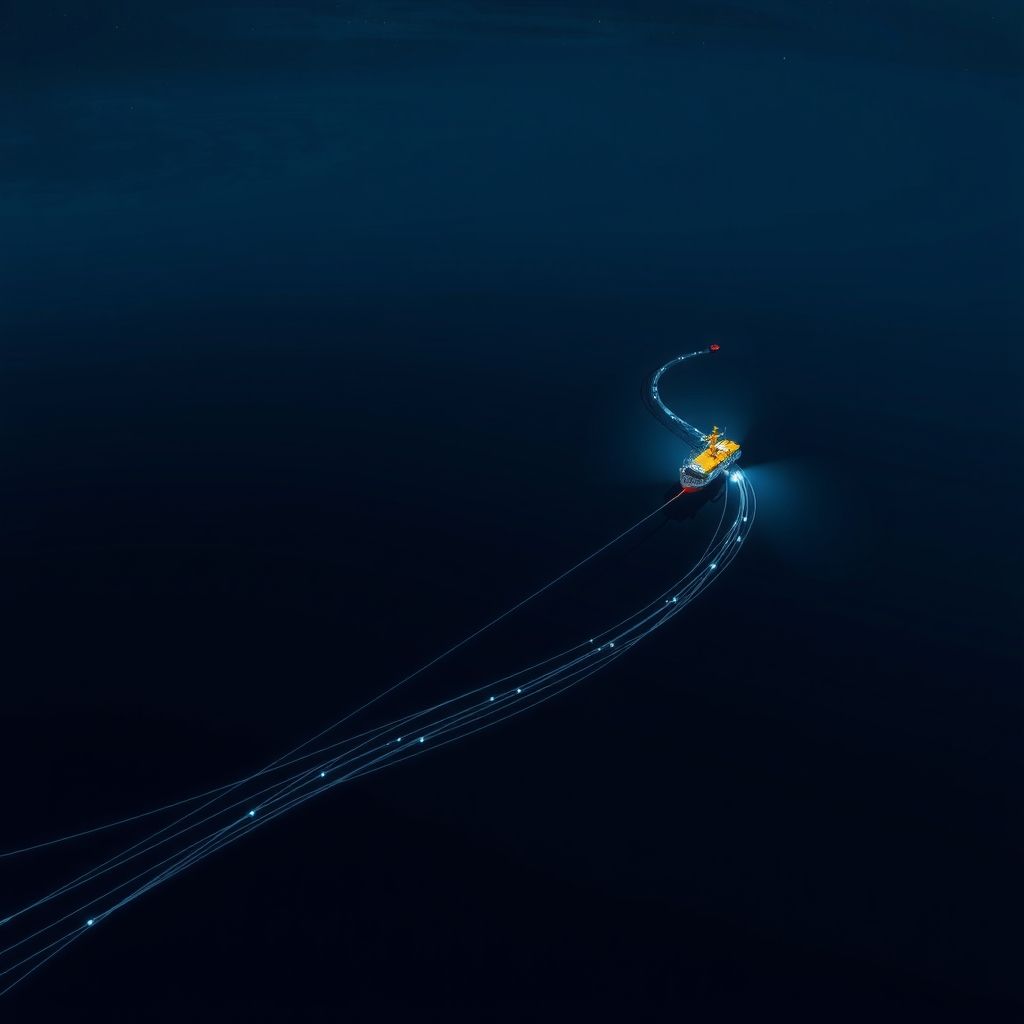
What failed
Between August 8 and September 4, 2026, three submarine systems linking Western Australia to Southeast Asia stopped carrying traffic. Indigo West and Indigo Central, each rated at roughly 40 Tbps, both suffered electrical shunt faults on August 8 and 9 inside the Perth Protection Zone, about 48 km offshore. A shunt fault means seawater has breached the insulation around the high-voltage conductor that powers the cable's repeaters, creating a short circuit in the feed. On September 4, the Australia-Singapore Cable, rated near 60 Tbps, suffered a full physical severance in Indonesian waters between Anyer and Singapore.
Taken together, the three failures removed all direct low-latency marine capacity between Perth and Southeast Asia. A Submarine Networks analysis estimates that about 100 Tbps of exit bandwidth left the state, and the marine link that backhauls traffic toward Sydney was cut at the same time. The notable point is not any single cable. It is that one region lost every direct route to Asia in the same month.
What rerouting costs
Traffic did not stop. It moved, and the new paths show how quickly distance adds up. Before the outages, round-trip time from Perth to Asia was roughly 60 milliseconds. The three contingency routes look like this:
- Northbound through Guam or Japan, with terrestrial backhaul to Sydney or Brisbane first: roughly 150 to 200 ms round trip.
- A double transpacific detour via Southern Cross, Southern Cross Next and Hawaiki to the US West Coast and back across Asia: roughly 300 to 400 ms.
- Overland terrestrial backhaul across the Nullarbor Plain for domestic traffic.
That is an increase of 250 to 650 percent. For interactive workloads, such as trading systems, video calls, VPN-tunneled SaaS and cross-region database replication, a 300 ms round trip changes how the application behaves. Anything with timeouts tuned to a 60 ms network will start to misbehave.
Why repairs take longer than the faults
The repair vessel CS Lodbrog was assigned to the Australia-Singapore Cable. The analysis notes, however, that repair timelines keep slipping for administrative reasons: cabotage exemptions to let a repair ship work in Indonesian waters, environmental clearances, and naval security approvals. None of these steps is unusual on its own. Together they can add days or weeks to each outage, and those are the days customers feel most.
The root cause is still open. Automatic identification system data showed an unidentified commercial vessel making erratic passes across both Indigo alignments during the fault window. According to the same analysis, the Australian Federal Police assessed potential illegal anchoring or fishing-gear damage as possible causes. The cause of the Australia-Singapore Cable fault has not been determined. Nothing published so far confirms sabotage, and that distinction matters for how operators respond.
The architecture argument
The analysis makes a point that reaches well beyond Perth. Many planners avoid routing cables through contested waters, including parts of the South China Sea. That can be a defensible geopolitical choice, but it concentrates capacity on the remaining corridors: the Java Sea, the Sunda Strait and the Australian coastal zone. When one of those fails, there is little left to fall back on. The authors call this a resilience paradox. Avoiding one class of risk can create another single point of failure.
Their recommendations are practical. Operators should build multi-path mesh diversity that balances South China Sea routes, transpacific links and Indian Ocean corridors, rather than excluding regions on principle. Governments should create standardized green-lane permits for commercial repair vessels, so that cabotage and environmental approvals are settled before a fault happens. And the industry needs stronger seabed protection, including monitoring and enforcement inside protection zones, because the Perth faults occurred inside one.
What to do if you run infrastructure in the region
- Check real path diversity. Two circuits from different carriers can ride the same cable system. Ask providers for cable system names, not only carrier names, and cross-check them against a public directory such as CableStatus.
- Test your latency budget at 300 ms. Services that assume 60 ms can fail quietly at 150 to 400 ms. Force traffic onto a longer path in a test window so you know how the application behaves before you need to know.
- Verify that failover can absorb lost capacity, not only lost connectivity. A link that stays up at a fraction of its bandwidth can be worse than a clean outage, because queues fill and the problem shows up late.
- Place regional replicas or CDN edges so that critical workloads do not depend on one subsea route. For Western Australian workloads, this is the difference between degraded and down.
- Track the repair and permit process, not only the fault notice. The expected restoration date tells you more about your exposure than the day the cable failed.
Three cables failing in one month is unusual, but the lesson does not depend on the cause. A network that looks diverse on a map can still funnel through one corridor. Finding that out during an outage costs far more than checking it in advance.